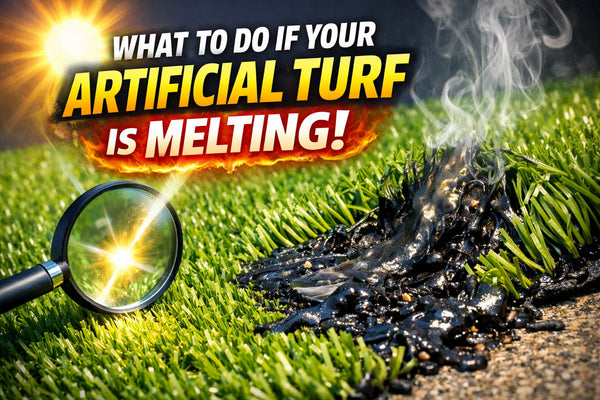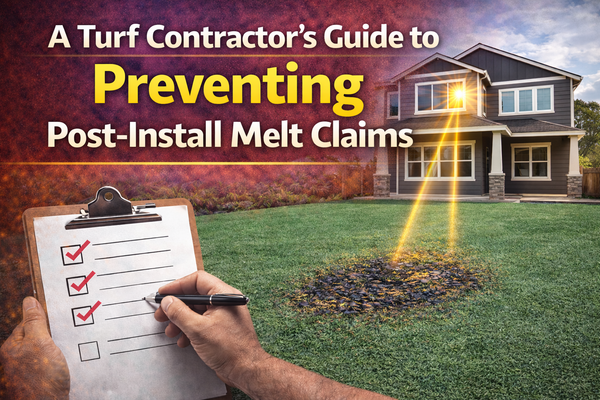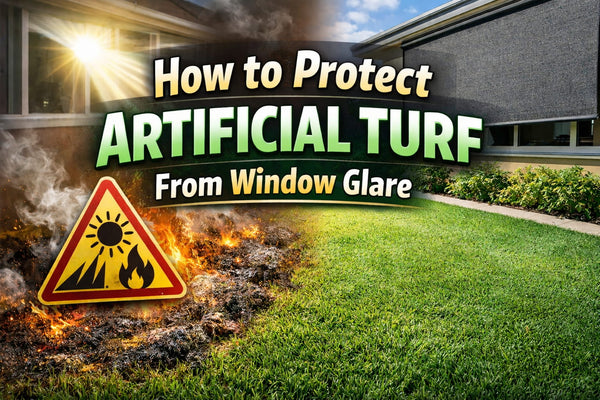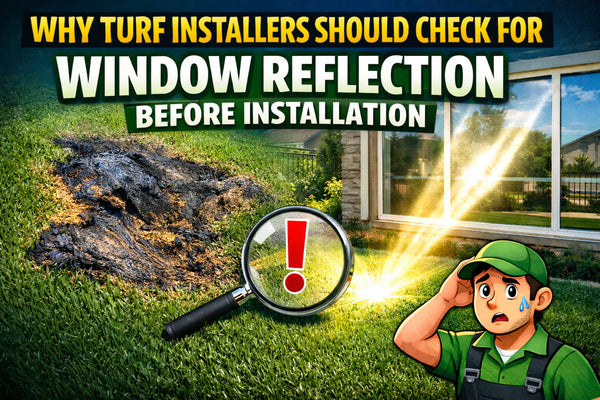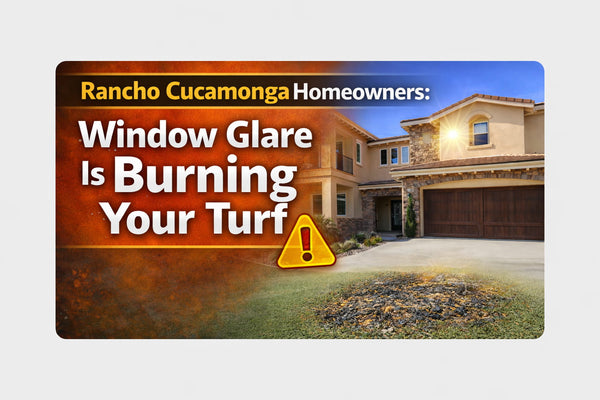
Putting artificial turf in your lawn is one of the best decisions you’ll ever make in designing the exterior of your house. These grasses need very minimum maintenance as compared to real grasses. On the other hand, there is this one problem that most artificial turf owners really hate: turf burn.
The common signs of a melting turf are discoloration, white spots, and a shriveled appearance. So, if you already see these signs in your artificial turf, you must immediately look for the solutions for melting turf.
However, you must first learn how to prevent turf burn. This is a significant first step for you to understand the solutions for melting turf later, and to achieve the sustainability of your artificial grasses by doing turf maintenance.
Where Does The Burn Come From?
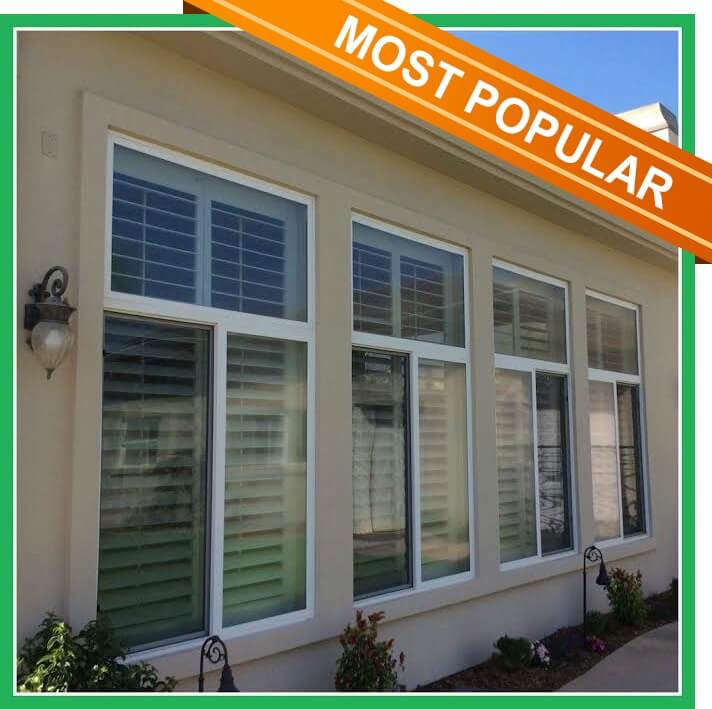
In order to prevent your turf from being burnt, you have to look for the main reason or source of the problem. Obviously, heat is the answer to these, but from where? The melting heat usually comes from the reflection of the sun from the glass windows and doors of your house.
Other reasons could be from a polished surface of metals reflecting a great amount of sunlight, such as the gutter, the chromes of your car, and your neighbors’ roof; flame sparks from a near by fire pit; and the lack of maintenance such as irregular watering and lack of cleaning.
Tips to Prevent Turf Burn
1. Eliminating the Source of HeatOne solution for melting turf is to assess the position of the turf and look for the things that can reflect concentrated sunlight into it. If possible, remove these things or just replace them with objects that have less reflective surfaces.
2. Block the ReflectionsAwnings or covers can be installed in your windows to block the sunlight, hence limiting the glare they emit that reaches your synthetic turf.
3. Use Windows FilmsThese films have an anti-reflective property that can refract the sunlight. They also have holes to break the path of the light, which prevents a high concentration of reflective sunlight.
How to Fix Burnt Grass?
The disadvantage with artificial turf is that you cannot grow them back when they are damaged or burnt. Fortunately, you can still fix burnt grass by replacing them with new ones. So, it is imperative to keep the excess patches of artificial grass during installation. On the other hand, the new patch of artificial grass will look different from old ones, though they can eventually look the same over time.
Conclusion
It is truly a big advantage for homeowners when they choose to install artificial grasses on their lawn instead of growing real ones. It requires lesser effort, not to mention the water, to maintain the grasses.However, the maintenance must still be taken seriously.
From the solutions mentioned above, the best and most convenient solution you can do is to install perforated window films. Aside from it being easy to install, window films are also less expensive than other solutions you may find in the market. If you are interested, then visit our website and check out Turf Guard Window Film.
The aforementioned solutions for melting turf could be done alone by the homeowners, but it is more advisable to ask for the assistance of professionals in order to avoid the waste of time and money, especially in the installation of window films.