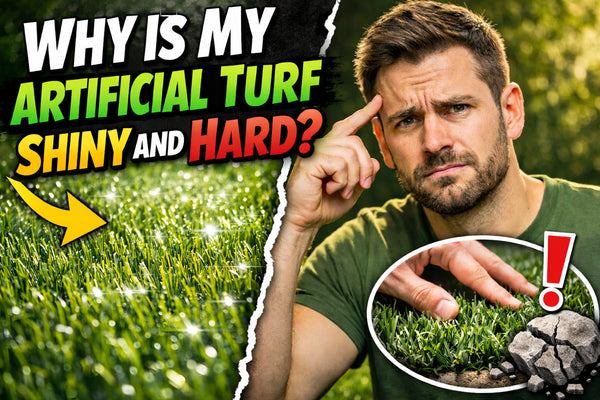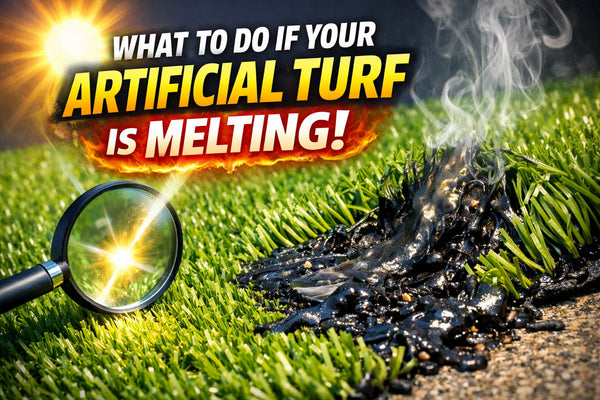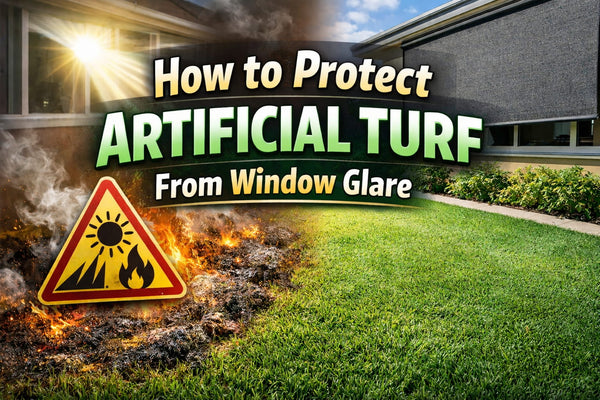
Homeowners are often shocked when they discover melted, shiny, or discolored patches in their artificial grass, especially when there’s no fire pit, grill, or obvious heat source nearby. One of the most common and misunderstood causes of artificial turf damage is window reflection.
So, can windows burn turf?
Yes. Certain windows can absolutely burn, melt, and permanently damage artificial turf.
This guide explains how window reflection damages turf, what signs to look for, why replacing the turf alone doesn’t work, and how to stop it permanently.
How Windows Can Burn Artificial Turf
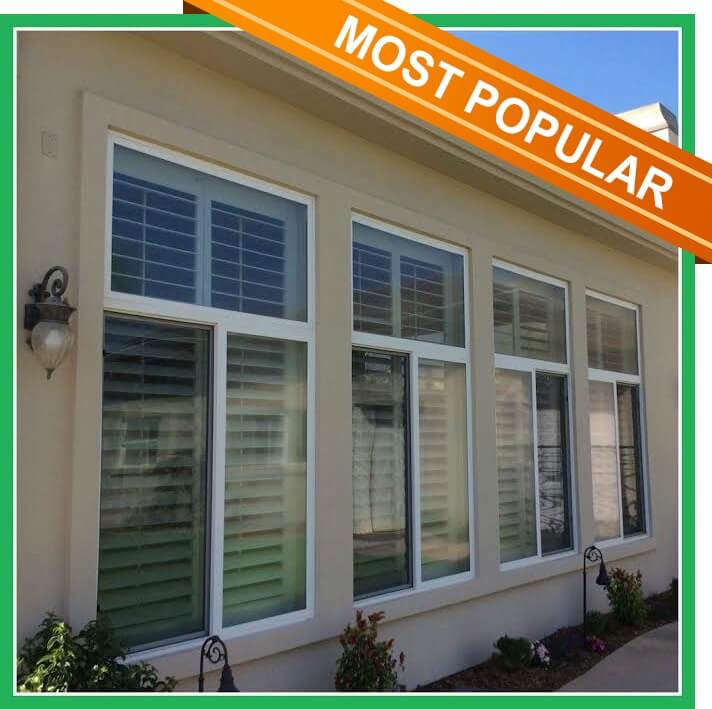
Many modern homes use Low-E (low-emissivity) energy-efficient windows. These windows are designed to reflect solar energy to keep heat out of the home.
Under the right conditions, that reflected sunlight can:
-
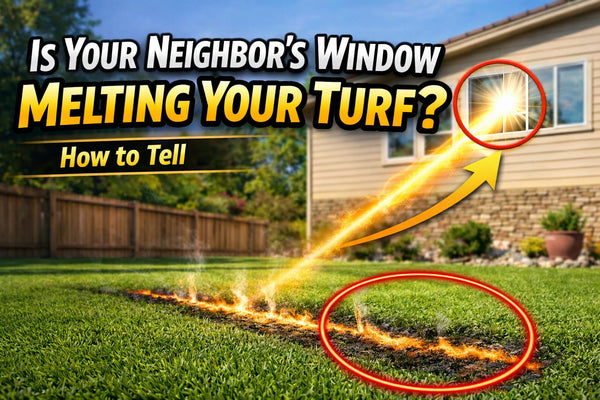
Concentrate into a narrow beam
-
Act like a magnifying glass
-
Create extremely high surface temperatures
When that concentrated beam hits artificial grass, surface temperatures can exceed 200–250°F, which is hot enough to melt turf fibers and warp the backing.
This phenomenon is often called:
-
Solar reflection damage
-
Low-E window reflection
-
Thermal distortion

Why the Damage Looks So Specific
Window reflection damage usually creates recognizable patterns:
-
Straight or diagonal melt lines
-
Circular or oval burn spots
-
Shiny, brittle, or collapsed blades
-
Localized patches that appear suddenly
Many homeowners notice the damage occurs at the same time each day, such as early afternoon, when the sun angle lines up perfectly with a reflective window.

Which Windows Are Most Likely to Cause Turf Damage?
Certain window types are more prone to causing concentrated reflection:
-
Low-E energy-efficient windows
-
Double-pane windows
-
Slightly concave or curved glass
-
Large second-story windows
-
Bay or angled windows
Second-story windows are especially problematic because they can project reflections far into the yard, sometimes 10–30 feet away from the house.

Why Replacing the Turf Doesn’t Fix the Problem
Many homeowners assume the turf itself is defective and replace it with a “better” or “higher-quality” product.
Unfortunately, this almost always leads to the same result.
Even premium artificial grass will melt when exposed to repeated concentrated reflection.
Most turf warranties specifically exclude:
-
Thermal distortion
-
Window reflection damage
-
Heat-related melting
Unless the reflection is addressed, new turf will melt in the exact same pattern.
How to Confirm Window Reflection Is the Cause
You can perform a simple check:
-
Stand in the damaged area.
-
Look toward nearby windows.
-
Identify any intense glare or bright reflection.
-
Observe whether the hot spot appears at a consistent time of day.
-
Take photos or video of the reflection path if possible.
Once you see it, the cause is usually very obvious.
How to Prevent Windows From Burning Turf
The permanent solution is to treat the window, not the turf.
Install Turf Guard window film which is specialized exterior window film designed to:
-
Diffuse reflected sunlight
-
Break up concentrated beams
-
Reduce reflection intensity
-
Prevent hot spots from forming
Because it’s installed on the outside of the glass, it stops the damaging reflection before it leaves the window.
Additional Options
-
Solar screens
-
Exterior shades or awnings
-
Strategic landscaping or shade structures
Interior window tint does not solve the problem and can sometimes make reflection worse.
Can Natural Grass Be Affected Too?
Yes. While artificial turf shows damage more visibly, concentrated window reflection can also:
-
Scorch natural grass
-
Burn plants and shrubs
-
Warp vinyl siding
-
Damage patio furniture
-
Crack pool covers
Artificial turf simply melts faster and more obviously.

Key Takeaway
Windows do burn turf.
When sunlight reflects off certain windows at the right angle, it can concentrate into extreme heat capable of melting artificial grass in minutes.
If your turf is melting in lines, spots, or repeating patterns, the cause is almost always window reflection, not defective turf.
Addressing the reflective window with exterior film like Turf Guard, or shading is the only permanent fix.