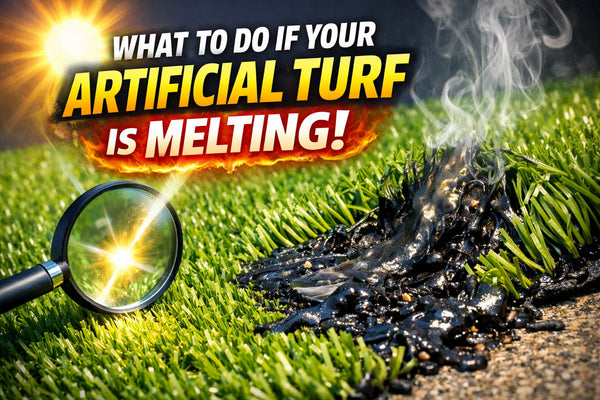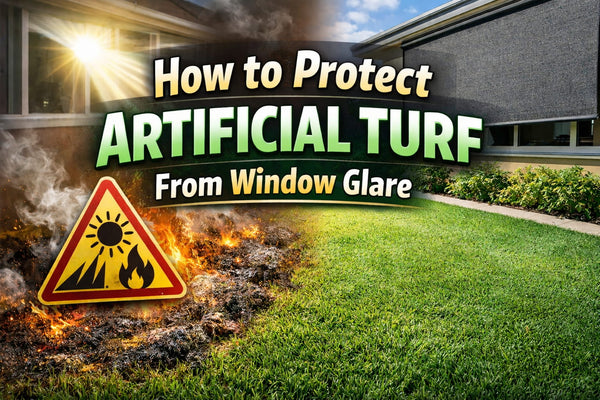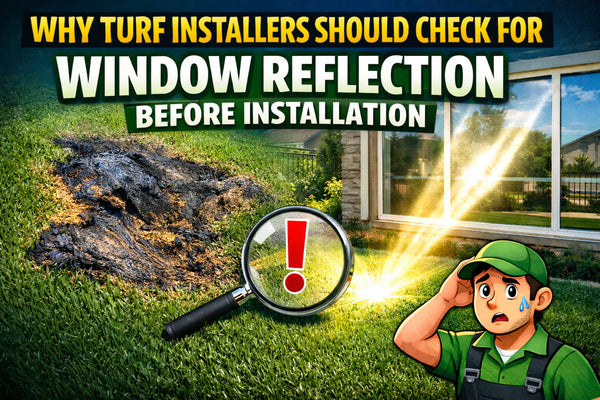
Artificial turf is supposed to be durable, low maintenance, and resistant to the elements. So when parts of your lawn start melting, it’s frustrating and confusing.
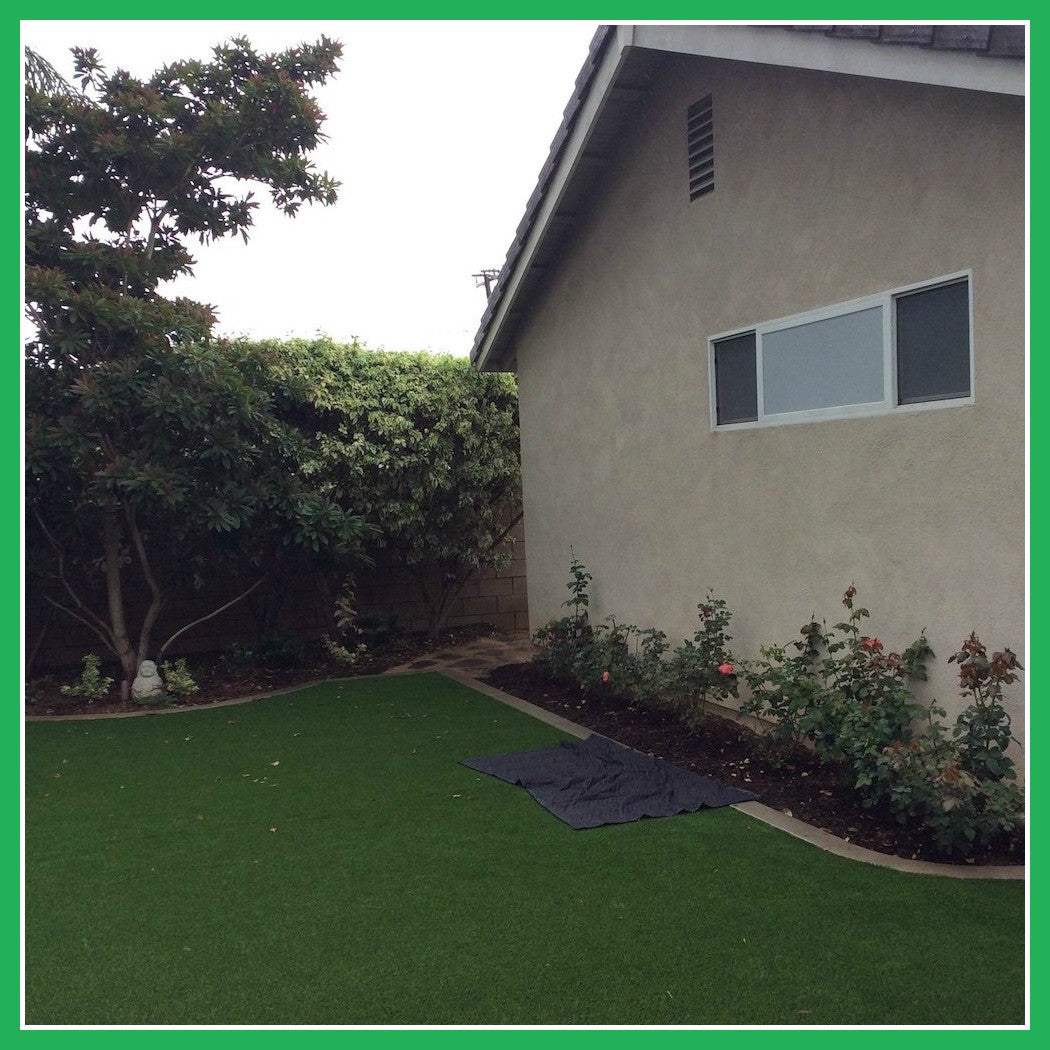
Many homeowners assume the turf product itself is defective. But in many cases, the real cause may actually be coming from a neighbor’s windows.
Yes, your neighbor’s house can unintentionally melt your artificial grass.

The Hidden Cause: Reflected Sunlight From Windows
Modern homes frequently use Low-E energy-efficient windows, which are designed to reflect solar heat away from the home.
While this improves indoor energy efficiency, it can also create a powerful reflection outdoors.
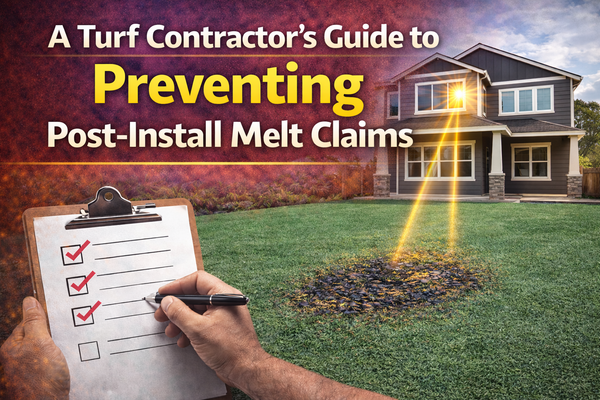
When sunlight hits these windows at certain angles, the glass can reflect and concentrate sunlight into a narrow beam. That beam can reach temperatures exceeding 200°F and melt artificial turf.
The tricky part is that this reflection may travel across property lines, meaning the hot spot damaging your lawn could be coming from your neighbor’s home.
Signs Your Neighbor’s Windows Are Causing Turf Melt
Artificial turf damaged by window reflection usually follows very specific patterns.
Common warning signs include:
-
Melted lines or streaks across the grass
-
Circular or oval burn patterns
-
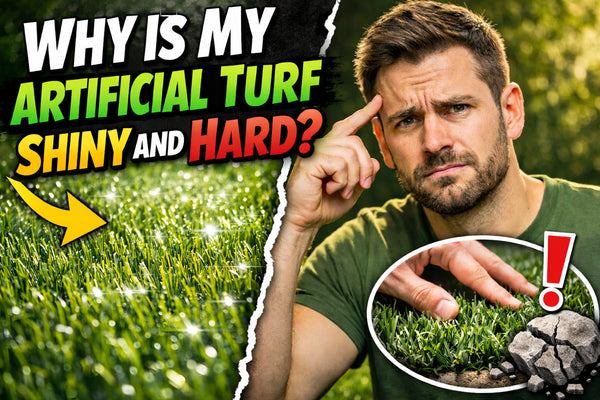
Shiny, hardened turf blades
-
Damage that appears at the same time every day
-
A bright glare visible from a nearby window
If the reflection comes from your neighbor’s property, the hot spot will typically appear closer to the fence line or property boundary.

How to Confirm the Source of the Reflection
A simple test can help you identify where the heat is coming from.
Stand directly in the melted area of turf and look toward nearby windows on both your home and neighboring homes.
The window producing the brightest glare or flash of reflected sunlight is likely the source.
You may even notice the reflection moving slowly across the lawn as the sun changes position.
Why Replacing Turf Won’t Fix the Problem
Some homeowners attempt to solve the issue by replacing the melted section of artificial grass.
Unfortunately, if the reflection source remains, the new turf will melt again.
The underlying problem isn’t the turf, it’s the concentrated sunlight being reflected onto it.

The Most Effective Way to Stop the Reflection
The best way to protect artificial turf from window reflection is to treat the glass causing the glare.
Turf Guard Window Film is specifically designed to stop concentrated reflection before it reaches the ground.
The film works by:
-
Breaking up the reflected sunlight
-
Diffusing the concentrated beam
-
Preventing dangerous hot spots
Once installed, the reflection is controlled directly at the window, protecting turf and surrounding surfaces.
Protect Your Turf Without Replacing It
Artificial grass melting is a growing issue in neighborhoods with energy-efficient windows.
If your lawn is melting and you suspect window reflection from nearby homes, the key is to control the reflection at the source.
Installing Turf Guard Window Film can eliminate the damaging glare and protect your artificial turf for the long term.