Artificial grass is popular because it looks great year-round with far less upkeep than natural grass. But “low maintenance” doesn’t mean “no maintenance.”
With a few simple habits, you can keep your turf looking fresh, clean, and long-lasting for years.
And at the end, we’ll share a hidden care tip most homeowners don’t realize is critical, one that can prevent costly damage that brushing and rinsing alone can’t fix.
Why Artificial Grass Still Needs Maintenance
Artificial turf is designed to be durable, but over time it’s exposed to:
-
Dust and debris
-
Leaves and organic matter
-
Pet waste
-
Foot traffic
-
Sun and heat
Regular care keeps fibers upright, prevents odors, and protects the turf backing so your investment lasts as long as possible.
1. Rinse Your Turf Regularly
A simple water rinse removes:
-
Dust and pollen
-
Pet urine and waste residue
-
Airborne debris
How often:
-
Light-use areas: once every 2–4 weeks
-
Pet areas or high traffic: once a week
This prevents buildup that can cause odors and discoloration.
2. Remove Debris Before It Breaks Down
Leaves, twigs, and dirt can decompose and settle into the turf.
Use:
-
Leaf blower
-
Turf rake
-
Soft push broom
Avoid metal rakes, they can damage turf fibers.
Keeping the surface clear helps drainage and prevents compacted debris layers.
3. Brush Fibers Upright
Foot traffic naturally pushes turf fibers down over time.
Brushing restores the upright look and keeps the lawn looking full.
Best practice:
-
Use a stiff nylon or synthetic bristle broom
-
Brush against the grain
-
Focus on walk paths and seating areas
Brushing every 1–2 months makes a noticeable difference.
4. Spot Clean Spills Quickly
For food, drink, or pet messes:
-
Blot liquids with paper towels
-
Rinse with water
-
Use mild soap if needed
Avoid harsh chemicals or solvents, they can damage turf backing.
5. Control Odors (Especially With Pets)
If odors develop:
-
Rinse thoroughly
-
Apply an enzyme-based turf deodorizer
-
Rinse again after treatment
Enzymes break down odor-causing bacteria instead of masking smells.
6. Check Edges and Seams
Occasionally inspect:
-
Edges near hardscapes
-
Seams between turf sections
If you notice lifting or separation, addressing it early prevents larger repairs later.
The Hidden Artificial Turf Care Tip Most Homeowners Miss
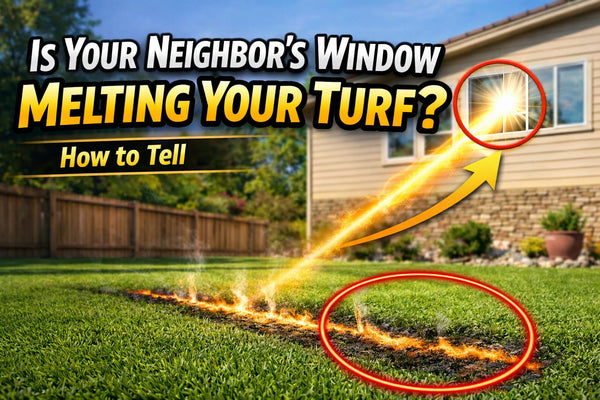
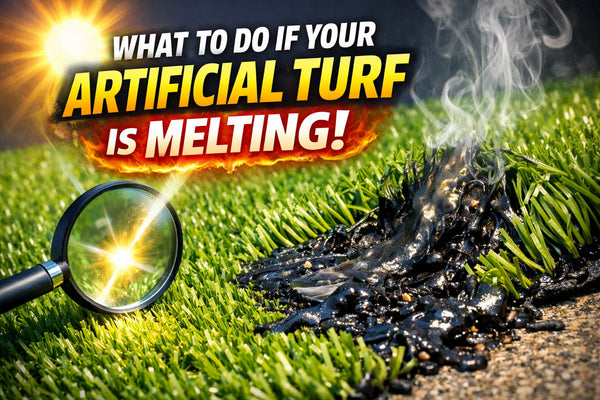
Even perfectly maintained turf can fail if it’s exposed to concentrated reflected sunlight from windows. Many modern homes have Low-E (energy-efficient) windows designed to reflect heat. Under the right sun angle, these windows can focus sunlight into a narrow beam, similar to a magnifying glass and damage your turf.
That concentrated beam can raise surface temperatures above 200°F, which is hot enough to:
-
Melt turf fibers
-
Shrink turf backing
-
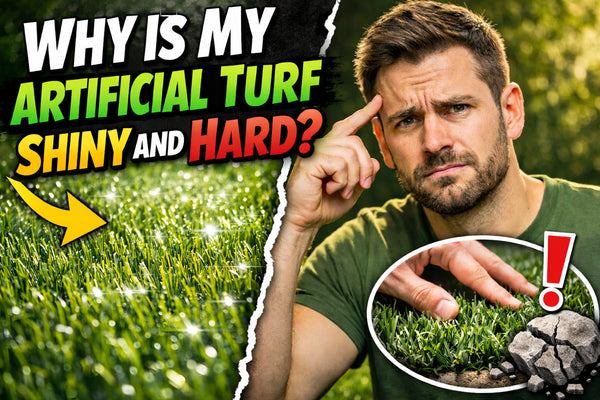
Create shiny or brittle blades
-
Cause straight or diagonal melt lines
No amount of rinsing, brushing, or deodorizing will prevent this type of damage.

Why This Matters for Long-Term Turf Care
Homeowners often assume melted turf means:
-
Poor-quality grass
-
Installation defects
-
Manufacturer failure
But in most cases, the turf isn’t the problem.
The real issue is window reflection.
If the reflection isn’t addressed, replacing the turf almost always leads to the same damage again.
The Simple Fix: Treat the Window, Not the Turf
Exterior window film like Turf-Guard is designed to reduce solar reflection which diffuses sunlight before it can concentrate into a damaging beam.
Benefits:
-
Breaks up reflected light
-
Prevents hot spots from forming
-
Stops repeat turf melting
-
Maintains visibility
-
HOA-friendly in many communities
It’s one of the most important long-term care steps for artificial turf, yet rarely mentioned.
Artificial Grass Maintenance Checklist
✔ Rinse regularly
✔ Remove debris
✔ Brush fibers upright
✔ Spot clean spills
✔ Treat odors with enzyme cleaner
✔ Inspect seams and edges
✔ Check for window reflection hot spots
Final Thoughts
Maintaining artificial grass is simple and affordable with consistent care. But the most overlooked step is making sure concentrated window reflection isn’t silently damaging your lawn.
If you notice shiny blades, straight melt lines, or hot spots that appear at certain times of day, addressing reflective windows is essential.
Protecting your turf starts with caring for both the grass and the glass.