The Complete Guide to Artificial Turf Melting and How to Stop It
Are you concerned about artificial turf melting? Many homeowners are dealing with this issue, which is why they want to know where to buy synthetic grass that can last for years.However, whether you buy it from a reputable artificial grass company or not, the lawn is still likely to melt. The questions are “what causes this damage and how to prevent this problem?” This post will give you the answers to these questions.

What Causes Your Synthetic Lawn to Disintegrate?
Fake turf is more durable than the real grass. That is why many homeowners choose to get fake grass for their backyard. However, having this in your garden does not mean you are free of any turf damage.
When radiant heat occurs, the lawn sucks the high temperature, which causes it to reach its melting point. But what causes this radiant heat to damage artificial grass? Here are some of them:
UV Rays Can Damage Artificial Turf Over Time
UV rays will not damage the aesthetics of your lawn if the synthetic grass supplier has done some UV-resistance tests to it before being sold to the public. Nevertheless, this does not mean that your turf is insoluble. Your lawn is still susceptible to damage if the sun’s rays are reflected off the right surface.
Decorative Mirrors
These glass panes may look appealing on your home, but they may cause damage to your turf. These decors may reflect an ample amount of heat that can melt your faux grass. Decorative mirrors can reflect sunlight back out and on to artificial grass, much like what happens with window reflection melting artificial turf.
Reflection from Windows Melting Turf
Windows have become more energy-efficient over the past few years. Thanks to Low-E windows, the glazing used by these windows allows natural light to pass through but prevents heat from entering.
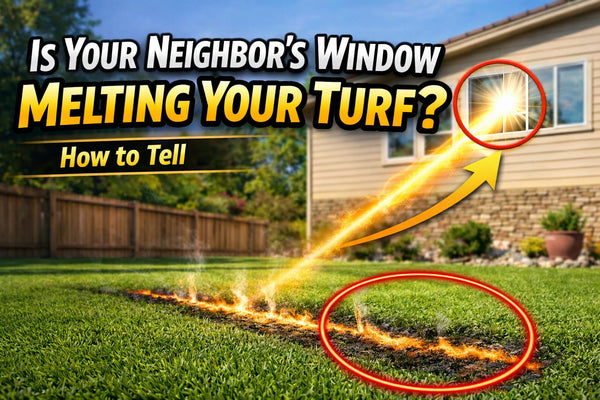
However, this can also cause problems with your lawn, whether it be natural grass or artificial grass. Because the windows do not absorb the radiant heat, they direct it to the ground, causing your synthetic grass to melt.
The sun's light can reflect off of your windows, amplifying the sun's light reflecting back on to your lawn, both natural grass and artificial turf. The magnified sun light reflecting on to the lawn is known to cause brown spots on natural grass lawns and can often cause artificial grass to melt. The best wa
How to Stop the Window Reflection from Damaging Your Lawn?
The best way to stop window reflection from damaging your lawn is to apply Turf Guard window film to exterior of your window to diffuse the reflection and protect your lawn from damage. Whether you have a natural lawn or artificial turf, Turf Guard will protect your lawn from damaging window reflection.
Turf Guard is a very unique window film, unlike typical window films you may be familiar with. This type of window film is different from its kind, as it has holes. This feature deflects off the light and disperses the heat evenly. That way, all areas of the lawn get the same amount of temperature.
To get these perks, be sure to buy a clear perforated window film. Visit our website and find out how it prevents the artificial turf from melting.