Artificial turf is everywhere in Phoenix. With triple-digit summers, rising water costs, and drought restrictions, it makes sense. No mowing. No irrigation. No brown patches by July.
But there’s one issue that surprises many Phoenix homeowners after installation:
Artificial turf melting.

If you're planning to install synthetic grass in Phoenix, this is what you need to understand before signing a contract. Because once turf melts, replacing it without fixing the root cause usually leads to the same damage again.
Why Artificial Turf Makes Sense in Phoenix
Let’s start with the positives.
Phoenix homeowners choose artificial turf because it:
-
Eliminates watering
-
Reduces monthly utility bills
-
Stays green year-round
-
Handles heavy foot traffic
-
Works well with desert landscaping
In most cases, it performs exactly as intended.
But Phoenix has a unique environmental factor that many installers don’t automatically address.
The #1 Cause of Turf Melting in Phoenix
It’s not the heat alone.
Artificial turf is engineered to handle high ambient temperatures. Even in 110–115°F weather, quality turf should not melt from normal sunlight.
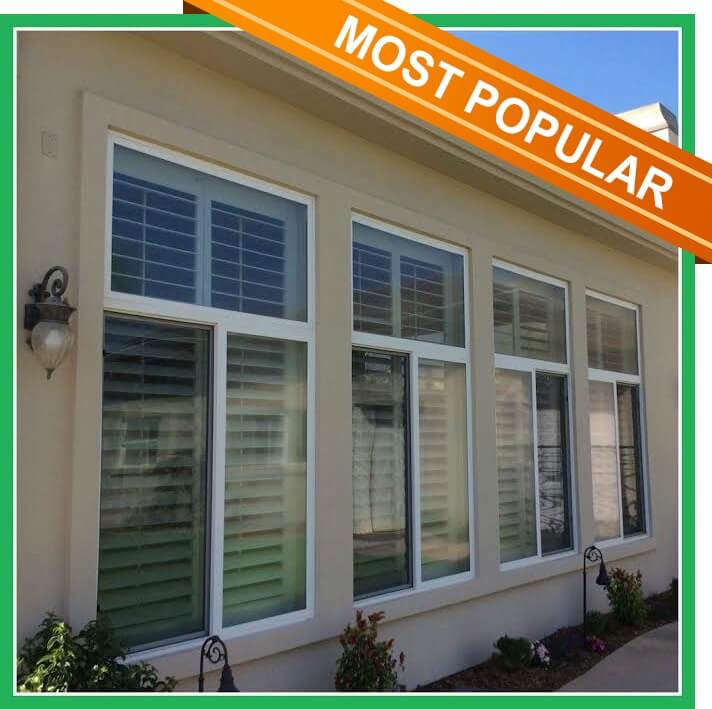
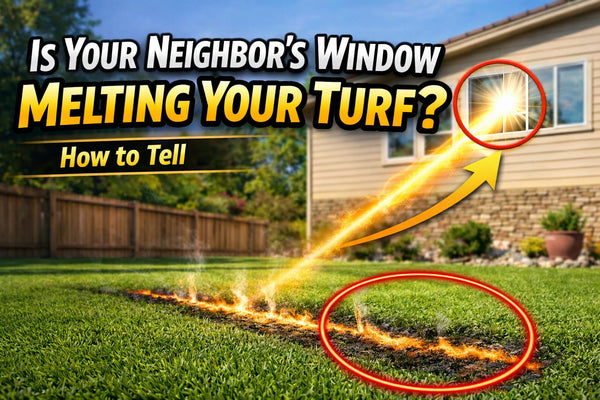
The real issue is concentrated reflected heat, most often from modern energy-efficient windows.
Phoenix homes commonly have:
-
Low-E (low emissivity) glass
-
Large sliding patio doors
-
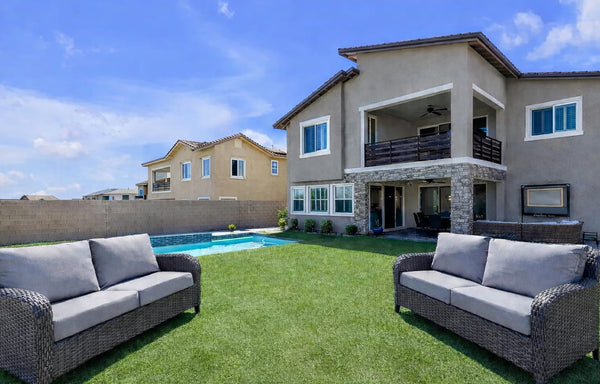
Second-story windows facing backyards
-
Glass pool fencing
-
Light-colored stucco and pavers
Under the right sun angle, reflected sunlight from these surfaces can:
-
Focus into a narrow beam
-
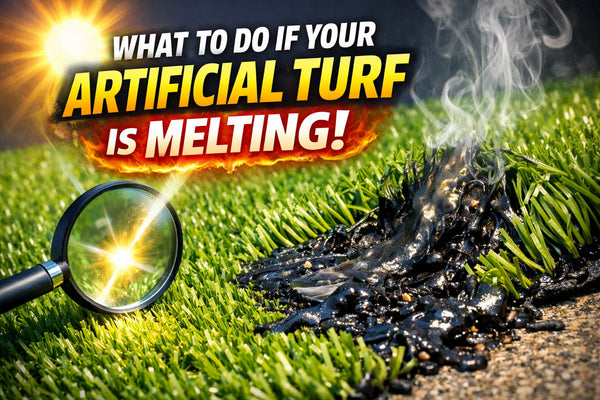
Act like a magnifying glass
-
Create surface temperatures exceeding 200–250°F
That’s hot enough to melt synthetic turf fibers within minutes.

Why Phoenix Homes Are Especially at Risk
Several factors increase risk in the Valley:
1. Energy-Efficient Windows
Most newer Phoenix homes use Low-E glass to improve cooling efficiency. Under certain sun angles, these windows can reflect and concentrate sunlight, creating a focused beam that may generate enough heat to melt nearby artificial turf.
2. Intense Sun Exposure Year-Round
Phoenix has long stretches of clear skies with minimal cloud cover.
3. Low Sun Angles in Fall and Winter
When the sun sits lower, reflections travel farther into yards.
4. Two-Story Homes
Second-story windows can project heat 10–30 feet across a yard.
5. Light-Colored Hardscape
White stucco, concrete, and pavers amplify reflection. This combination creates repeated daily hot spots in specific areas of turf.
What Turf Melt Looks Like
If reflection occurs, damage typically appears as:
-
Straight or diagonal melt lines
-
Circular or oval burn spots
-
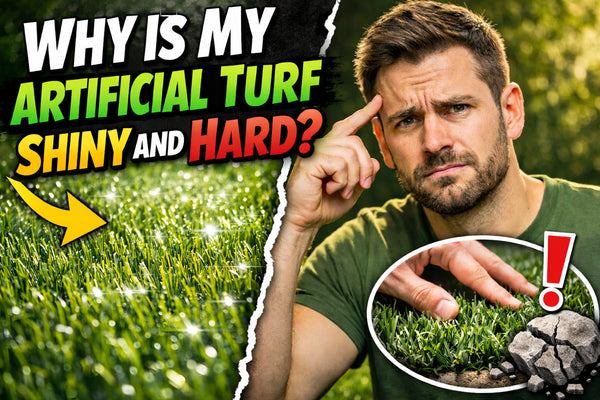
Shiny, stiff, or fused blades
-
Localized damage rather than full-yard discoloration
Many homeowners first notice it weeks or months after installation.

The Question You Must Ask Before Signing
Before choosing a turf installer in Phoenix, ask:
“Have you evaluated my windows and surrounding surfaces for reflection risk?”
Most installers focus on:
-
Base prep
-
Drainage
-
Seam placement
-
Turf selection
Reflection risk isn’t always part of standard installation evaluation.
That doesn’t mean your installer is inexperienced, it just means reflection often falls outside the turf scope unless specifically discussed.
Bringing it up early can prevent costly problems later.
What a Professional Installer Should Assess
A thorough pre-installation evaluation should include:
-
Identifying Low-E windows facing the yard
-
Noting second-story or bay windows
-
Observing glare during peak sun hours
-
Evaluating pool fencing or glass railings
-
Checking proximity of turf to reflective surfaces
If concentrated glare is visible, that area is at risk.
Why Replacing Melted Turf Doesn’t Fix the Problem
Many homeowners assume:
-
The turf was defective
-
The installer made a mistake
-
The product was low quality
But most turf warranties exclude:
-
Thermal distortion
-
Reflection damage
-
Heat-related melting
Replacing the turf without addressing the reflection almost always results in the same pattern returning.
Different turf.
Same window.
Same damage.
How to Prevent Turf Melting in Phoenix
The key is to treat the source of the reflection before or during installation.
Turf Guard Window Film Designed for Turf Protection
Works by:
-
Diffusing reflected sunlight
-
Breaking up concentrated heat beams
-
Reducing peak surface temperatures
-
Preventing destructive hot spots
By scattering the reflection before it leaves the glass, the magnifying-glass effect is eliminated.
Interior tint does not solve this issue. Reflection damage occurs on the exterior surface of the glass.
A Simple Pre-Installation Reflection Test
Before installing turf, try this:
-
Go outside between 1–4 pm.
-
Stand where turf will be installed.
-
Look toward nearby windows.
-
Watch for bright glare or concentrated flashes.
-
Notice where the reflection lands.
If you see a sharp beam of light hitting the ground, that spot could become a melt zone.
Is Artificial Turf Still Worth It in Phoenix?
Yes.
Artificial turf works extremely well in Phoenix when:
-
Quality UV-stabilized products are used
-
Drainage is properly installed
-
Reflection risks are identified early
With the right planning, turf provides:
-
Long-term water savings
-
Clean, low-maintenance landscaping
-
Year-round curb appeal
The Bottom Line
If you’re installing artificial turf in Phoenix, don’t just compare price per square foot. Make sure reflection risk is part of the conversation. Addressing reflective glass before installation can save you thousands in future repairs and prevent repeat melting.
Artificial turf should simplify your landscaping, not create new problems.
Planning ahead ensures your lawn stays green, stable, and long-lasting in Arizona’s desert climate.