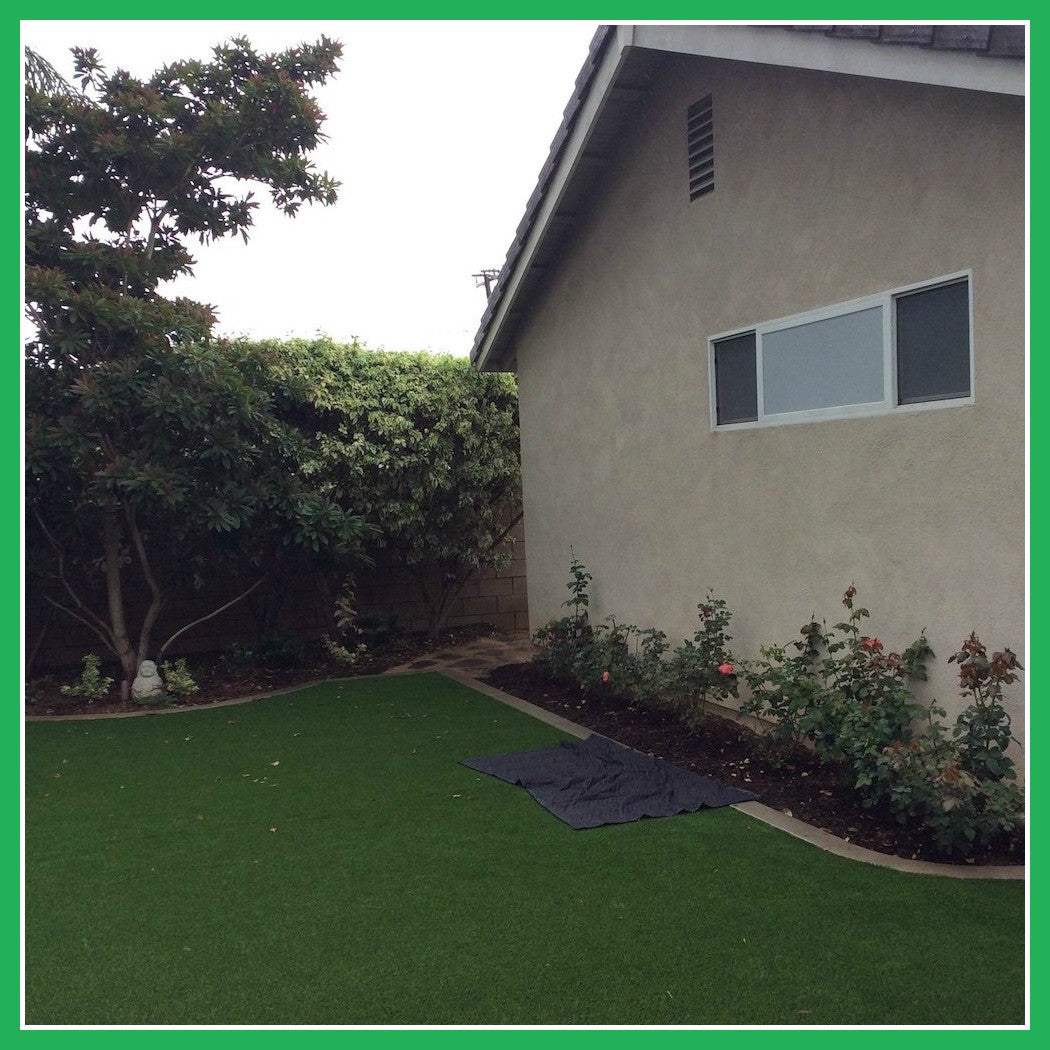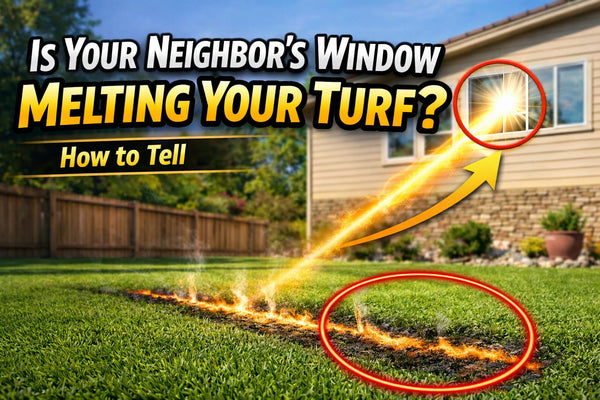
If your artificial turf has strange shapes burned into it, a wavy line, a melted stripe, or a perfect “crop circle,” it’s normal to think something is wrong with the turf itself. But these marks are rarely random. They form because something in the environment is creating a consistent, focused source of heat that hits the same spots in the same way every day.
Most homeowners describe the damage as melted divots, shiny or wilted blades, diagonal lines, or circular rings that appear randomly. The reason the shapes look so specific is simple: turf doesn’t melt evenly. It melts wherever a concentrated beam of sunlight lands.

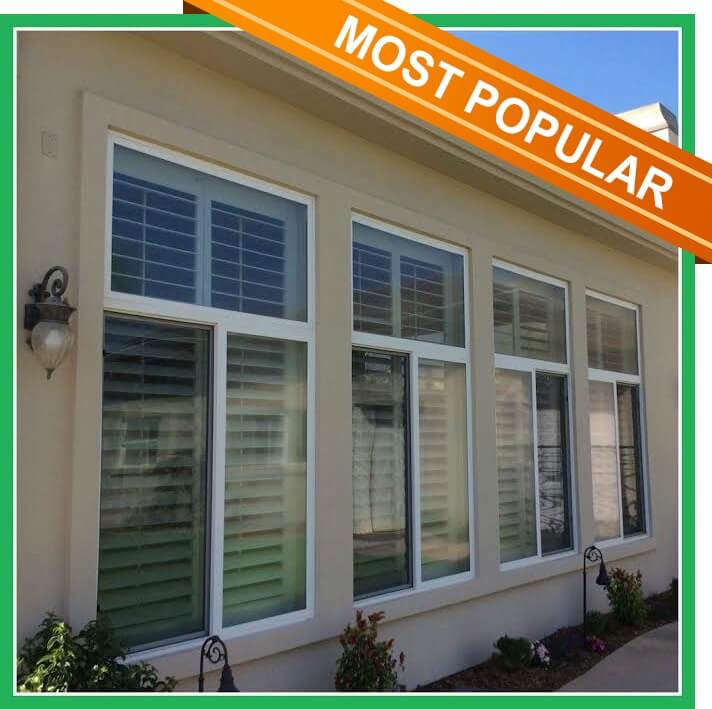
And that concentrated beam almost always comes from a reflective window nearby, most often, Low-E energy-efficient glass. These windows can behave like a magnifying glass, focusing sunlight into a narrow, extremely hot point. As the sun moves across the sky, that focused beam moves too, and the path it takes across your yard creates the exact pattern you see on your turf.
That’s why you may see:
• a single melted stripe
• a curved or wavy line
• an oval or circular burn mark
• a long diagonal path across the lawn
• a small, intensely damaged divot
Each pattern represents the path of the reflection and the type of window creating it.
Each shape is a clue.
Pattern 1: Melted stripes or shiny straight lines in turf
What it looks like:
A straight or slightly curved melted strip, usually a few inches wide, with turf blades that look flattened, shiny, or shrunken.
What it means:
This is classic concentrated reflection from a large window, often a sliding glass door, tall picture window, or long second-story window. The sun hits the glass at a stable angle, creating a linear hot spot that drifts slowly across the turf.
Most common causes:
• South-facing Low-E windows
• Large second-story windows
• Long vertical or bay windows
• Energy-efficient glass creating mirror-like glare
Best fix:
Turf-Guard Window Film

Pattern 2: Crop-circle rings or oval burn spots
What it looks like:
A circular or oval ring where the turf is melted, curled, or wilted. Sometimes appears 10–30 feet away from the window.
What it means:
The window is slightly concave, acting like a bowl-shaped lens. Concave Low-E glass can focus sunlight into a concentrated point, similar to a magnifying glass. This causes extremely high temperatures in a tight circle or oval.
Most common causes:
• Second-story bedroom windows
• Bay or bow windows with curved glass
• Older Low-E glass with visible warping
• East/west windows during summer and winter low sun
Best fix:
Turf-Guard Window Film for second-story windows and first-story widows and door or solar shades for first-story windows and doors.

Pattern 3: Wavy lines or a melted squiggle across the yard
What it looks like:
A rippling, wavy, or zig-zag line that appears across the turf mid-afternoon.
What it means:
You’re seeing reflection from segmented glass, often multi-panel windows or windows with built-in curvature. Each pane slightly shifts the reflection, causing a wavy burn track.
Most common causes:
• Curved bay windows
• Multi-panel second-story windows

Pattern 4: A diagonal melt path running across the yard
What it looks like:
A long diagonal line cutting across the grass. The turf along the line is often shrunken, crispy, or discolored.
What it means:
This is the movement path of the reflected beam as the sun changes position. The window acts like a moving “laser,” sweeping across the lawn hour by hour.
Most common causes:
• Southwest-facing Low-E windows
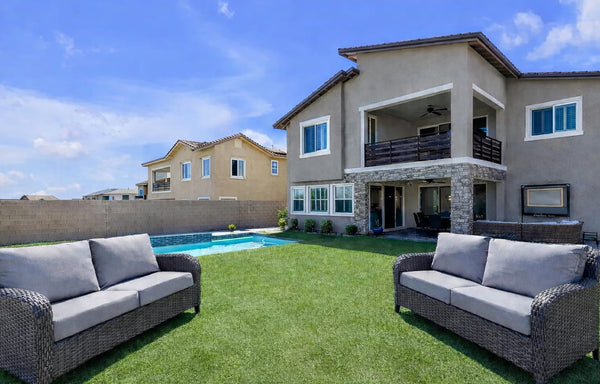
• Second-story windows reflecting into the yard
• Winter low sun creating long-angle reflections
Best fix:
Solar screens for heavy heat exposure or Exterior Turf-Guard Window Film where HOA-restricts solar screens homes.

Pattern 5: Small melted divots or tiny intense spots
What it looks like:
Small circles, just a few inches across where turf has burned or sunk. They often appear suddenly and repeatedly.
What it means:
This is a tightly focused hot spot created by slightly concave or distorted glass. Temperatures in these divots can exceed 200°F, often melting turf, car trim, and pool covers
Most common causes:
• Bowed window panes
• Low-E windows
• Pelican/Impact glass with minor curvature
• East-facing windows in winter mornings
What the patterns reveal about the angle and season:
Each pattern tells you not just which window is causing the problem, but why it happens at certain times. Sun geometry explains everything.
Straight stripes = steady sun angle
Crop circles = concave magnification
Diagonal paths = moving reflection over time
Wavy lines = multi-surface reflections
Divots = tight focal point from bowed glass
Season plays a huge role too:
Winter low sun:
• Creates more intense hot spots
• Causes deeper burn paths
• Hits yards at wide, shallow angles
Summer high sun:
• Hot spots occur closer to the house
• Damage is faster
How to identify the exact window causing your turf burn
- Stand in the melted spot at the hour the damage happens.
- Turn toward your home or the neighbor’s home.
- Look for the window producing the strongest glare or flash.
- Take pictures or video for documentation.
- Repeat at different hours to observe movement.
Final takeaway: Turf burn patterns are symptoms of window reflection. The shape of the burned patch reveals the angle, the window type, and the intensity of the hot spot. Whether it’s a melted stripe, a diagonal path, or a crop-circle ring, the cause is the same: a concentrated reflection from Low-E or concave glass.