Installing artificial turf is supposed to be a long-term upgrade: low maintenance, water savings, clean aesthetics, and durability in extreme heat.
But across Arizona, Nevada, Texas, and California, turf installers are running into a costly problem:
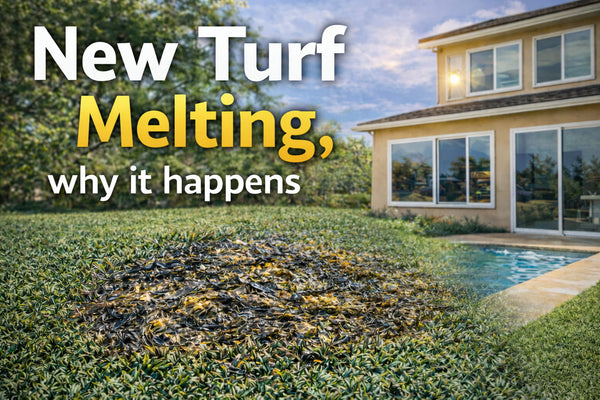
Brand-new turf melting within weeks of installation.
And in many cases, the turf wasn’t defective.
The installation wasn’t wrong.
The base prep was solid.
The real cause?
Window reflection.
If you’re a turf contractor, checking for reflective hot spots before installation isn’t optional anymore, it’s a professional safeguard.

The Problem: Low-E Windows and the “Magnifying Glass” Effect
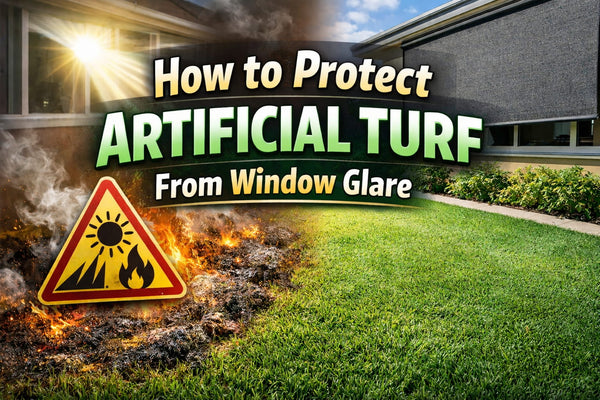
Modern homes are built with Low-E (low emissivity) glass. These windows are designed to reflect solar heat away from the home to improve energy efficiency.
But under the right sun angle, that reflected light can:
-
Concentrate into a narrow beam
-
Act like a magnifying glass
-
Create surface temperatures exceeding 200–250°F
-
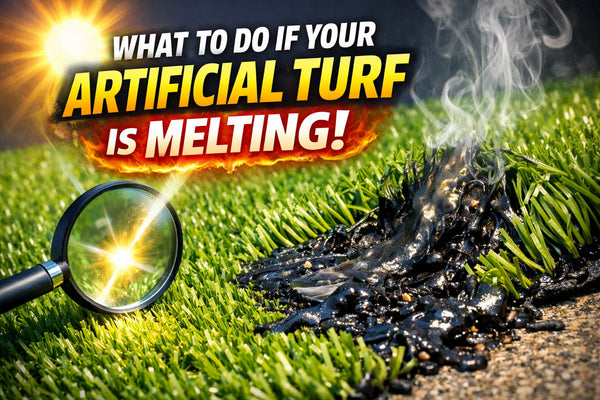
Melt synthetic turf fibers within minutes
The result looks like:
-
Straight melted streaks
-
Circular “crop circle” burn marks
-
Shiny, brittle patches
-
Turf that looks warped or collapsed
The turf didn’t fail.
The reflection created a hot spot strong enough to damage it.

Why This Matters for Turf Installers
1. You Get the Blame First
When turf melts, homeowners don’t immediately suspect their windows.
They call the installer.
Even when the reflection is coming from:
-
The client’s own home
-
A neighbor’s house
-
Glass pool fencing
-
Sliding patio doors
Without prior documentation, you may be drawn into warranty disputes or expensive re-installs.
2. Replacing Turf Without Fixing Reflection Doesn’t Work
Even high-end nylon turf will melt again if concentrated glare remains.
If you replace the turf but don’t address the reflective source:
-
The same pattern returns
-
The client becomes frustrated
-
Your company reputation suffers
The root cause must be handled at the window.
3. It Protects Your Reputation and Margins
A simple pre-installation glare check can:
-
Prevent callbacks
-
Reduce warranty arguments
-
Protect profit margins
-
Position you as an expert, not just an installer
Professional installers are now adding reflection assessments to their site evaluations.
How Turf Installers Can Check for Window Reflection
Step 1: Visit During Peak Sun Hours
Glare typically occurs:
-
Late morning to mid-afternoon
-
During spring and fall angle shifts
-
When sun angles are lower
If possible, inspect between 10am–3pm.
Step 2: Stand Where Turf Will Be Installed
Look toward:
-
The home’s windows
-
Neighboring homes
-
Glass fencing
-
Large sliding doors
If you see a bright, concentrated glare or flashing beam, that’s a red flag.
Step 3: Look for Signs of Existing Damage
Even if turf isn’t installed yet, check for:
-
Burned natural grass
-
Warped vinyl siding
-
Melted patio furniture
-
Faded decking in straight lines
These are clues that concentrated reflection already exists.
What to Do If Reflection Is Present
You don’t have to solve it yourself, but you do need to flag it.
Options include:
-
Turf Guard window film designed to diffuse glare and prevent or stop turf from melting
-
Solar screens
-
Shade structures or awnings
-
Adjusting installation zones
The key principle: If reflection isn’t stopped at the window, turf melting remains a risk.
Many installers now partner with turf protecting window film specialists like Turf Guard Window Film to prevent post-install damage and callbacks.
Add This to Your Pre-Install Checklist
Professional turf companies are updating contracts to include:
-
Reflection inspection acknowledgment
-
Documentation of glare risk
-
Client signature confirming awareness
-
Recommendations for mitigation if needed
This protects both installer and homeowner.
The Cost of Ignoring It
Without checking for window reflection:
-
You risk free replacements
-
You risk negative reviews
-
You risk disputes with builders
-
You risk damaged referral relationships
With one inspection step, you prevent all of it.
The Bottom Line
Artificial turf melting isn’t always about heat.
It’s often about concentrated reflected sunlight.
For turf installers, identifying that risk before installation is now part of doing the job professionally.
Check the windows.
Document the glare.
Educate the client.
Protect your install.
Because once the turf goes down, it’s already too late to pretend reflection wasn’t there.