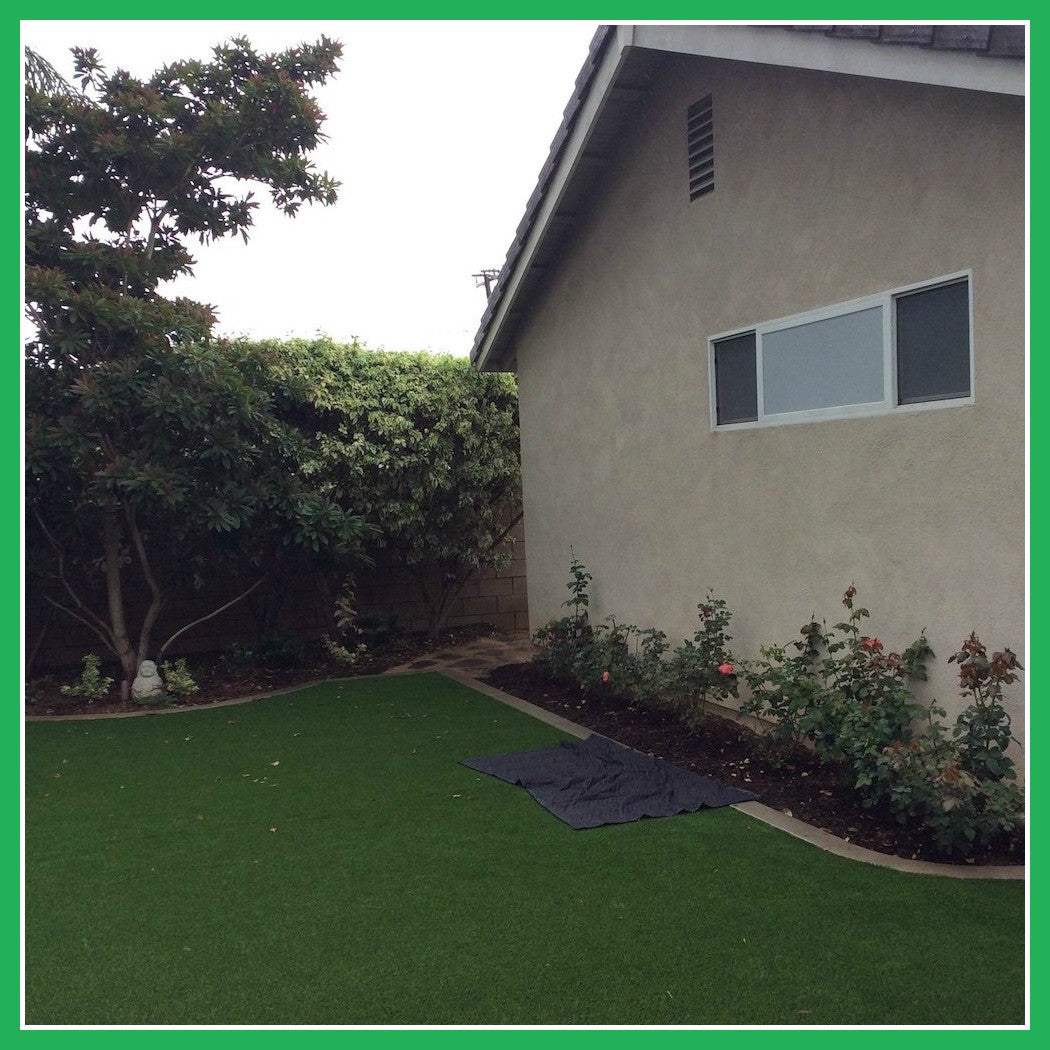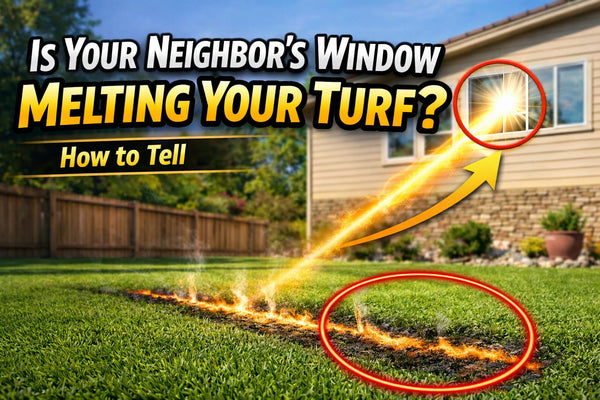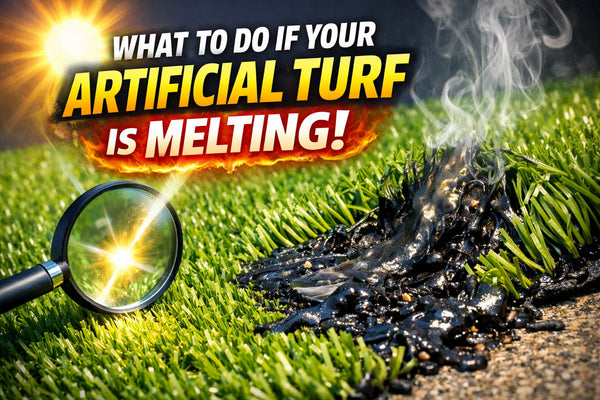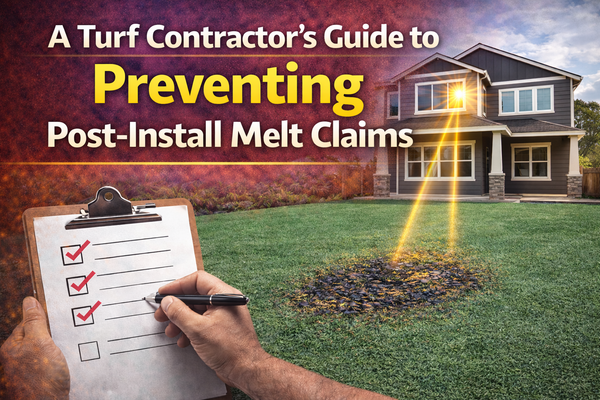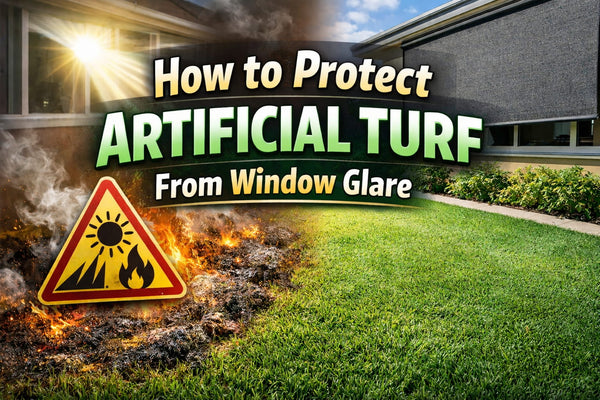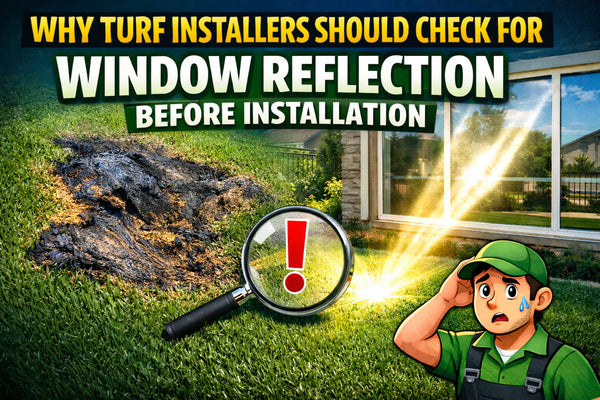
If you’ve walked outside after a sunny day and noticed melted divots, shiny stripes, or a “crop-circle” patch on your synthetic grass, you're not imagining it. Window reflection is melting your artificial turf. This is one of the most common turf-related complaints across sunny cities like Scottsdale, Phoenix, Las Vegas, San Diego, Los Angeles and Dallas.
The good news: there are reliable fixes, and the best ones don’t require replacing your turf, or violating HOA rules.

Why window reflection melts artificial turf
Most homeowners describe the problem the same way:
-
“My turf has melted lines or stripes.”
-
“There’s a crazy hot spot around 2 PM.”
-
“My artificial grass looks sunburned.”
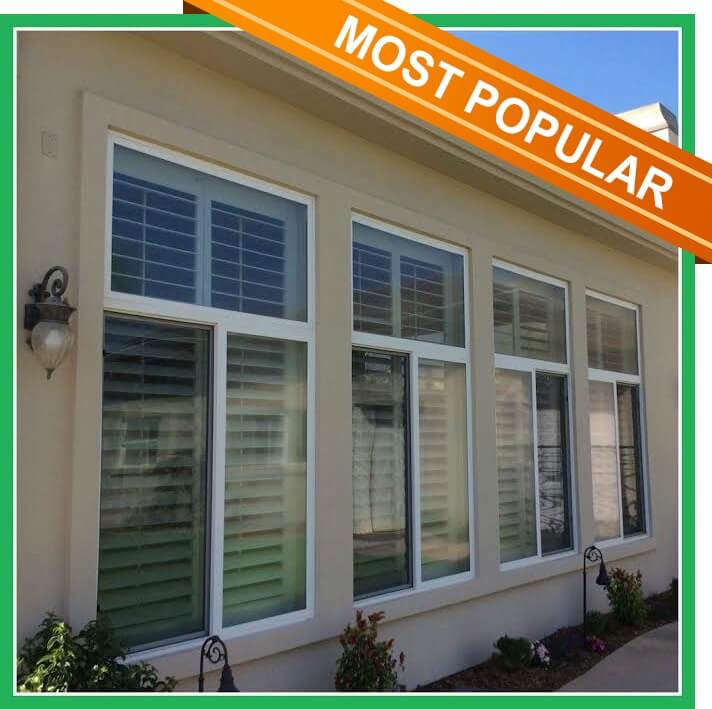
These problems are caused by sunlight bouncing off energy-efficient (Low-E) windows. The coating on these windows can concentrate sunlight like a magnifying glass, raising temperatures on your turf well above 200°F, hot enough to melt turf fibers, car trim, pool covers, patio furniture, and even vinyl siding.

Why the hot spot moves
As the sun shifts throughout the day, the reflected “death ray” pattern moves too. This is why you might see melting only at certain hours.
Why newer homes experience this more
New construction almost always uses Low-E glass, which intensifies reflection—especially from:
-
South- and west-facing windows
-
Second-story windows
-
Bay or angled windows
-
Homes with tight spacing between houses

What actually stops window reflection from melting turf? (The quick answer)
The only reliable, permanent solution is reducing the reflectivity of the window itself.
The most effective fixes include:
-
Turf protecting window film (Turf-Guard Window Film)
- Solar screens (full frames or removable screens)
Other temporary fixes include shade sails, awnings, plants, fencing, or repositioning objects.
Below is a breakdown of each option.
1. Turf Guard Window Film (Best long-term fix)
Turf Guard is a turf protecting film that is engineered specifically to stop window glare from melting turf by:
-
Cutting mirror-like reflection
-
Diffusing sunlight instead of magnifying it
-
Reducing surface temperatures
-
Preventing future hot spots
Why homeowners choose it
-
HOA-friendly
-
Barely visible from the street
-
Works on second-story windows
-
Doesn’t darken indoor rooms
-
Designed for turf and vinyl siding
It’s one of the most popular options when homeowners need a noninvasive, removable, or HOA-approved fix.
Risks to avoid
Do not install interior film for this problem. Interior film can make reflection stronger, worsen hot spots, and in some cases void window warranties.
3. Solar Screens (Effective + good for temperature control)
Great option because they:
-
Effective at stopping turn burn
-
Diffuses sunlight before it ever hits the glass.
-
Can be color-matched to trim
The downside: some HOAs prohibit screens on the street-facing sides of homes.
4. Shade Alternatives (Good temporary fixes)
These do not eliminate the root cause (reflective glass), but they can reduce exposure:
Shade sails / awnings
Block direct hits during the high-heat hours.
Trees, shrubs, hedges
Provide natural barriers, but take years to grow.
Moveable barriers
Trellises, privacy panels, temporary fencing.
5. “Upgrading turf” won’t solve the problem
Many installers try to address complaints by:
-
Replacing turf with “high-heat turf”
-
Using nylon that has a higher melting point
-
Substituting lighter blade colors
While nylon turf can withstand more heat, Low-E hot spots can exceed 200–250°F, which is enough to damage even high-grade synthetic grass.
Upgraded turf may buy time, but it won’t stop recurring damage if the reflective source isn’t fixed.
How to confirm your turf is melting from window reflection
Most homeowners see at least one of these signs:
-
Melted patches that align with a specific window
-
Damage that appears at the same hour each day
-
A “flash” or shimmer on the turf in the afternoon
-
A diagonal or circular melt pattern
-
Melted toys, trash cans, or car mirror caps nearby
A simple test: stand at the melted spot and look toward nearby windows.
If you see a bright glare, that window is the culprit.
Does homeowners insurance cover melted turf?
Often no. Many policies exclude damage caused by:
-
Window reflection
-
“Thermal events”
-
Low-E window distortion
This is why property managers, HOAs, and turf installers prefer preventative window solutions. It’s easier, and far cheaper than replacing turf repeatedly.
HOA won’t allow tint. What are my options?
Great news: Turf Guard Window Film is not considered “tint” in most communities.
If your HOA bans tint but allows:
-
Screens
-
Exterior film
-
Shutters
-
Awnings
You have a solution.
Related problems window film fixes
Turf isn’t the only material that gets damaged:
-
Melted vinyl siding
-
Warped car trim / mirrors
-
Burned pool covers
-
Melted patio furniture
-
Warped trash cans
-
Scorched plants
All of these issues typically share the same cause: intense sun reflection off Low-E glass.
Best overall solution: Treat the reflective window, not the turf
If you want to permanently stop turf burn hot spots, the most reliable route is:
Install Turf Guard Window Film or Solar Screens.
This stops the magnifying-glass effect at the source and prevents the damage from returning, without altering your landscaping or violating HOA rules.
Frequently Asked Questions