Artificial grass is known for being durable, low-maintenance, and long-lasting. But “durable” doesn’t mean indestructible.
Homeowners are often surprised to discover that artificial turf can melt, fade, discolor, or deteriorate when exposed to certain conditions. Understanding what actually damages turf, and how to prevent it, can save you thousands in replacement costs and help your lawn look great for years.
Below are the most common causes of artificial turf damage, how to recognize them, and what you can do to protect your investment.
1. Concentrated Sunlight from Window Reflection
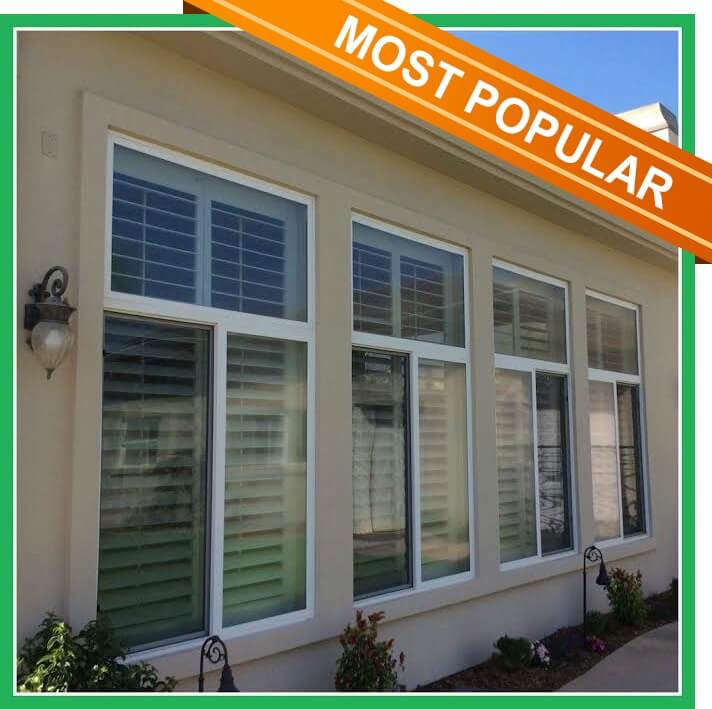
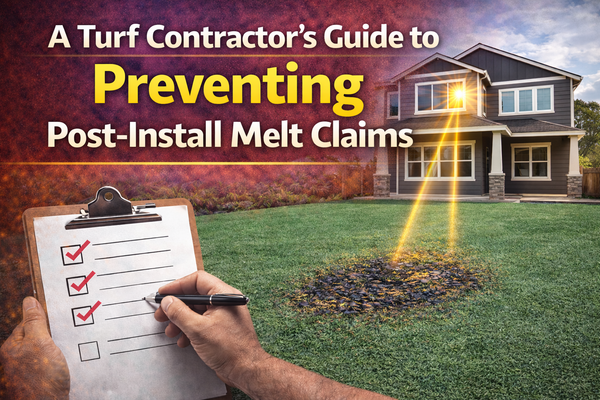
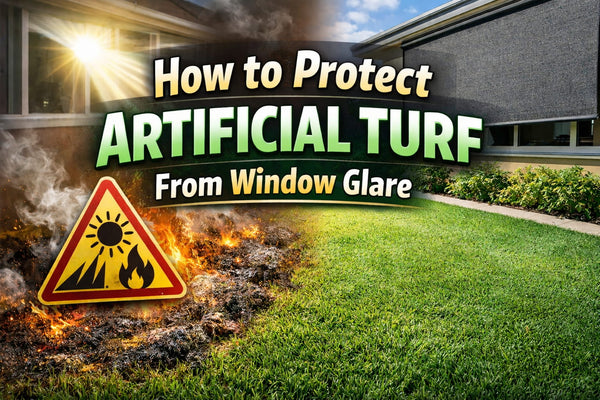
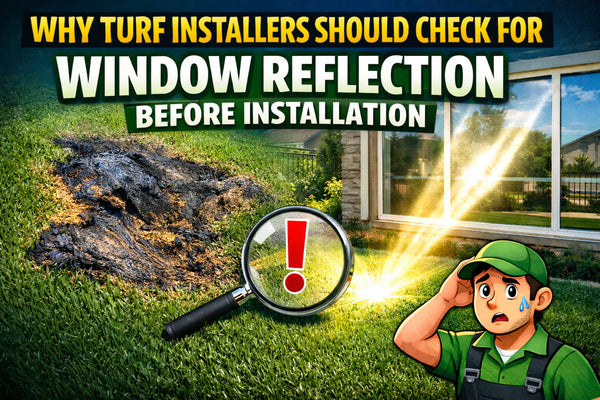
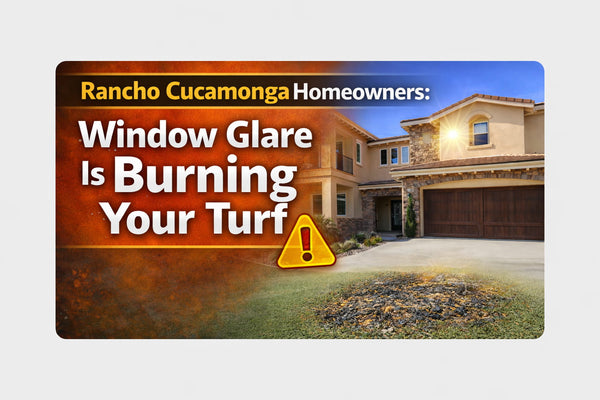
One of the leading causes of artificial turf melting is concentrated sunlight reflected from windows, especially modern Low-E (energy-efficient) glass.
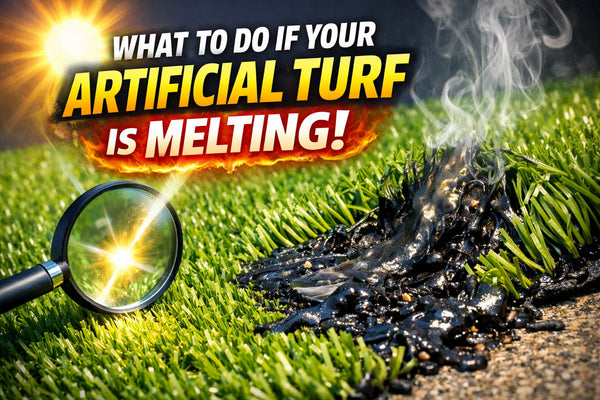
Low-E windows are designed to reflect solar energy. Under the right sun angle, that reflection can focus into a narrow, intense beam that acts like a magnifying glass. When that beam hits turf, surface temperatures can exceed 200–250°F, hot enough to melt fibers and warp the turf backing.
Common Signs of Window Reflection Damage
-
Straight or diagonal melt lines
-
Circular or oval burn spots
-
Shiny, brittle, or collapsed blades
-
Damage appearing at the same time of day
![artificial turf damage]()

How to Prevent It
-
Install Turf Guard window film designed to diffuse reflection from windows
-
Add solar screens or shading devices
-
Identify and treat the specific window causing the reflection
Treating the window, not the turf, is the only permanent solution.

2. Extreme Heat Exposure
Artificial turf naturally gets warmer than natural grass in direct sunlight. Prolonged extreme heat accelerates material aging and can weaken turf fibers over time.
Risk Factors
-
Desert or hot-climate environments
-
Dark-colored turf
-
Areas with little airflow or shade
Prevention Tips
-
Rinse turf during peak heat to lower surface temperature
-
Choose turf with built-in UV stabilizers
-
Provide shade where possible
3. Fire Pits, Grills, and Hot Embers
Artificial turf is not fireproof. Hot embers, charcoal, fireworks, or sparks can melt turf instantly.
Typical Damage
-
Small melted craters
-
Hardened black spots
-
Burned backing material
Prevention Tips
-
Keep grills and fire pits off turf
-
Use fire-resistant mats under grills
-
Never dump hot ashes near turf
4. Fading from UV Radiation
Constant sun exposure slowly breaks down pigments in turf fibers, especially in lower-quality products.
Signs of Fading
-
Washed-out green color
-
Yellow or gray tones
-
Uneven coloration across yard
Prevention Tips
-
Choose UV-stabilized turf
-
Rinse periodically to remove dust buildup
-
Brush fibers upright to restore light reflection
5. Poor Drainage and Standing Water
If water cannot drain properly, it can cause odors, bacterial growth, and backing deterioration.
Causes
-
Improper base installation
-
Compacted sub-base
-
Blocked drainage holes
Prevention Tips
-
Ensure proper base construction
-
Remove debris regularly
-
Address pooling early
6. Heavy Furniture and Constant Weight
Continuous pressure from furniture, planters, or playground equipment can flatten fibers and cause uneven wear.
Typical Damage
-
Matted blades
-
Shiny or crushed areas
-
Visible footprints or depressions
Prevention Tips
-
Rotate furniture periodically
-
Use furniture pads
-
Brush turf regularly
7. Pet Waste Buildup
Pet urine and feces won’t usually damage turf structurally, but residue buildup can cause odors and discoloration.
Prevention Tips
-
Rinse pet areas weekly
-
Use enzyme-based turf cleaners
-
Choose turf with proper drainage layers
8. Harsh Chemicals and Cleaners
Bleach, degreasers, and petroleum-based products can strip protective coatings and degrade fibers.
Safer Options
-
Water
-
Mild soap
-
Enzyme cleaners
9. Low-Quality Turf Materials
Not all artificial grass is manufactured the same.
Lower-grade turf often:
-
Fades faster
-
Flattens sooner
-
Has weaker backing
-
Shorter lifespan
Investing in quality turf dramatically reduces long-term problems.
Why Replacing Turf Alone Often Fails
When turf melts or discolors from window reflection, replacing the grass without addressing the reflection will almost always result in the same damage again.
Most turf warranties exclude:
-
Thermal distortion
-
Reflection damage
-
Heat-related melting
The root cause must be solved.
Artificial Turf Protection Checklist
✔ Choose UV-stabilized turf
✔ Rinse periodically
✔ Brush fibers upright
✔ Keep heat sources away
✔ Watch for window reflection hot spots
✔ Treat reflective windows with Turf Guard window film
Final Thoughts
Artificial turf is durable, but it’s not immune to damage. The biggest threats, window reflection, extreme heat, fire sources, and low-quality materials, are all preventable with the right planning and protection.
Understanding what damages turf allows you to protect your lawn, avoid repeat failures, and extend the life of your investment for many years.