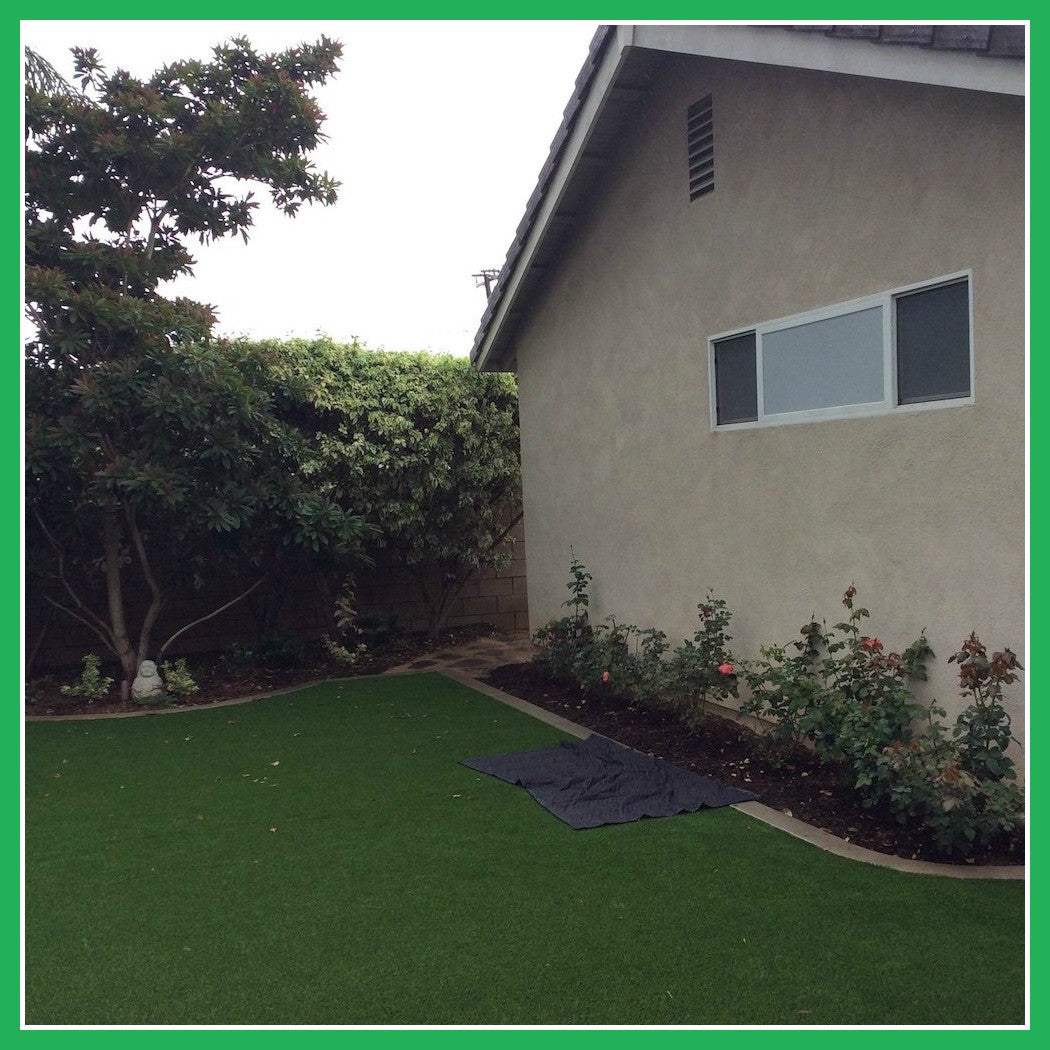
Artificial turf has become a popular landscaping solution in Scottsdale due to extreme heat, limited rainfall, and water conservation priorities. But many homeowners are caught off guard when brand-new turf begins to shrink, discolor, or melt, often in strange lines or hot spots.
In most of these cases, the turf isn’t defective. The real issue is window reflection and other reflective surfaces interacting with Scottsdale’s intense sun.
Understanding how this works can help you prevent damage before it happens, or stop it from getting worse.

Why Window Reflection Is a Bigger Issue in Scottsdale
Scottsdale homes are uniquely prone to reflection-related turf damage because of a few overlapping factors:
-
Intense desert sunlight year-round
-
Low sun angles in winter, which increase reflection distance
-
Large modern windows, especially second-story and picture windows
-
Widespread use of energy-efficient Low-E glass
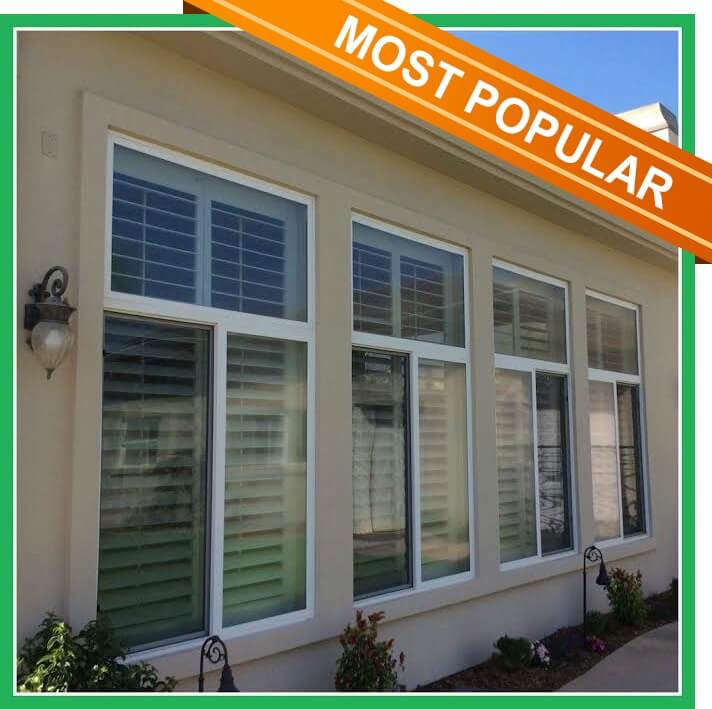
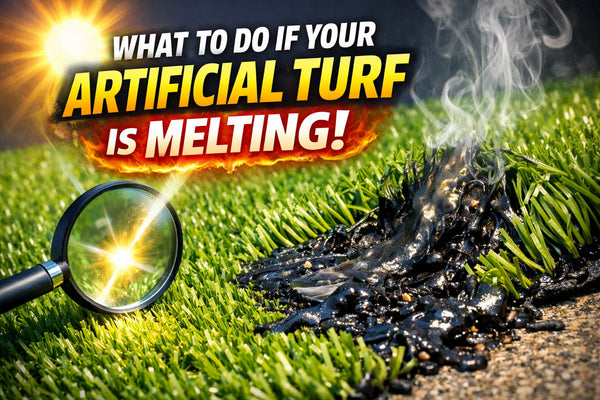
Low-E windows are designed to reflect heat away from the home. That’s great for indoor comfort, but outdoors, that same reflective coating can behave like a magnifying glass, concentrating sunlight into a powerful beam.
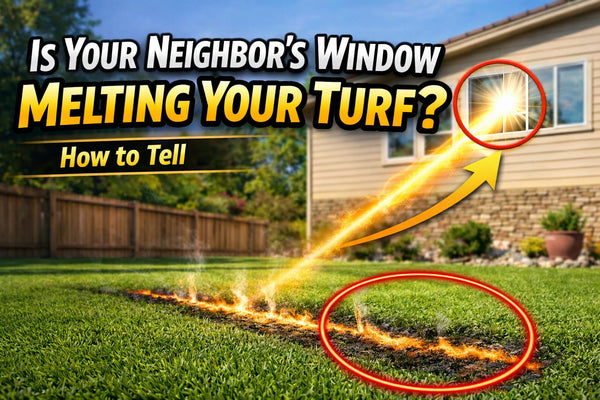
When that beam hits artificial turf, temperatures can exceed 200–250°F, which is hot enough to melt turf fibers, backing, and infill.
What Reflection Damage Looks Like on Turf
Unlike general heat stress, reflection damage is very specific and patterned. Homeowners in Scottsdale commonly report:
-
Straight melted lines across the lawn
-
Diagonal burn paths that appear at the same time each day
-
Circular or oval “crop-circle” spots
-
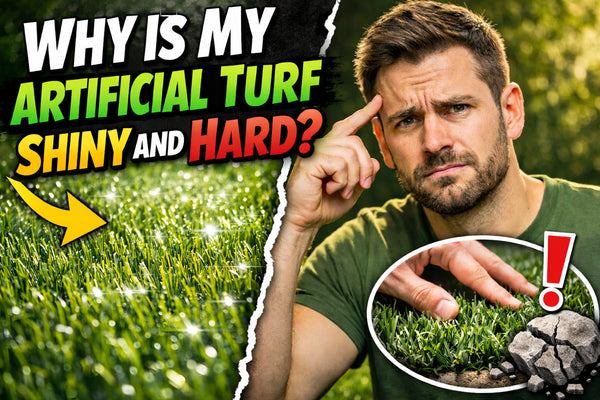
Small, intense divots where turf looks shiny or wilted
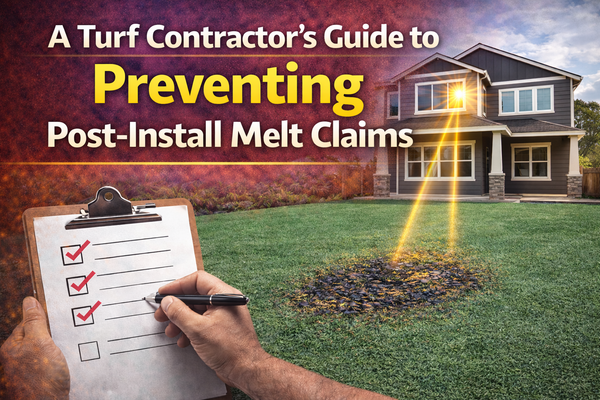
These patterns aren’t random, they map the path of the reflected sunlight as the sun moves across the sky.
Why the Damage Appears at Certain Times of Day
Many homeowners notice turf damage occurring only around 1–3 PM or another consistent window of time.
That’s because reflection depends on sun angle, not just temperature.
-
When the sun aligns with a reflective surface at the right angle, a hot spot forms
-
As the sun shifts, the beam moves, and so does the damage
-
Seasonal changes mean the problem can appear months after installation
This explains why turf can suddenly start melting.
Second-Story and Bay Windows Are Common Culprits
In Scottsdale, the most problematic windows tend to be:
-
Second-story windows
-
Bay or angled windows
-
Large panes of Low-E glass facing south or west
These windows capture more sky and sunlight, allowing reflections to project 10–30 feet or more into a yard. That’s why damage often appears far from the house, sometimes even closer to the middle of the lawn.
It’s Not Always Your Window
One of the most surprising discoveries for homeowners is that the damaging reflection may come from a neighbor’s home.
Because of lot spacing and elevation differences, a neighbor’s second-story window can reflect sunlight directly into your yard, even if the sun appears to be “in front” of their house.
This is especially common in tightly spaced Scottsdale neighborhoods.
Other Reflective Surfaces That Can Contribute
While windows are the most common cause, other reflective materials can worsen turf damage, including:
-
Glass pool fences
-
Stucco walls with smooth finishes
-
Metal patio panels
-
Light-colored stone or tile
When combined with windows, these surfaces can intensify or redirect heat toward turf.
Why Replacing Turf Doesn’t Fix the Problem
A common response is to replace damaged turf with “higher-quality” or nylon grass. Unfortunately, this rarely works.
Even premium turf materials cannot withstand repeated exposure to concentrated heat above 200°F. If the reflection isn’t addressed, the new turf will melt again, often in the exact same pattern.
This is why most turf warranties exclude damage caused by thermal distortion or window reflection.
How Scottsdale Homeowners Can Prevent Reflection Damage
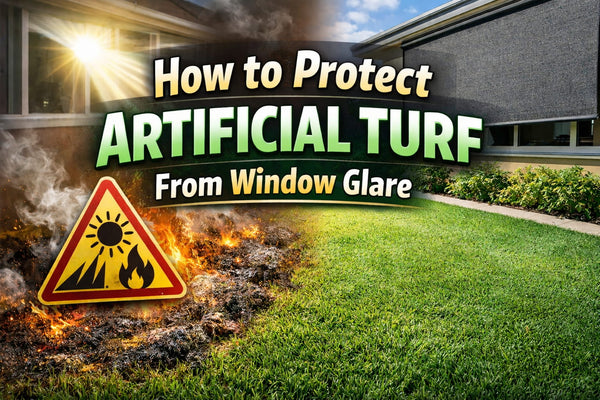
The key principle is simple: Treat the reflection at the source, the window, not the turf.
Effective prevention options include:
-
Exterior turf-safe window film, which diffuses glare and breaks up concentrated beams
-
Solar screens, which absorb and block sunlight before it hits the glass
-
Shade solutions like awnings, sails, pergolas, or shutters
-
Strategic landscaping to interrupt the sun’s path
These solutions prevent hot spots from forming in the first place, protecting turf and other outdoor surfaces.
How to Identify the Window Causing the Problem
A simple diagnostic method used by installers and inspectors:
-
Go outside at the time damage usually appears
-
Stand in the damaged area
-
Look toward nearby homes and windows
-
Identify the window producing the brightest glare or flash
That window is creating the hot spot.
Final Takeaway
In Scottsdale’s desert climate, artificial turf and reflective surfaces interact in powerful ways. Windows designed to improve energy efficiency indoors can unintentionally cause serious damage outdoors when sunlight is concentrated and redirected.
Understanding how windows, sun angle, and reflective materials affect turf is the difference between a lawn that lasts, and one that keeps failing.
With proper planning and the right preventative solutions, artificial turf can still be a successful, long-term choice in Scottsdale.