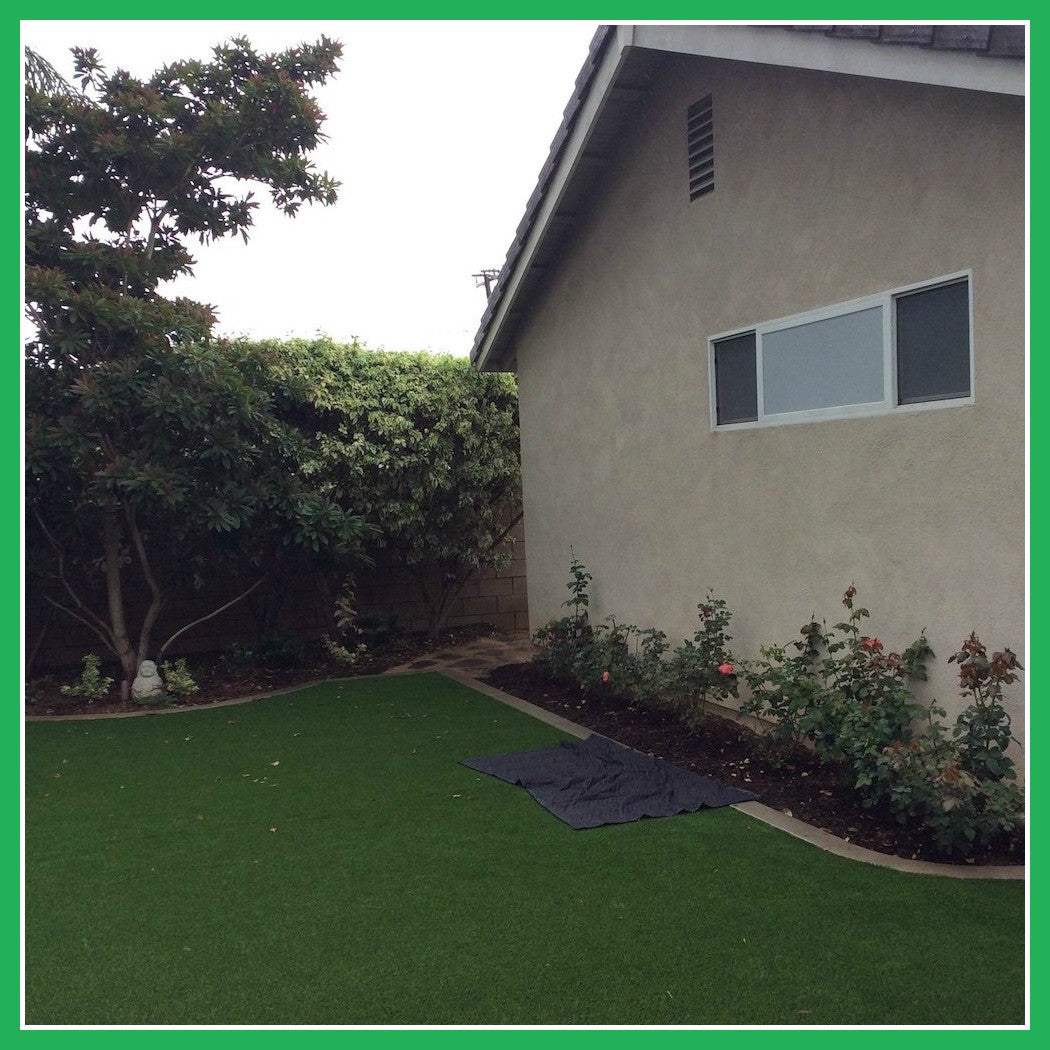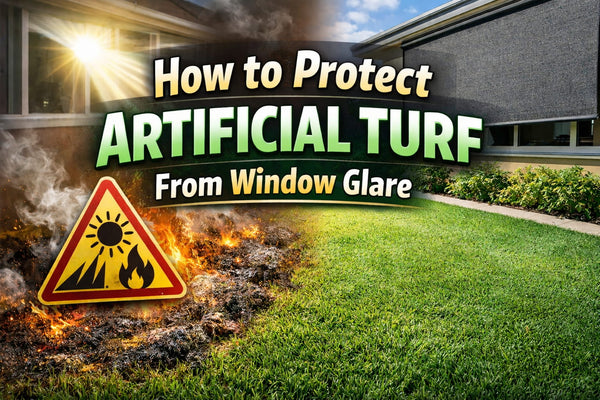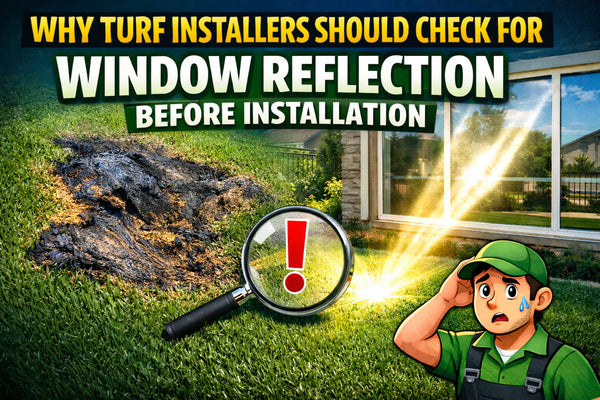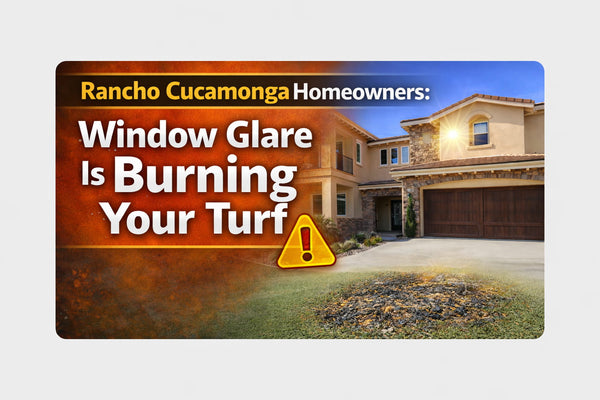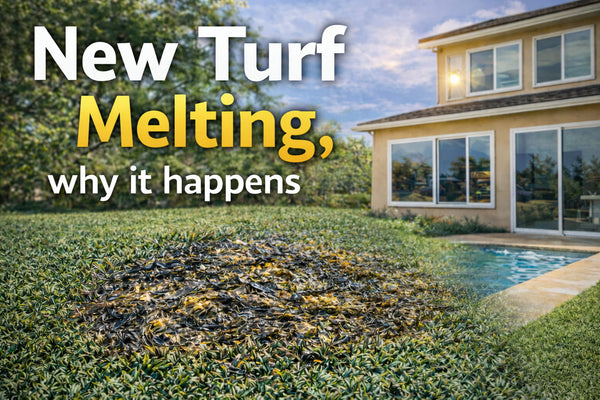
Artificial grass is designed to handle extreme outdoor heat. So when homeowners discover sections of their turf warped, curled, or melted, the first assumption is usually: “It must be the sun.”

In reality, the sun alone does not melt artificial grass.
Artificial turf melting is caused by concentrated reflected heat, most often from energy-efficient windows. This guide explains:
-
What actually causes artificial turf to melt
-
Why certain homes are more at risk
-
How to identify the exact source
-
Which solutions work temporarily vs. permanently
If you’re seeing burned or distorted turf, this article will help you stop the damage at its source.
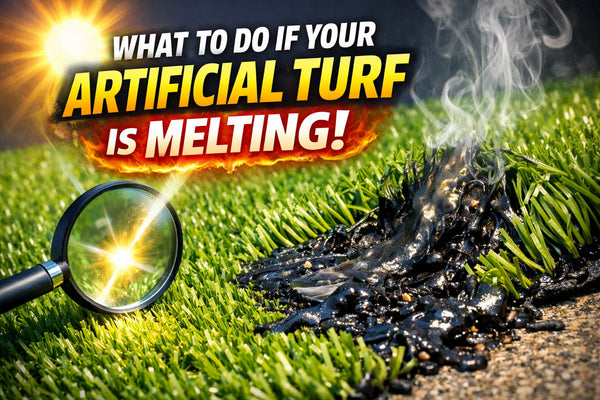
What Does Artificial Turf Melting Look Like?
Melted artificial grass typically appears as:
-
Shiny, hardened, or glossy blades
-
Fibers that curl, shrink, or fuse together
-
Irregular burn patches or straight-line scorch patterns
-
Localized damage in specific zones rather than across the whole lawn
These patterns are an important clue: localized melting means concentrated heat, not ambient temperature.

At What Temperature Does Artificial Grass Melt?
Most polyethylene turf fibers begin to soften and deform between 175°F and 200°F.
On a hot day, surface temperatures of turf may feel warm, but they rarely reach those levels on their own.
However, reflected solar energy can easily exceed these thresholds, creating laser-like hot spots capable of melting synthetic fibers within minutes.
The #1 Cause of Artificial Turf Melting: Window Reflection
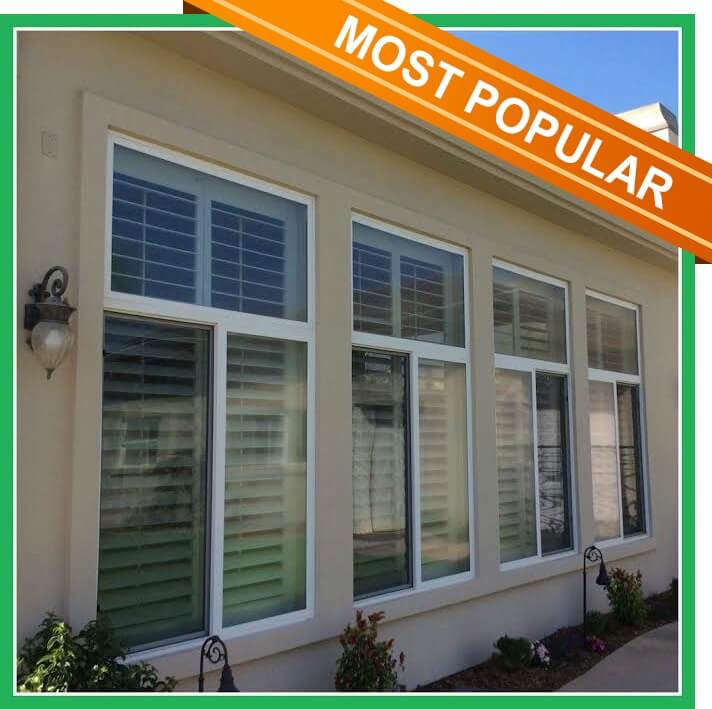
Modern homes commonly use Low-E (low-emissivity) glass to improve energy efficiency.
Low-E coatings reflect infrared heat back toward its source. While this improves indoor comfort, it can unintentionally turn windows into powerful reflectors.
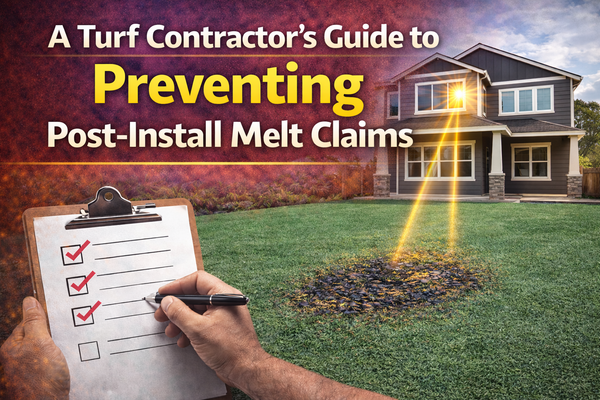
When sunlight hits these windows:
-
Heat is reflected outward
-
The curved or flat glass focuses that energy
-
The light concentrates into a tight beam
-
The beam lands on nearby surfaces such as turf
The result is a magnifying-glass effect that generates extreme heat in a small area.
This concentrated reflection, not the sun itself, is what melts artificial grass.

Other Surfaces That Can Contribute to Turf Burn
While windows are the most common cause, other reflective materials can intensify heat:
-
Vinyl siding
-
Polished or white fencing
-
Metal gutters or flashing
-
Pool glass railings
-
Sliding doors and patio doors
Any smooth, reflective surface can bounce sunlight toward your turf and create damaging hot spots.
Why Only Certain Areas Melt
If high outdoor temperatures were the cause, your entire lawn would show damage.
Instead, turf melting almost always appears:
-
In specific zones
-
At certain times of day
-
Along straight or curved reflection lines
This confirms the problem is directional reflected heat, not overall climate.

How to Find the Exact Source of the Reflection
Use this simple method:
-
Stand outside during peak sun hours
-
Observe where sunlight reflects from windows or shiny surfaces
-
Watch where that reflection lands on the ground
-
Check if it aligns with damaged turf
You’ll often see a bright glare point aimed directly at the affected area.

Temporary Ways to Reduce Turf Melting
These methods may lower heat exposure but do not eliminate the root cause:
-
Covering turf with towels or sheets
-
Adding shading to stop the reflection from reaching the turf
While helpful, these solutions are temporary.

The Permanent Solution: Turf Guard Window Film
The only way to permanently stop turf melting is to interrupt the reflection at its source.
Turf Guard is a specialized exterior window films designed for turf protection:
-
Diffuses and scatters reflected sunlight
-
Reduces concentrated heat beams
-
Maintains natural light indoors
-
Preserve energy efficiency
By neutralizing reflection before it leaves the glass, the film prevents hot spots from ever forming.
This protects:
-
Artificial grass
-
Decking
-
Fencing
-
Outdoor furniture
-
Siding
Most importantly, it prevents repeat damage after turf replacement.
Why Replacing Turf Alone Does Not Fix the Problem
If you replace melted grass without addressing the reflection:
-
New turf will melt again
-
The damage pattern will repeat
-
You’ll incur ongoing repair costs
Stopping reflection first is essential before installing new artificial grass.
Can Interior Window Film Work?
No.
Interior films do not control exterior reflected solar energy. The heat reflection occurs on the outer surface of the glass.
For turf protection, film must be:
-
Installed on the exterior side
-
Designed specifically to reduce reflection intensity
Frequently Asked Questions
Does artificial turf melt from heat alone?
No. Turf is engineered to withstand high outdoor temperatures. Melting occurs when heat is concentrated by reflected sunlight.
Will shade alone stop turf burn?
Shade can reduce exposure, but shifting sun angles often create new hot spots. It is not a guaranteed permanent fix.
Can HOA rules restrict window film?
Turf Guard window film is nearly invisible and compliant with most HOA's, but guidelines should always be checked.
Final Takeaway
Artificial turf melting is not a turf defect. It’s a reflection problem.
Once reflected heat is neutralized at the window, artificial grass performs exactly as intended, durable, stable, and long-lasting.