Installing artificial turf is supposed to be the end of lawn problems, no mowing, no watering, no brown patches.
But there’s one issue that surprises thousands of homeowners after installation:
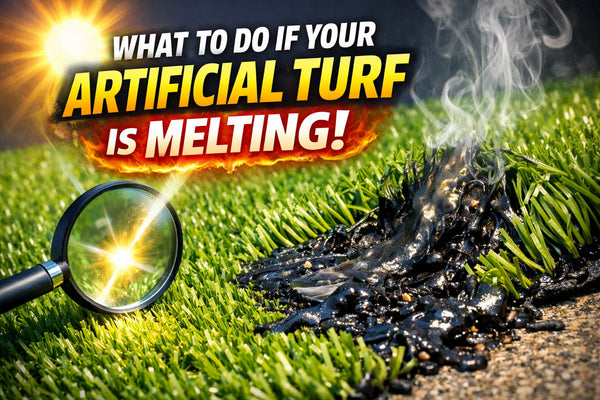
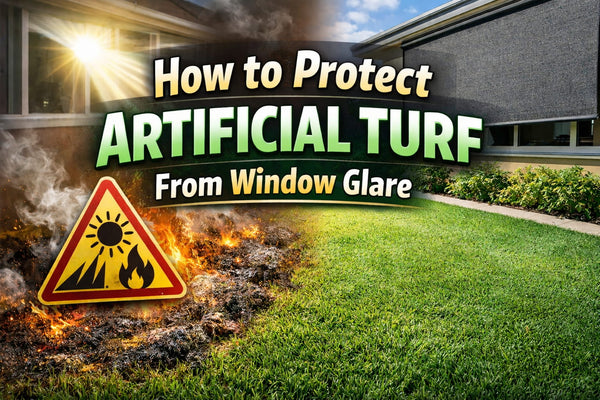
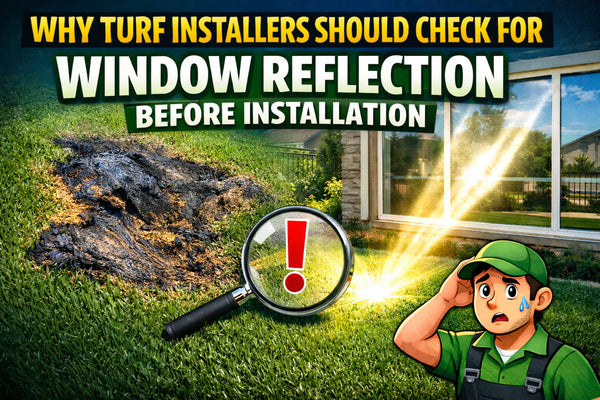
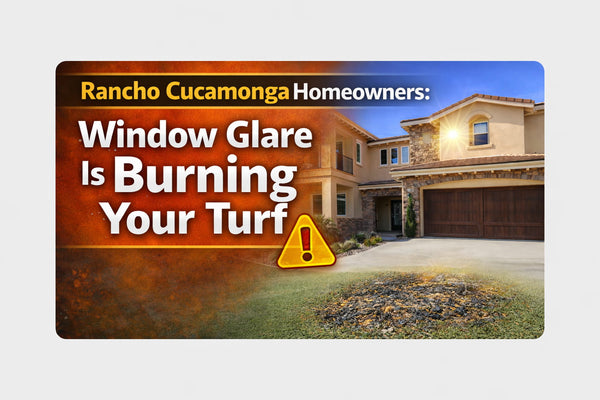
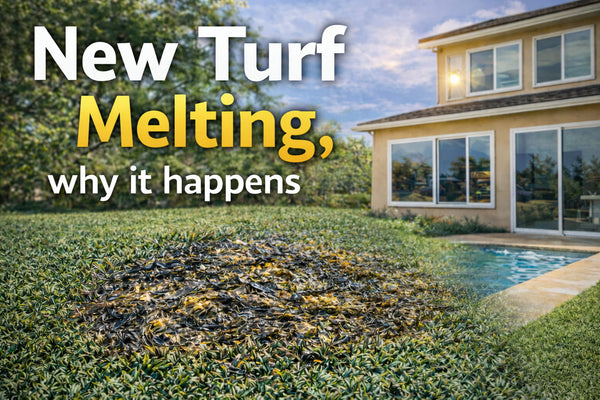
Artificial turf melting from window reflection.

If you’re planning to install synthetic grass, this is the conversation you need to have before the turf goes down. Because once turf melts, replacing it without fixing the cause will only lead to the same damage again.
Why Window Reflection Matters Before Turf Installation
Artificial turf is designed to withstand high outdoor temperatures. Normal sunlight alone does not melt turf.
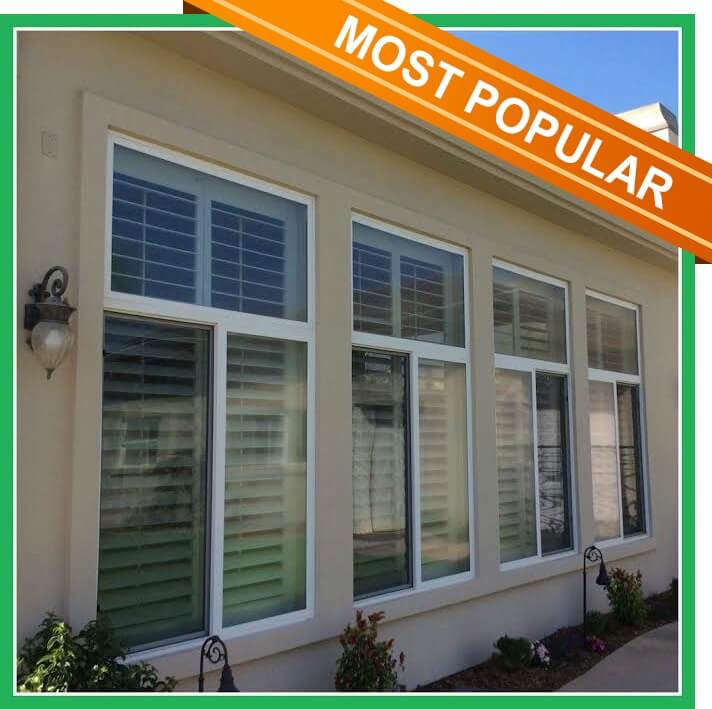
What does cause melting is concentrated reflected heat, most commonly from modern energy-efficient windows. Many homes today have Low-E (low emissivity) glass. These windows are designed to reflect heat away from the home to improve energy efficiency.
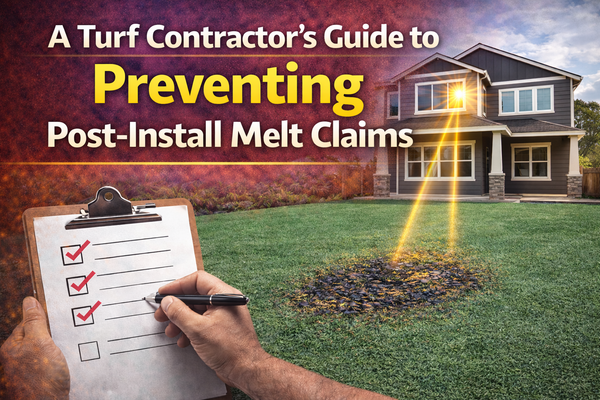
Under the right sun angle, that reflected sunlight can:
-
Concentrate into a narrow beam
-
Act like a magnifying glass
-
Create surface temperatures exceeding 200–250°F
When that focused beam lands on artificial grass, it can:
-
Melt turf fibers
-
Warp the backing
-
Create straight or diagonal melt lines
-
Cause shiny, brittle, collapsed blades
This damage often appears days, weeks, or months after installation, leaving homeowners confused and frustrated.

The Question Most Homeowners Don't Know to Ask
Before signing a turf contract, ask your installer:
“Have you evaluated my windows for reflection that could damage the turf?”
Many installers focus primarily on the turf product, base preparation, and drainage. Reflection risk isn’t always included in that standard scope of work, so it can unintentionally go unaddressed during the planning process.
Window reflection damage isn’t uncommon, it’s just not always discussed during the planning phase.
Bringing it up early ensures everyone is aligned and helps prevent issues before your turf is installed.

Homes Most at Risk for Turf Melting
You should be especially cautious if your property has:
-
Low-E or energy-efficient windows
-
Large sliding glass doors
-
Bay or angled windows
-
Second-story windows facing the yard
-
Pool glass fencing or railings
-
Light-colored concrete or pavers near turf
Second-story windows are particularly problematic because reflection can project 10–30 feet into the yard.
What a Professional Turf Installer Should Check
A knowledgeable installer should:
-
Identify reflective glass surfaces
-
Look for previous melting signs on fences or siding
-
Discuss potential hot spot zones
-
Recommend preventative solutions if needed
If reflection is not discussed at all, it may not have been evaluated.
Why Replacing Melted Turf Doesn’t Work
Many homeowners assume melted turf means:
-
Poor turf quality
-
Faulty installation
-
Manufacturer defect
But most turf warranties exclude:
-
Thermal distortion
-
Window reflection damage
-
Heat-related melting
Replacing turf without addressing the window reflection almost always results in repeat damage, in the exact same pattern.
How to Prevent Turf Melting Before Installation
The key is to treat the glass before the turf is installed.
Turf Guard Window Film is Designed for Turf Protection
It works by:
-
Diffusing reflected sunlight
-
Breaking up concentrated heat beams
-
Reducing peak surface temperatures
-
Preventing destructive hot spots
By scattering the reflection before it leaves the glass, the film eliminates the magnifying-glass effect.
This protects:
-
Artificial grass
-
Vinyl fencing
-
Siding
-
Decking
-
Outdoor furniture
Most importantly, it protects your investment before problems start.
Why Interior Window Tint Is Not the Solution
Interior film controls heat entering your home.
Turf melting happens from reflected heat leaving the exterior surface of the glass.
Interior films do not solve the problem, and in some cases can increase reflection intensity.
For turf protection, exterior treatment is essential.
A Simple Pre-Installation Reflection Check
Before installing turf, try this:
-
Stand in your yard during peak sun hours.
-
Look at nearby windows.
-
Watch for intense glare or bright reflection.
-
See where that reflection lands on the ground.
If you notice concentrated light in a specific area, that spot could become a turf melt zone.

The Bottom Line
Artificial turf melting is not a turf defect. It’s a reflection issue.
Asking your installer about window reflection before installation can save you thousands in future repairs and replacements.
If reflective glass is present, addressing it first ensures your artificial grass performs exactly as intended, clean, green, and long-lasting.