If you’ve found melted lines, divots, shrunken blades, or strange diagonal stripes in your artificial grass, you’re not alone. Turf melting is a growing issue for homeowners, HOAs, and turf installers, especially in sunny climates like Las Vegas, Phoenix, Dallas, Albuquerque, and Palm Springs. Most people assume turf melts because it’s hot outside, but the real causes are more specific (and often surprising).
The most common cause of turf burn is sun glare off windows, but there are other sources of extreme heat that can damage synthetic grass. This guide explains all the main reasons artificial turf melts, and the best ways to fix each one permanently.

The #1 Cause of Turf Melting: Window Reflection from Low-E Glass
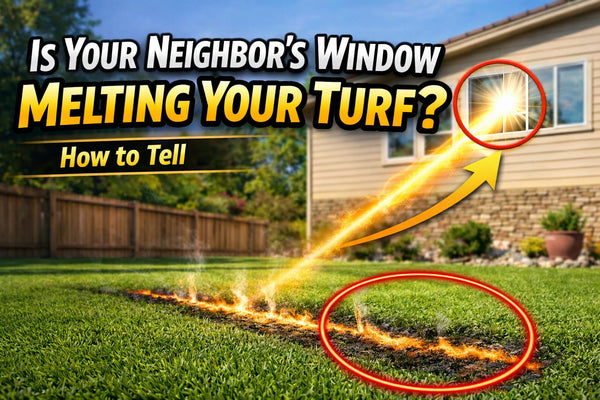
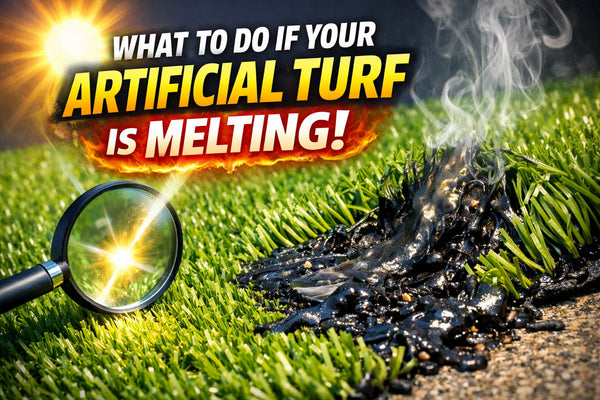
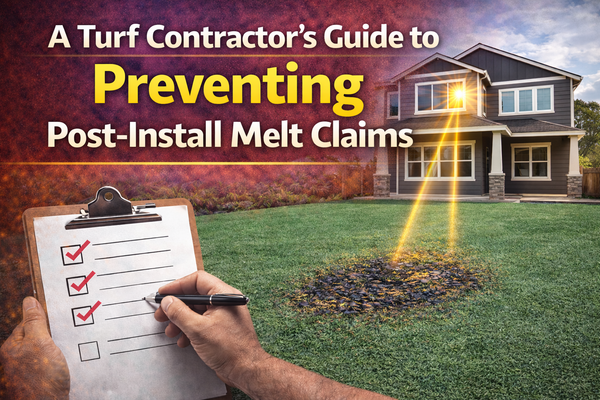
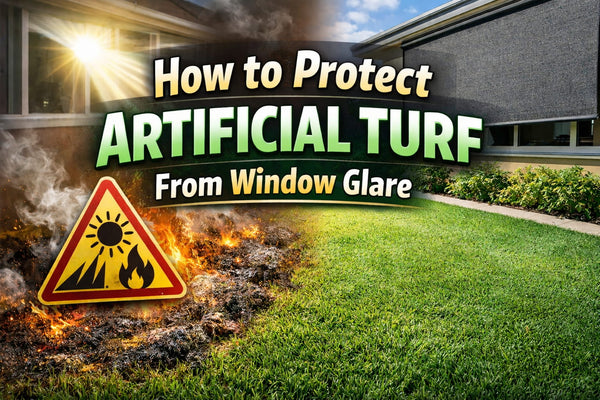
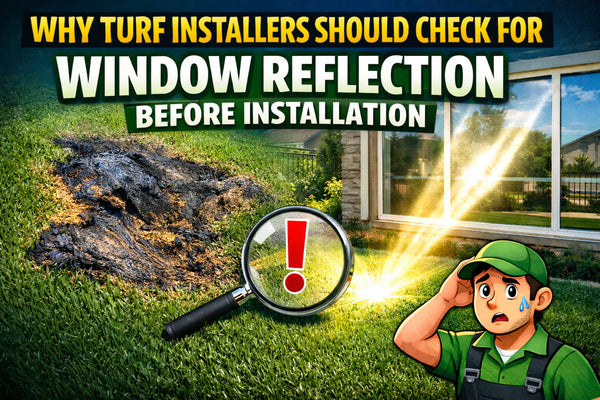
The most common reason artificial grass melts is sun glare bouncing off energy-efficient windows. Low-E windows are designed to reflect heat, but under certain angles they can act like a magnifying glass, concentrating sunlight into a hot, laser-like beam. These hot spots regularly reach well above 200°F, which is hot enough to melt turf backing, curl blades, and leave diagonal melt paths across your lawn.

Signs window reflection is the cause:
• Melted stripes
• A bright shimmer or flash on the ground
• Turf only melts in one specific path
• Neighbor’s windows line up with the hot spot
Reason #2: Reflections From Neighbors windows
Many homeowners are surprised to learn their turf melt is caused by something they don’t even own, especially a neighbor’s window. Second-story windows from nearby homes often create a concentrated “death ray” beam that crosses property lines.
The Fix:
If a neighbor’s window is causing the glare, Turf-Guard window film is usually the easiest solution. It doesn’t change the look of their home and stops the beam instantly.

Reason #3: Fire Pits, Solo Stoves, Grills, and Other High-Heat Items
Artificial turf can’t withstand direct radiant heat from:
• Solo Stoves
• Wood-burning fire pits
• Gas fire bowls
• Smokers
• Charcoal grills
• Heat lamps
This type of heat can cause melting, discoloration, or even burn holes in the turf.
Signs heat sources, not reflection, are the cause:
• Damage is close to the heat source
• Turf blades look charred or wilted, not just melted
• Melted area is circular, not in a straight diagonal path
The Fix:
• Use a fireproof turf mat under grills or Solo Stoves
• Move heat sources onto concrete or pavers
• Add a heat barrier like a stand or stone pad
But if your turf is melting far away from the firepit, reflection, not heat, is the real issue.
Reason #4: Low-Quality Turf With a Lower Melting Point
Not all turf is created equal. Lower-quality grasses can melt more easily, especially those made from polypropylene or polyethylene with lower heat tolerance.
Sign this may be an issue:
• Melting appears across large areas, not in a narrow path
• Turf softens or warps even without direct reflection
However, even the best, highest-melting-point nylon turf cannot survive a concentrated Low-E window reflection or heat from grills and stoves.
The Fix:
fix the damaged turf areas and install exterior Turf-Guard window film to prevent future melt. Otherwise, new turf will melt again in the same spot.
How to Diagnose What’s Melting Your Turf (Simple 10-Minute Test)
Homeowners often want to know the cause before fixing the problem. Here’s a quick way to diagnose turf melt:
-
Look for a shimmer or bright glare on the turf between 9:30 AM and 3 PM.
-
Check if the melt line aligns with a specific window or angle.
-
Notice if the damage forms a diagonal path, classic window reflection.
-
Check photos or security footage on sunny days for moving hot spots.
-
Stand where the melt occurs and look back toward the home or neighbor.
If you see glare, it’s almost always the cause.

The Most Reliable Way to Stop Artificial Turf From Melting
No matter the source, the solution usually comes down to:
1. Stop the reflection at the window using:
• Exterior Turf-Guard window film
• Awning
• Solar screens
2. Repair the turf, if needed.
Patching is possible, but matching turf can be difficult. Preventing future melting is the real priority.
FAQs About Turf Melting and Reflection Damage
Why is my artificial turf melting only at certain times of day?
Because the sun’s angle changes throughout the day. As the sun reflects off Low-E windows, the hot spot moves across your yard, often hitting the turf between 10 AM and 2 PM.
Can a neighbor’s window really melt my turf?
Yes. Neighboring Low-E windows are one of the top causes of turf burn. An exterior turf protection film on their glass is the most effective fix and often HOA-friendly.
Is melted turf covered by homeowners insurance?
Usually not. Reflection-related melt is considered a maintenance issue, and most turf warranties also exclude thermal distortion.
Will solar screens stop turf burn?
Yes. Solar screens reduce reflective heat before it hits the turf. When screens aren’t allowed, exterior turf-protection film is the best alternative.
What if my turf melted near a fire pit or grill?
Radiant heat, not reflection, is the likely cause. Move the heat source to hardscape and use heat-resistant mats going forward.
Protect Your Turf Before More Damage Occurs
If you’re seeing melted spots, stripes, or hot spots on your lawn, the first step is stopping the reflection that’s causing the damage. Once the window glare is diffused, your turf, and surrounding materials, stay safe.
Explore turf-protection film options here: /solutions/turf-protection-window-film