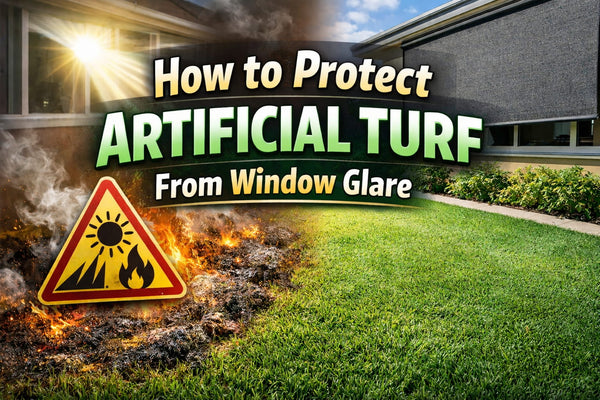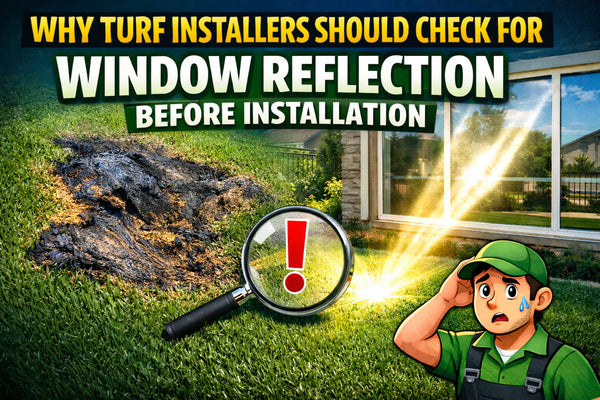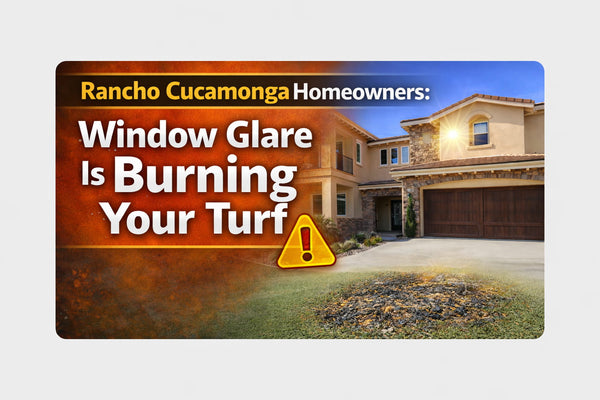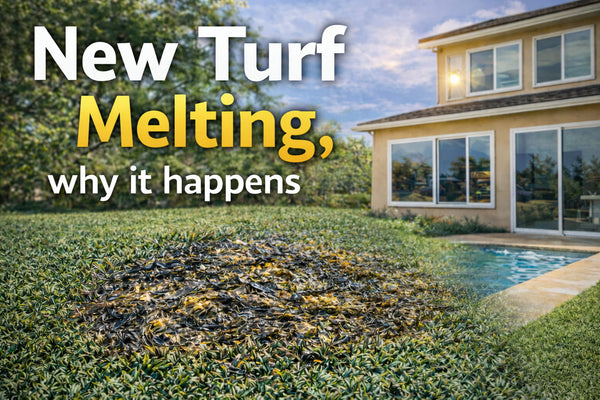
You install artificial turf expecting a clean, green, low-maintenance yard. Then you notice sections of your turf look warped, stiff, or discolored. Some areas even turn brown or collapse. Naturally, the first thought is: Did we buy bad turf? In most cases, the answer is no.

The Overlooked Heat Trap Around Pool Glass
Glass pool fencing looks sleek and modern. It keeps views open, improves safety, and blends seamlessly into outdoor spaces.
But glass behaves in a way most homeowners are never warned about.
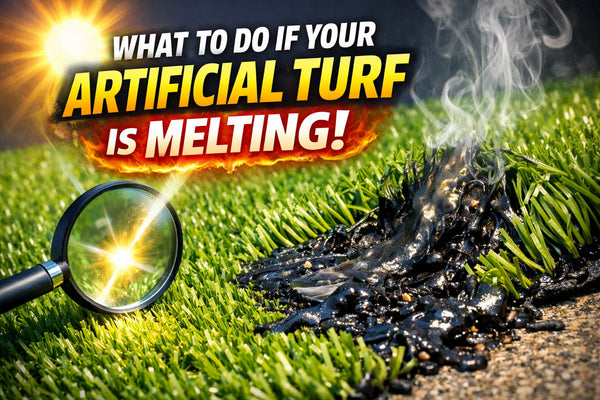
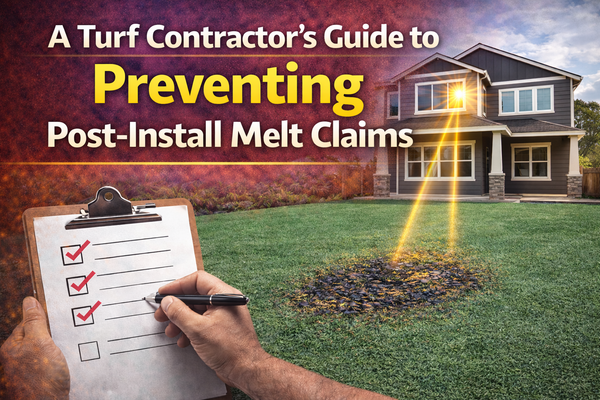
It redirects sunlight. Under the right conditions, glass can act like a magnifying glass. When afternoon sun hits pool fencing at certain angles, that reflected light can land in a tight zone on nearby artificial turf.
Over time, that focused energy creates surface temperatures hot enough to:
- Soften synthetic fibers
- Warp turf blade
- Melt turf
-
Permanently deform the grass
Why Pool Glass Is More Likely to Damage Turf
Pool areas often combine multiple risk factors at once:
-
Large, vertical glass panels
-
Open, unobstructed sun exposure
-
Light-colored concrete or pavers nearby
-
Artificial turf installed close to the fence line
Together, these elements turn a small reflection into a repeated daily heat event.
It doesn’t require:
-
A heat wave
-
A fire pit
-
Defective turf
It only requires alignment.
The Telltale Signs Turf Damage Is Coming From Glass
Reflection damage leaves behind very specific visual clues:
-
Brightened or pale green patches
-
Shiny, slightly stiff blades
-
Rectangular or straight-edged shapes
-
Damage that looks “too clean” to be random
Many homeowners notice a progression:
Lightening → stiffness → collapse
That pattern strongly points to concentrated heat exposure, not normal sun wear.
Why It’s Almost Never a Turf Quality Issue
High-quality turf includes UV inhibitors to slow fading from sunlight. But no artificial grass product is designed to withstand focused heat beams. Even premium turf will deform when the same concentrated reflection hits it day after day. That’s why replacing turf without addressing the glass usually results in: Same damage.
“Is There Anything You Can Put on Pool Glass to Stop It?”
Yes, specialized Turf Guard window film is designed to reduce solar reflection by scattering and softening sunlight before it exits the glass.
Instead of one intense beam, the light is dispersed into a broader, weaker pattern that no longer creates destructive hot spots.
When installed, the film:
-
Breaks up concentrated reflection
-
Prevent repeat melting
This approach treats the cause, not the symptom.
A Simple Way to Confirm the Source
If you’re unsure whether your pool glass is causing the damage:
-
Stand near the affected area on a sunny afternoon
-
Look toward the glass fencing
-
Watch for bright glare or concentrated reflection
-
Check if the light aligns with the damaged turf
If it does, you’ve found the source.
The Big Takeaway
Artificial grass around pools doesn’t fail randomly.
When melting or discoloration appears near glass fencing, it’s almost always a solar reflection issue, not a turf defect.
Fixing the glass stops the problem.
Replacing the turf alone does not.
Once reflection is controlled, artificial turf performs exactly as intended — clean, green, and low-maintenance.