Artificial turf in backyard pools are a common combination in Arizona. With extreme summer heat, water restrictions, and year-round outdoor living, many homeowners replace natural grass with synthetic turf around pool areas to create a clean, low-maintenance space.
But one important question comes up often:
Is artificial turf safe around pools in Arizona?
The short answer: Yes, when it’s installed properly and heat risks are evaluated.
Here’s what Arizona homeowners should know before installing turf around a pool.
Why Artificial Turf Is Popular Around Arizona Pools
Artificial turf works well in pool areas because it:
-
Eliminates mud and dirt being tracked into the pool
-
Reduces watering in drought-prone climates
-
Stays green year-round
-
Drains quickly when splashed
-
Creates a soft, slip-resistant surface
- Aesthetic
In Phoenix, Scottsdale, Mesa, and surrounding areas, it’s a popular alternative to patchy, overwatered grass.
But Arizona’s intense sun creates a few considerations.
1. Does Turf Get Too Hot Around Pools?
Arizona summers routinely exceed 110°F. Artificial turf absorbs and retains heat more than natural grass. On very hot days, turf surface temperatures can feel hot, sometimes too hot for bare feet.
How to Manage Heat
-
Lightly hose turf before heavy use
-
Choose lighter-colored turf blends
-
Install shade structures (pergolas, umbrellas)
-
Allow airflow around the area
Most homeowners find the heat manageable with some adjustments.
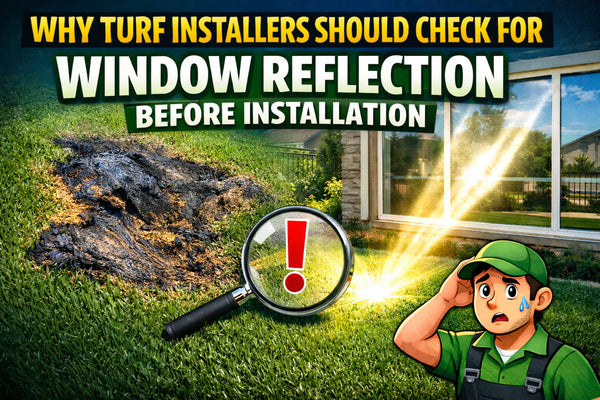
2. Can Pool Glass or Windows Damage Turf?
This is the most overlooked risk in Arizona pool areas.
Many modern homes have:
-
Large sliding glass doors
-
Low-E energy-efficient windows
-
Glass pool fencing
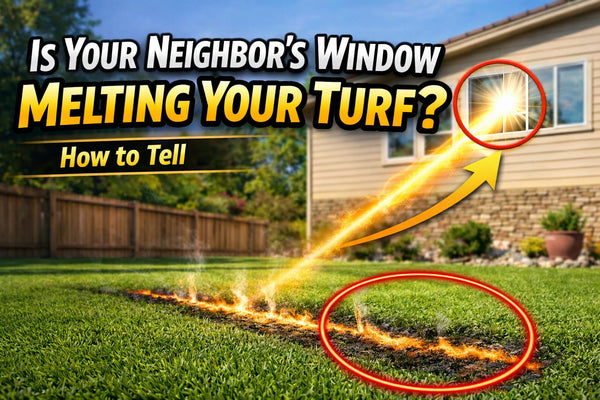
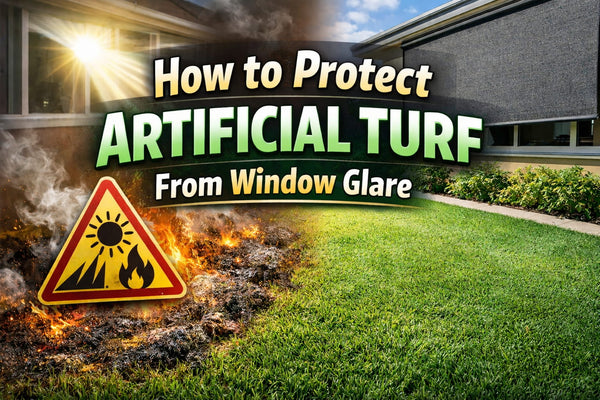
Low-E glass reflects solar energy to keep homes cooler. Under the right sun angle, that reflection can:
-
Concentrate into a focused beam
-
Act like a magnifying glass
-
Create temperatures exceeding 200–250°F
When that concentrated heat hits turf near the pool, it can:
-
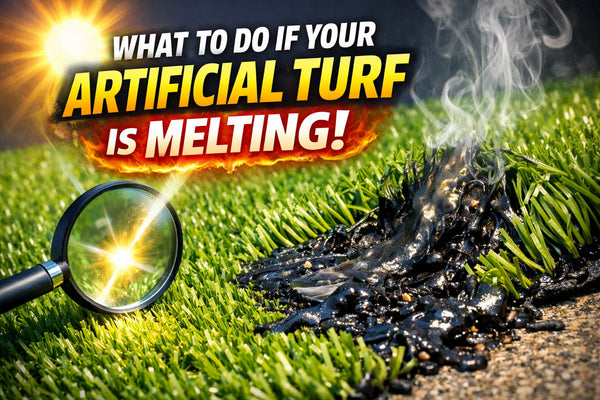
Melt fibers
-
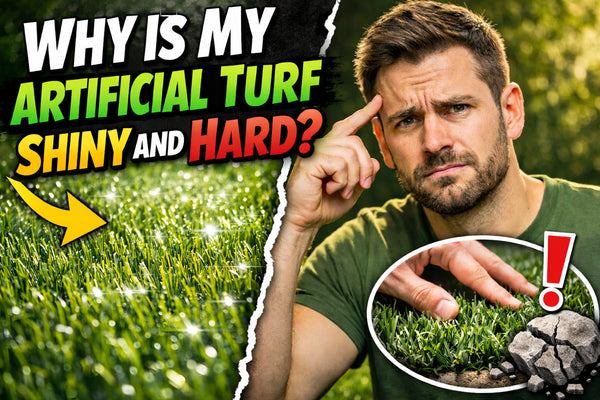
Create shiny or stiff patches
-
Cause diagonal burn lines
-
Permanently deform the surface
This is not a defect in the turf, it’s concentrated solar reflection. If you want a deeper breakdown of how glass pool fencing causes turf melting, and how to confirm whether reflection is the issue, read our guide on how pool glass can damage artificial turf.
Pool areas are especially vulnerable because they often combine glass fencing, open sun exposure, and reflective surfaces.
3. Is Turf Slippery When Wet?
High-quality turf designed for landscaping includes drainage systems that allow water to pass through quickly.
When installed properly:
-
Water drains through the turf base
-
Puddling is minimized
-
Surface traction remains consistent
Proper base preparation is critical for safety and performance.
4. Is Artificial Turf Hygienic Around Pools?
Yes, when maintained properly.
Synthetic turf:
-
Does not hold mud
-
Reduces dirt entering the pool
-
Can be rinsed easily
-
Resists pest nesting
Routine rinsing helps remove sunscreen residue, dust, and debris common in pool areas.
5. What Should You Ask Before Installing Turf Around a Pool?
Before signing a contract in Arizona, ask your installer:
-
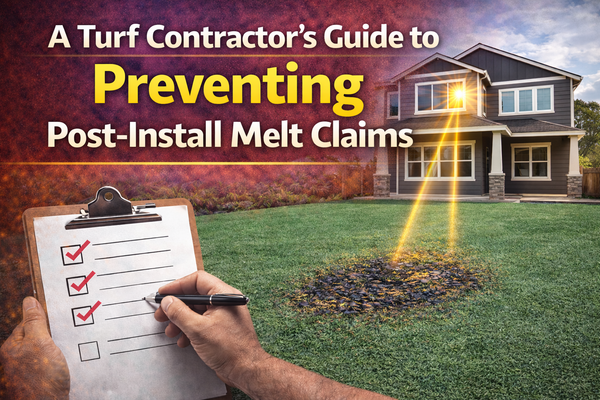
Have you evaluated nearby windows and glass fencing for reflection risk?
-
What drainage base will be installed?
-
Is the turf UV-stabilized for desert conditions?
-
How will edges near concrete or pavers be secured?
Most turf installers focus on drainage and base prep, but reflection risk isn’t always automatically evaluated.
Bringing it up early can prevent expensive repairs later.
6. How to Prevent Turf Melting Around Pools
If reflective glass is present, solutions may include:
-
Turf Guard window film designed to diffuse reflection and protect turf from melting
-
Solar screens
-
Strategic shade structures
Treating the glass prevents concentrated heat before it reaches the turf.
Is Artificial Turf Safe Around Pools in Arizona?
Yes, when installed thoughtfully.
Artificial turf performs well in Arizona pool environments when:
-
Proper drainage is installed
-
High-quality, UV-stabilized turf is used
-
Reflection risks are identified before installation
-
Heat management is considered
With proper planning, turf around pools provides:
-
Cleaner pool water
-
Lower water usage
-
Less maintenance
-
Year-round curb appeal
Final Takeaway
Artificial turf is safe and highly practical around Arizona pools, but desert conditions require smart planning.
Most problems arise not from the turf itself, but from:
-
Concentrated window reflection
-
Poor drainage installation
-
Extreme heat exposure without mitigation
Addressing these factors before installation ensures your poolside turf remains durable, attractive, and long-lasting.