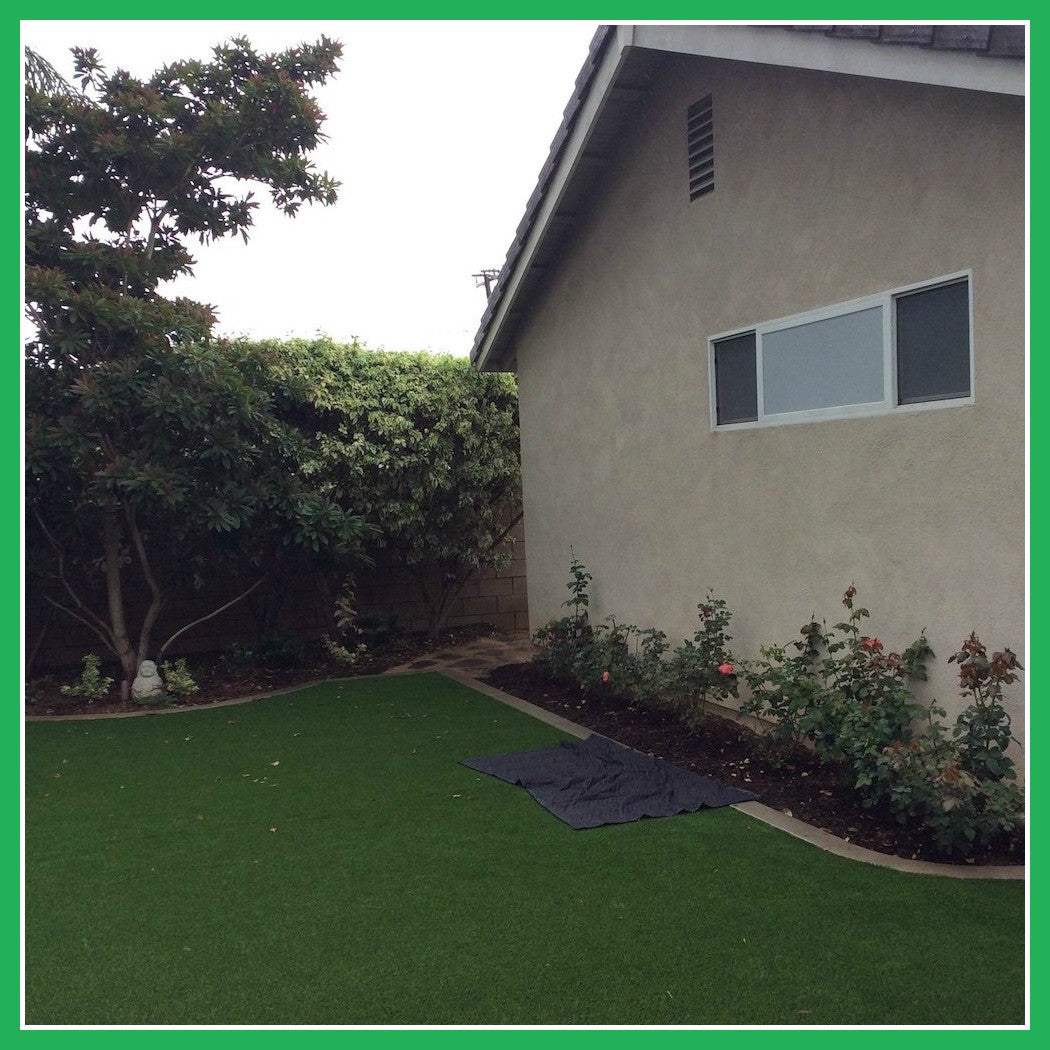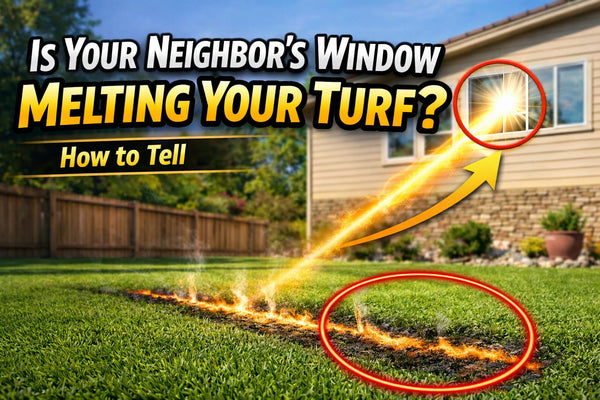
If your artificial turf only melts at the same time every day, often around 2 pm, you’re not alone. Homeowners describe this as a “flash of light,” a shimmer across the yard, or a narrow hot spot that suddenly appears and quickly disappears. Many people assume it’s random, but there’s a simple explanation: the angle of the sun, the season, and the magnifying-glass effect created by certain Low-E windows.


This article explains why turf melts at specific times, why the hot spot moves throughout the year, and how you can identify the exact window causing the problem. Once you understand the pattern, it becomes much easier to stop artificial turf burn for good.
Why the hot spot hits at the same time every day
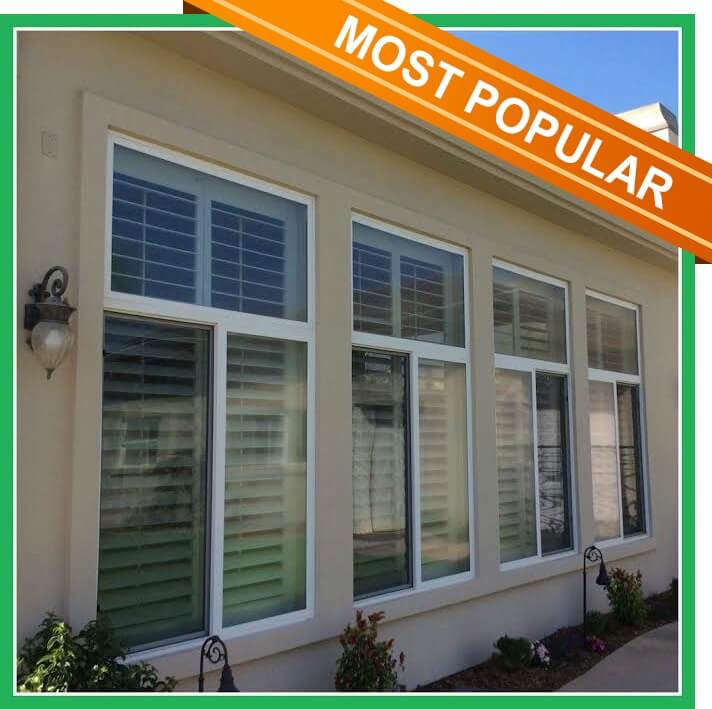
The reason artificial turf melts at 2 pm (or any consistent hour) is because the sun’s position lines up perfectly with a reflective window surface, usually a second-story window, a bay window, or Low-E energy-efficient glass. When the sun hits these windows at just the right angle, the coating can act like a magnifying-glass lens. Instead of scattering light, it concentrates the reflection into a small, powerful beam. When that beam lands on artificial turf, siding, car trim, or patio furniture, or pool covers, temperatures can spike to well above 200°F.
That beam only forms when the geometry lines up. This is why the damage appears at the same time each day.

How the concave “lens” or magnifying-glass effect works
Some windows, especially Low-E windows, have a slightly concave shape. This curve can act like a lens. When sunlight hits it, the window focuses the rays into a tight, laser-like point.
This is why artificial turf burn often looks like:
• a perfect oval or circle
• a diagonal melt path
• a small area of shrunken, wilted, or shiny turf blades
• a moving hot spot that shifts as the sun moves

Why the hot spot moves throughout the year
Sun angle changes throughout the year. In summer, the sun sits higher in the sky, while in winter it travels lower and at a shallower angle across the yard. These shifts in sun angle affect how strongly windows reflect light, which is why glare and hot spots become more intense during certain seasons.

Why second-story and bay windows cause most turf melt
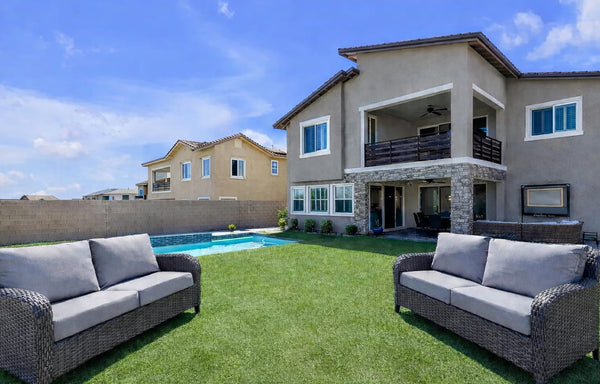
Second-story, bay, and angled windows capture more sky and sunlight. When the sun reflects off them, the beam projects farther into the yard. That’s why many homeowners notice the turf melting nowhere near the house.
Second-story and bay windows often cause:
• circular melt spots 10–30 feet from the home
• damage that appears in the middle of the lawn
• a hot spot that moves fast across the yard as the day progresses
If you see melting far from any structure, a second-story window is almost always responsible.

How to diagnose which window is causing the turf burn
You can use a simple “hot spot mapping” exercise to find the source:
Step 1: Stand directly in the damaged spot.
Step 2: Look toward the house or nearby homes.
Step 3: Identify the window producing the brightest glare or flash.
Step 4: Take photos or a short video to document the reflection path.
Step 5: Check the window shape, is it Low-E, slightly curved, or part of a bay window?
Step 6: Note whether the spot moves throughout the day.
Most people are surprised at how obvious the reflection is once they look for it.
Why the turf melts so quickly
Because the concentrated reflection creates extreme, localized heat. Temps often exceed:
• 180°F on a mild day
• 200–230°F on clear afternoons
• 250°F or higher near strong Low-E reflections
Turf blades cannot withstand these temperatures. Many melt at 175–200°F. Even high-melting-point nylon turf can fail under concentrated parabolic reflection.
The good news: the fix is simple
Once you find the source window, you can stop the hot spot before it forms. The most reliable fixes include:
Turf-Guard Window Film
• reduces reflectivity
• breaks up the concentrated beam
• HOA-friendly in most communities
• diffuses the light
• great for second-story windows
Solar screens
• block and absorb sunlight
• ideal for high-heat windows
• long lifespan
Awnings and shade options
• helpful for seasonal or temporary relief
• blocks winter low sun from striking the glass
Final takeaway: Turf melts at 2 pm because everything lines up, the sun angle, the season, and the reflective surface all line up to create a focused hot spot at that exact time. Once you understand the path of the reflection, you can stop turf burn permanently with the right exterior window solution.