Arizona sunshine is one of the biggest reasons homeowners choose artificial grass. No mowing, no watering, and a green lawn year-round sounds perfect.
But Arizona’s extreme UV exposure can take a toll over time. Without the right care and product choices, artificial turf can gradually fade, lose vibrancy, or develop uneven color.
The good news: fading is not inevitable. With the right materials, maintenance habits, and protection strategies, you can keep your turf looking rich and green for many years, even in Arizona’s desert sun.
Why Artificial Grass Can Fade in Arizona
The sun in Arizona is more intense than in most parts of the country. High UV levels, long summer days, and frequent clear skies mean turf is exposed to sunlight for thousands of hours each year.
Fading happens primarily because:
-
UV radiation breaks down pigments in turf fibers
-
Heat accelerates material aging
-
Lower-quality turf uses weaker color additives
Over time, this can cause turf to look:
-
Dull or washed out
-
Slightly yellow or gray
-
Uneven in color across different areas
Quality and protection make a major difference in how fast this occurs.

Choose Turf with Strong UV Stabilizers
Not all artificial grass is made the same.
High-quality turf is manufactured with UV inhibitors and stabilizers built directly into the fibers. These additives help:
-
Resist color breakdown
-
Slow oxidation
-
Maintain green tones longer
When shopping for turf, look for:
-
UV-stabilized fibers
-
Heat-resistant polyethylene or nylon blends
-
Long-term color fade warranties
Cheaper turf often lacks sufficient UV protection and fades much faster in desert climates.
Rinse Turf Periodically
Dust, dirt, and airborne pollutants can settle on turf and create a dull film that makes grass appear faded even when the fibers are still healthy.
A simple rinse:
-
Removes surface buildup
-
Brightens fiber appearance
-
Helps turf look more vibrant
In Arizona:
-
Light-use areas: rinse every 2–4 weeks
-
Pet or high-traffic areas: rinse weekly
This quick habit goes a long way toward keeping color crisp.
Brush Fibers Upright
Flattened turf reflects light differently than upright turf. When fibers lay down, they can look darker, duller, or uneven in tone.
Brushing helps:
-
Restore natural sheen
-
Improve light reflection
-
Maintain consistent color appearance
Use a stiff synthetic bristle broom or turf rake, and brush against the grain every 1–2 months.
Reduce Extreme Heat Build-Up
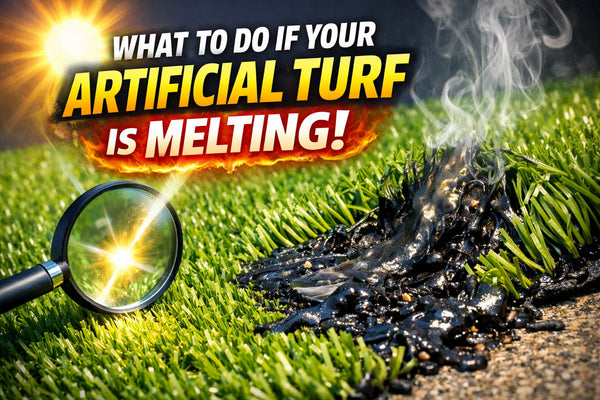
Heat doesn’t just melt turf, it also accelerates fading.
Steps that help reduce surface temperatures:
-
Rinsing during extreme heat
-
Providing shade from trees, pergolas, or umbrellas
-
Avoiding placing reflective objects near turf
Lower surface temps = slower aging of fibers.
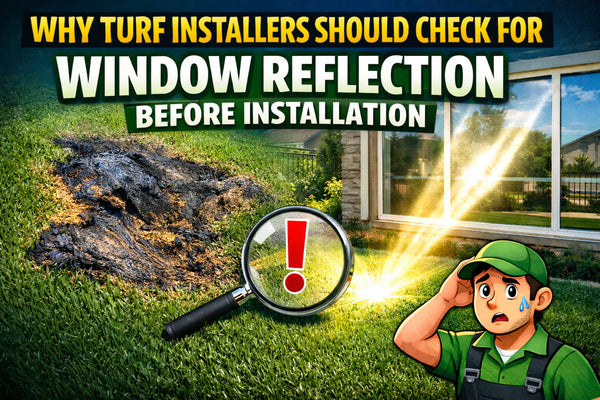
Watch for Window Reflection Hot Spots
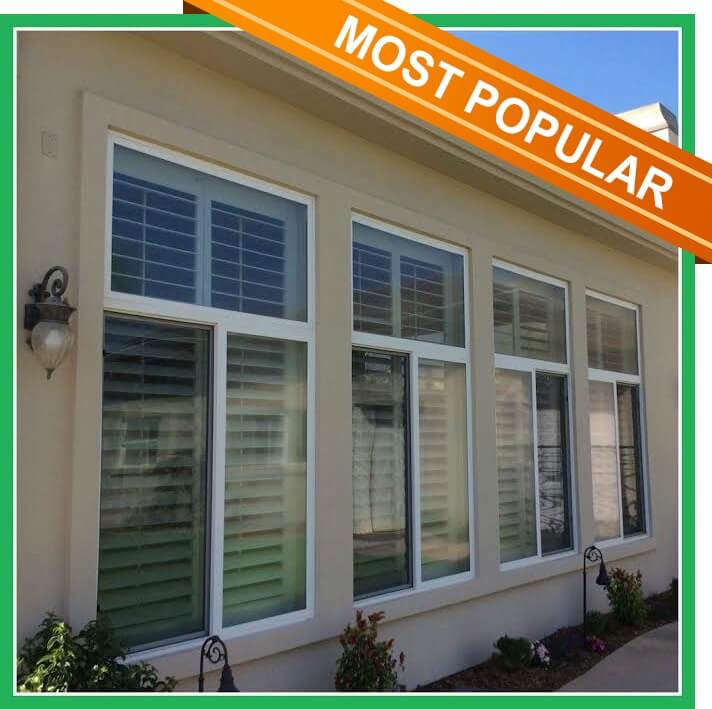
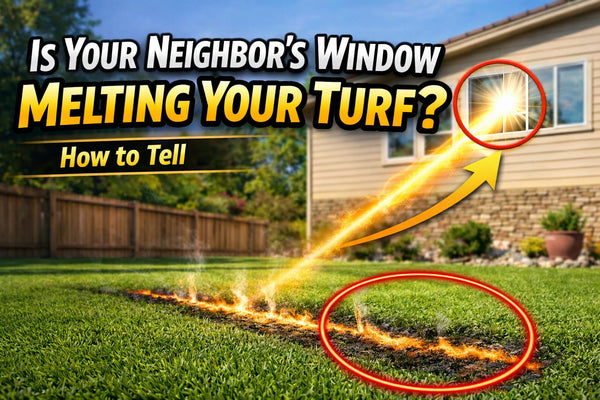
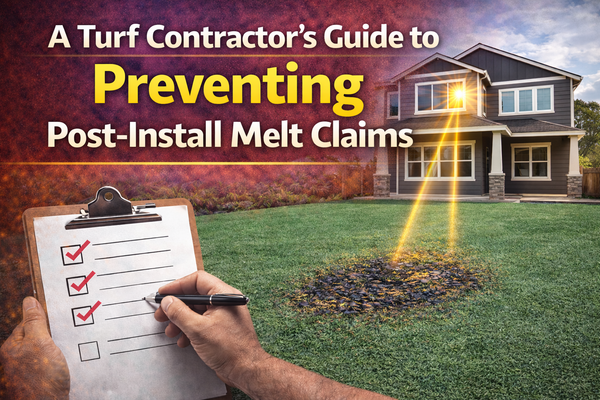
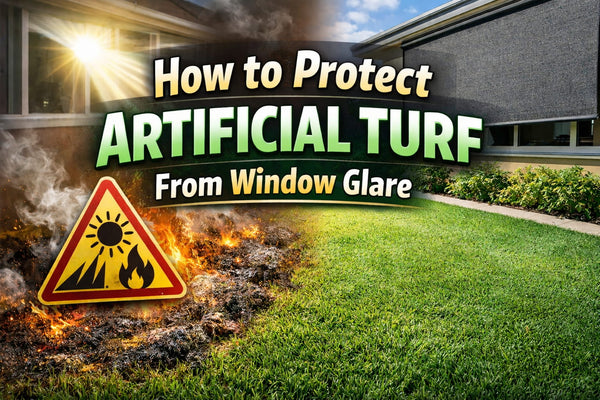
Arizona homes commonly have Low-E (energy-efficient) windows. Under the right sun angle, these windows can reflect and concentrate sunlight onto turf.
This concentrated beam can:
-
Create localized fading
-
Cause discoloration
-
Melt turf in diagonal lines
-
Burn turf
If you notice fading or discoloration in a specific pattern or area, window reflection may be the cause.

Use Exterior Window Film When Needed
Exterior window film such as Turf Guard is designed to protect artificial grass by diffusing reflected sunlight from windows before it concentrates into damaging hot spots.
Benefits include:
-
Reduces reflective intensity
-
Prevents localized overheating
-
Protects turf color and fibers
-
Maintains window visibility
-
HOA-friendly in many communities
Treating the glass protects the grass.
Avoid Harsh Chemicals
Some cleaners and solvents can strip protective coatings from turf fibers.
Stick to:
-
Water
-
Mild soap when needed
-
Enzyme-based cleaners for pet areas
Avoid bleach, degreasers, and petroleum-based products.
Rotate Furniture and Accessories
If furniture, planters, or play equipment sit in one spot for long periods, they can create uneven aging patterns.
Occasionally rotating items:
-
Promotes even sun exposure
-
Prevents patchy appearance
What to Expect with Quality Turf
Even premium turf will experience very gradual color change over many years, but it should remain natural-looking and consistent.
With proper care and protection:
-
Turf should not turn yellow
-
Should not develop obvious blotches
-
Should maintain a green, healthy appearance
Rapid fading usually indicates either low-quality turf or concentrated heat exposure.
Final Thoughts
Arizona’s sun is powerful, but it doesn’t have to ruin your artificial grass.
Choosing UV-stabilized turf, rinsing regularly, brushing fibers upright, reducing extreme heat, and addressing window reflection are the keys to long-lasting color.
Prevent fading by caring for both the grass and the environment around it, and your lawn will stay green and beautiful for years to come.