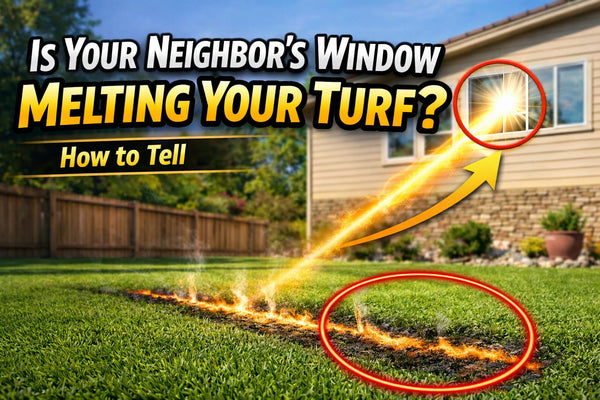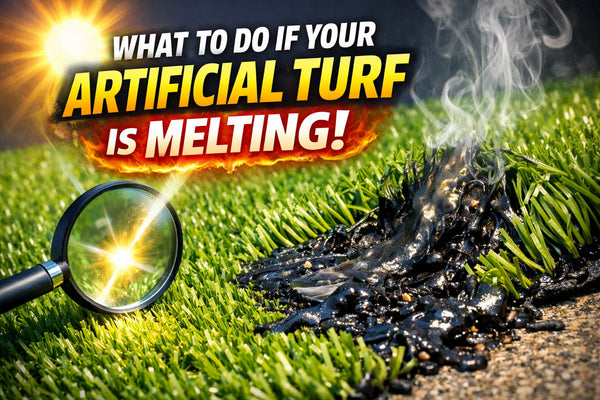
When artificial turf starts melting in lines, stripes, or random hot spots, the cause is almost always the same: concentrated window reflection creating temperatures well over 200°F. Homeowners describe it as turf burn, melted divots, or a “death ray” coming off Low E or energy efficient windows. The good news is that the problem is understood, and there are specific fixes that stop it.
This post explains what is happening, why the damage shows up at certain times of day, and which solutions actually work based on how the heat is created.

Why turf melts in stripes or lines
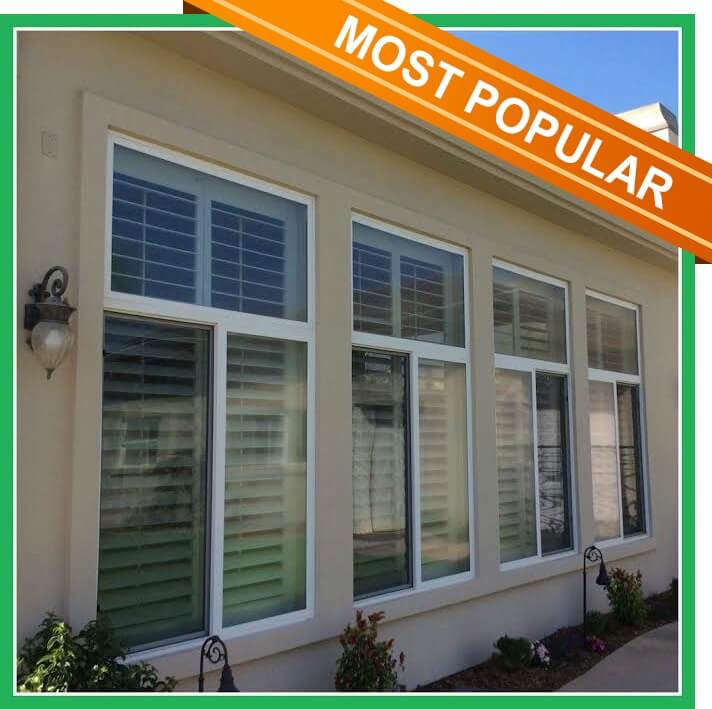
Artificial turf melts when focused sunlight reflects off glass and concentrates into a moving hot spot. Low E coatings, concave glass, and double pane windows can act like a magnifying lens. The reflection travels across the yard as the sun moves, which is why many people notice a perfect diagonal line or a melted stripe that always appears around the same hour. Second story windows, bay windows, and east, west, and south facing windows tend to produce the strongest glare. If the nearest surface happens to be turf, that turf can shrink, curl, or melt where the hot spot touches.

Fastest fixes that stop turf burn
Two solutions reliably stop the heat before it reaches the turf: exterior Turf-Guard window film and solar screens. Both reduce the reflectivity of the glass and break up the focused beam.
Turf-Guard window film is one of the simplest approaches. It mounts on the outside of the window and reduces the mirror like reflection that causes turf to overheat. Many homeowners describe it as looking similar to a screen from the outside and nearly invisible from the inside. Because the film is installed externally, it stops the concentrated reflection before it forms.
Solar screens are another proven option. They fit over the window like a mesh frame and diffuse sunlight before it reflects off the glass. If an HOA does not allow window film but does allow screens, this is often the best approach.
Both solutions address the actual cause, which is the reflectivity of the window, instead of only treating the symptoms.
Longer term options: shade, awnings, and landscaping
If film or screens are not possible due to HOA rules or builder restrictions, creating shade can still break the hot spot.
Awnings, Bahama shutters, shade sails, or strategically placed landscaping can block sunlight before it hits the glass. This prevents the reflection from forming in the first place. These options tend to be more visible and more expensive, but they are effective at blocking the source of the heat.
FAQs
Do solar screens stop turf burn?
Yes. Solar screens diffuse sunlight before it hits the glass, which prevents the focused reflection that melts turf. They are one of the most consistent ways to stop hot spots.
Will interior window film fix the problem?
No. Interior window film does not stop turf melting. The reflection forms on the exterior surface of the window, so any product installed inside the glass does not reduce the mirror effect. Only exterior film or screens address the cause.
How hot does the hot spot get?
Measurements vary, but many homeowners record temperatures above 200°F using an infrared thermometer. That is hot enough to melt polyethylene turf, warp vinyl siding, or damage plastic trim.
Does the type of turf matter?
Nylon turf has a higher melting point, but even high quality turf can still shrink or curl where a hot spot hits it directly. Prevention is more reliable than replacement.