If you’ve ever noticed a patch of turf, a plastic item, or outdoor furniture that looks scorched after a sunny day, you may wonder if window glare can get hot enough to start a fire. Homeowners often report the sun is leading to burned cushions, melted vinyl siding, or plants that seem to shrivel instantly. The concern is valid: certain Low-E windows can create hot spots well above 200°F, hot enough to damage materials and pose an immediate fire hazard under the right conditions.

This article breaks down the realistic risks, what materials are most vulnerable, and the fast, effective steps you can take to eliminate the danger.
Can Low-E window glare actually ignite something?
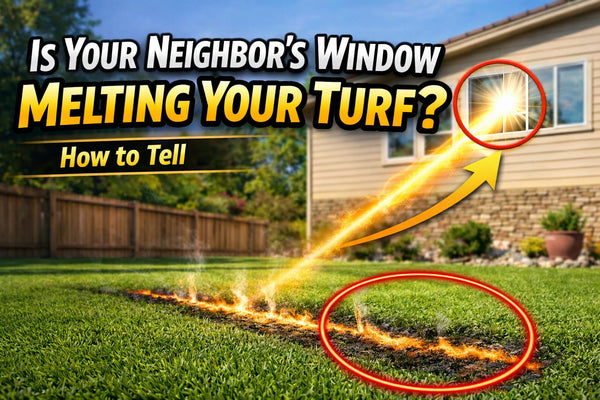
Direct ignition is uncommon, but the heat levels are real. Low-E glass can act like a magnifying lens when sunlight hits it at the right angle. The coating and curvature of the window focus sunlight into a concentrated beam. Measurements taken by homeowners, inspectors, and building professionals regularly show temperatures between 180–230°F, and in rare cases even higher.
At 200°F+, several materials begin to soften, warp, melt, or smolder:
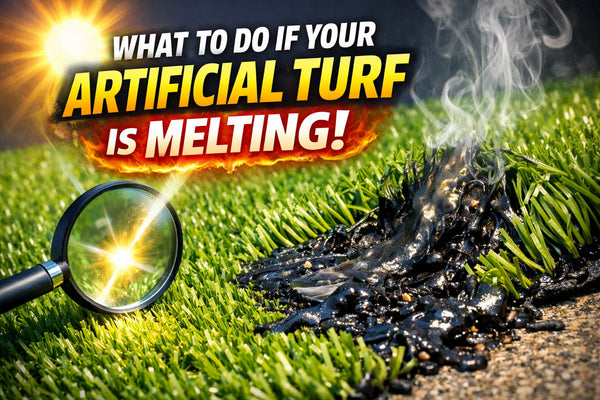
• artificial turf blades (melting point 175–200°F)
• vinyl siding
• plastic furniture or toys
• vehicle trim or mirrors
• rubber seals
• plant leaves or shrubs
• outdoor cushions (if dark or synthetic)
While a large flame isn’t typical, these temperatures can:
• cause smoking or smoldering on dark fabrics
• brown or scorch natural materials
• melt plastics that then drip onto other surfaces
• create dry, overheated patches on plants or mulch
These conditions, especially combined with dry vegetation, can increase fire risk.
Why Low-E windows produce extreme heat
Energy-efficient windows (including Low-E windows) are designed to control heat transfer.
They help in two main ways:
-
In cold weather: They reflect indoor heat back into the home (keeping heat inside.)
-
In hot weather: They reflect solar heat away from the home (keeping heat OUT).
Energy-efficient windows are designed to control heat transfer, but their reflective coating can send that heat somewhere else. When the sun hits Low-E glass at a particular angle:
• the reflection becomes concentrated instead of scattered
• the glass can create a magnifying-glass or parabolic effect
• second-story windows push the beam farther into the yard
• winter low-sun angles intensify the reflection
This is why the same spot on your turf, deck, or furniture may “burn” at the same time every day.
What materials are most at risk of burning or melting
Based on homeowner reports and field inspections, the most vulnerable items include:
• Artificial turf – melts quickly in focused hot spots
• Vinyl siding – warps or ripples under 160–200°F
• Outdoor cushions – dark fabrics absorb heat fast
• Plastic toys, chairs, and planters – soften or deform
• Car trim – side mirrors and door frames warp
• Plants and shrubs – leaves scorch, brown, or curl
• Garden mulch – can dry out and smolder
If anything in the beam is dark-colored or synthetic, the risk increases.
Fast mitigations you can use immediately
If you suspect a concentrated reflection on your property, these quick steps can reduce risk while you evaluate permanent fixes:
• Move flammable or meltable items out of the beam
• Rotate or relocate outdoor furniture
• Add temporary shade (umbrella, shade sail, patio umbrella)
• Place a non-reflective barrier like a fence panel or plant pot
• Water the area (plants or mulch) during peak sun hours
These are temporary but effective until a permanent solution is installed.

Permanent solutions that eliminate the fire hazard at the source
To truly solve the issue, you need to stop the reflection. The most reliable long-term fixes include:
Exterior Turf Guard Window Film
• Diffuses the beam without darkening the interior view
• HOA-friendly in many communities
• Extremely effective on second-story windows
Solar screens
• Absorb and block sunlight before reflection forms
• Great for windows facing strong east/west sun
Awnings or Bahama shutters
• Prevent sunlight from hitting the glass altogether
• Useful when HOAs restrict window modifications
Once the reflection is diffused or blocked, the hazard disappears instantly.
How to tell if your window glare is a fire risk
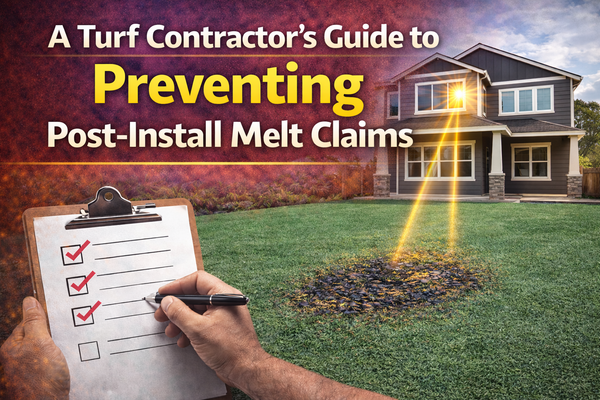
Stand in the hot spot at the time the damage occurs, this is usually between mid-morning and late afternoon. Look back at your home or a neighbor’s home and identify the window producing a bright flash or shimmer. Take photos or videos to confirm.
Signs your reflection is unusually strong:
• turf melting
• plants wilting with no irrigation issues
• outdoor cushions heating rapidly
• warped or soft plastic near the beam
• a visible “path” of heat across the ground
If you see any of these, address it promptly.
Mitigation hierarchy: what to do first, next, and last
-
Identify the hot spot (take video or photos)
-
Move vulnerable items or block the beam temporarily, for example, use a towel to cover the spot where the beam is damaging the artificial turf.
-
Install a permanent fix on the window creating the reflection
-
Monitor the area during peak seasons (winter and summer transitions)
This approach minimizes risk and prevents ongoing damage.
Final takeaway: Window glare can create 200°F+ hot spots, stop it at the source
While full ignition is rare, the heat created by Low-E window glare can absolutely damage turf, outdoor items, vegetation, and even parts of a home. Eliminating the concentrated reflection with exterior Turf-Guard window film or solar screens is the fastest and most reliable way to remove the hazard.
FAQs
Can window glare actually start a fire?
It’s unlikely but possible under the right circumstances. Low-E reflections can exceed 200°F, which can scorch plants, smolder materials, or overheat dark fabrics. Preventing concentrated reflection removes the risk.
What items are most vulnerable to window glare?
Artificial turf, outdoor cushions, vinyl siding, plastics, car trim, pool covers, and plants are most at risk because they degrade or deform at relatively low temperatures.
Why does glare from Low-E windows get so hot?
Low-E coatings and slight glass curvature can concentrate sunlight like a magnifying glass, producing a focused beam rather than a wide reflection.
How do I stop window glare from getting that hot?
Install exterior Turf-Guard Window film, or solar screens. These solutions break up or absorb the reflection so temperatures stay safe.
Is this covered by homeowners insurance?
Damage from window glare often falls into a gray area. Many policies treat it as “preventable maintenance,” so installing a mitigation solution is usually the most reliable path. Read more HERE