You installed artificial grass to avoid brown patches, high water bills, and constant maintenance.
So when you start seeing melted streaks, shiny patches, or strange circular burn marks across your lawn, it’s frustrating, especially in a place like Rancho Cucamonga where turf is supposed to handle the heat.
But here’s what many local homeowners don’t realize:
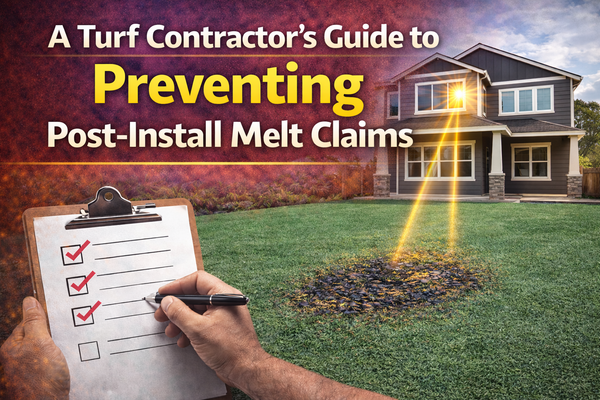
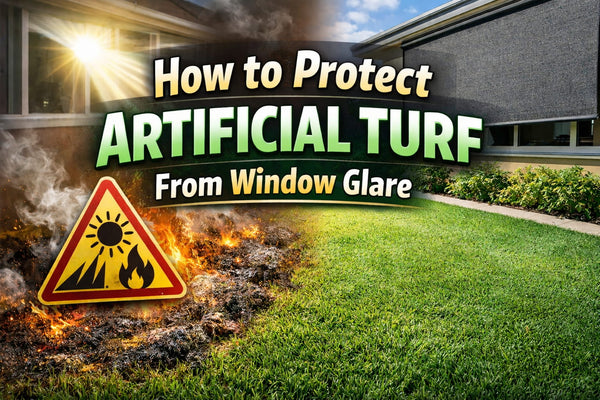
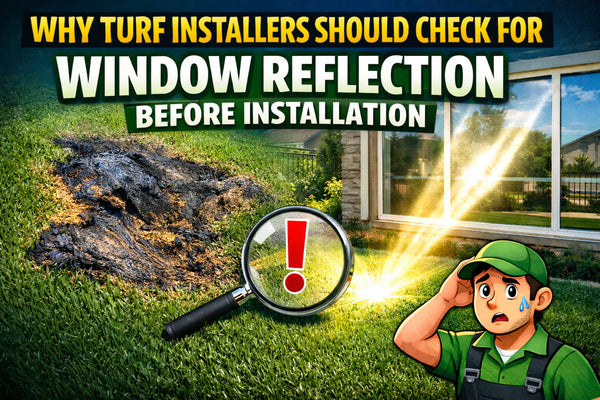
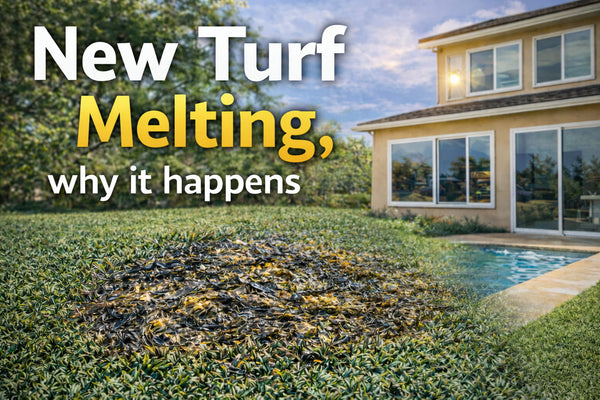
In most cases, it’s not the temperature causing the damage. It’s window glare.
Why This Is Happening in Rancho Cucamonga

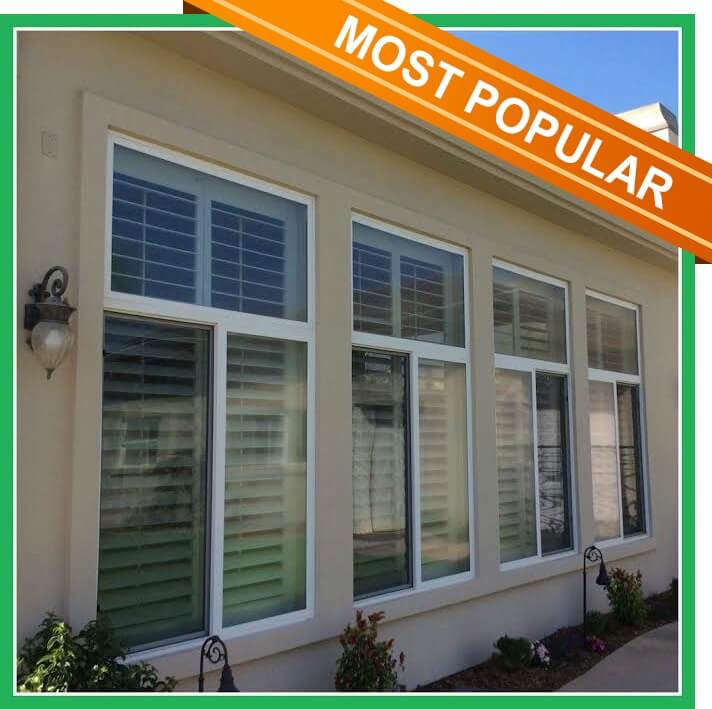
Rancho Cucamonga homes, especially newer builds, commonly feature energy-efficient Low-E windows. These windows are designed to reflect solar heat away from your home to improve efficiency.
The problem?
Under the right sun angle, that reflected light can:
-
Concentrate into a narrow beam
-
Act like a magnifying glass
-
Create surface temperatures exceeding 200–250°F
-
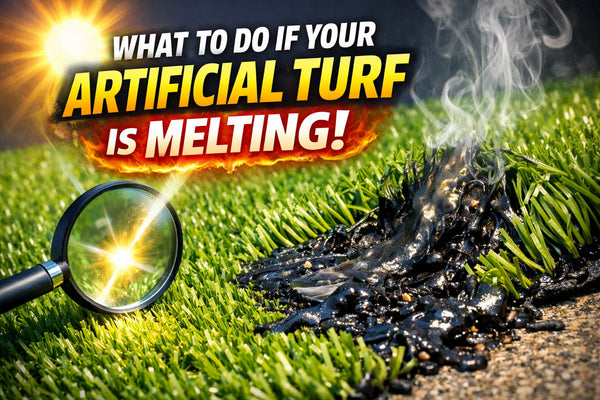
Melt synthetic turf fibers within minutes
Even on a mild 75° day, concentrated reflection can overheat artificial grass.
This is why homeowners often notice:
-
Straight melted lines
-
“Crop circle” patterns
-
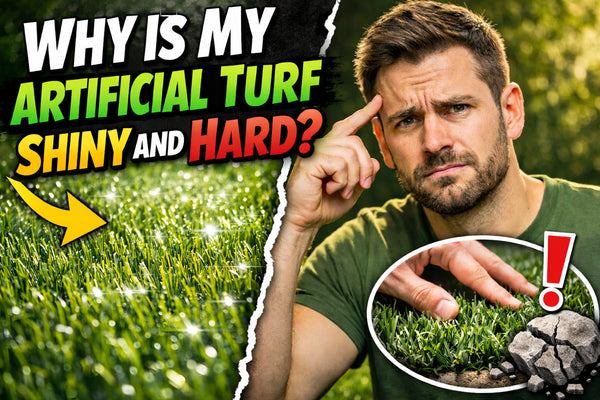
Shiny, brittle turf blades
-
Damage that appears in the same spot every afternoon
The turf didn’t fail.
The reflection created a hot spot.

Why Rancho Cucamonga Is Especially Vulnerable
Several local factors increase glare risk:
☀️ Intense Inland Sun
The Inland Empire gets strong, direct sunlight year-round.
🏡 New Construction Homes
Many Rancho Cucamonga neighborhoods have large dual-pane Low-E windows, ideal for energy savings, but reflective.
🏘 Close Property Lines
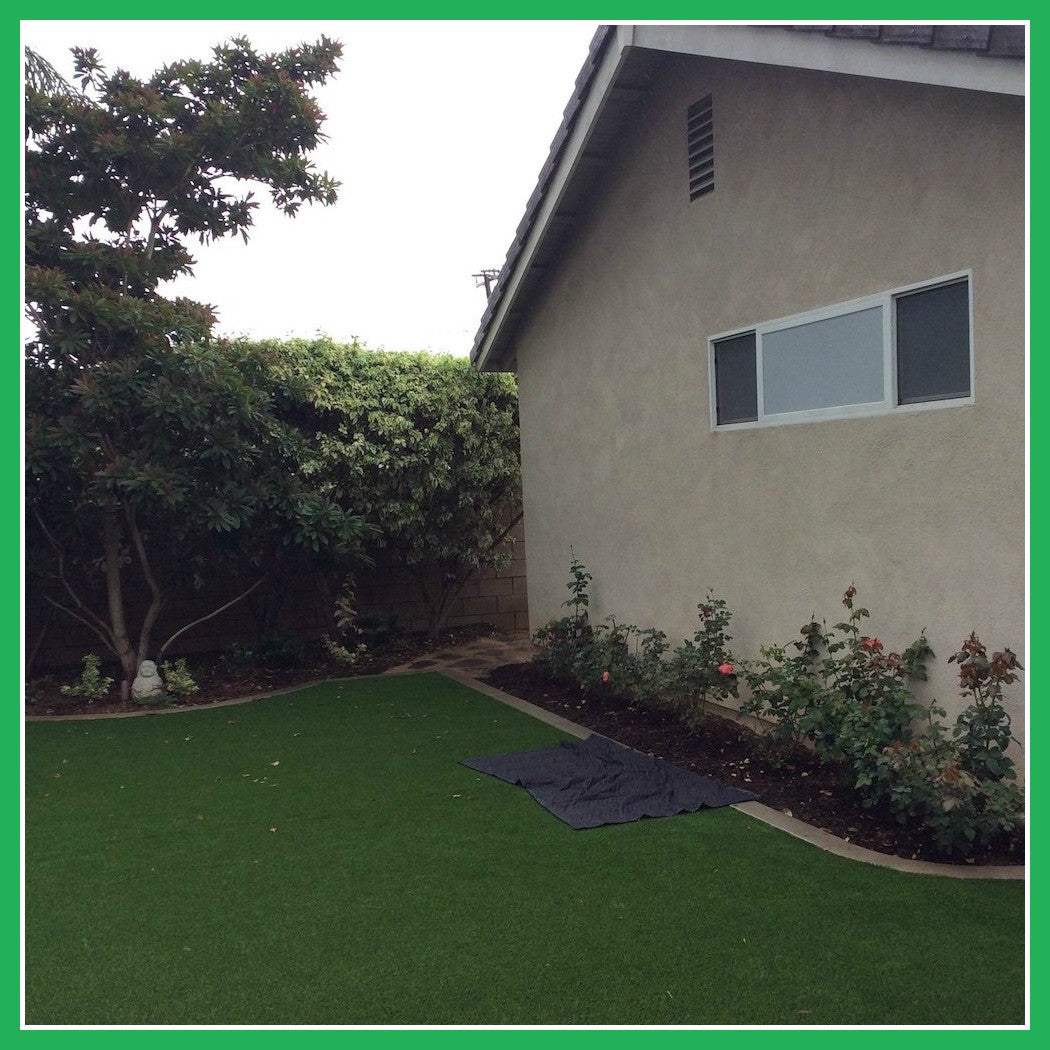
In some communities, neighboring homes are close enough that one house’s windows can reflect onto another yard.
Yes, sometimes the glare isn’t even coming from your home, but your neighbors.

How to Confirm Window Glare Is the Cause
If your artificial turf is melting:
-
Stand in the damaged area.
-
Look toward your house and nearby homes.
-
Identify which window is producing the brightest glare or flash of light.
That window is likely creating the concentrated hot spot.
You may also notice:
-
Damage occurring at the same time daily (often between 1–4 PM)
-
Melt patterns that shift slightly with the seasons
These are classic reflection signs.

Why Replacing the Turf Won’t Fix It
Many homeowners replace damaged turf, only to see it melt again.
Even premium nylon turf can’t withstand concentrated reflected heat exceeding 200°F.
If the glare isn’t addressed at the window, the problem returns.
What Actually Stops Turf Melt
The solution isn’t thicker turf.
It’s stopping the reflection at the source.
Effective options include:
-
Turf Guard window film designed to diffuse glare before it concentrates and protect turf from melting
-
Solar screens
-
Shade structures like awnings or sails
Turf Guard window film is often preferred because it breaks up the reflection directly on the glass, preventing the beam from forming in the first place.
Once the concentrated light is diffused, the turf can no longer overheat, and the melting stops.
Don’t Wait Until It Spreads
Turf melt usually starts small.
A single streak.
A shiny patch.
One circular mark.
Over time, as the sun angle shifts seasonally, the damage pattern can widen.
If you’re seeing early signs, addressing reflection now can prevent a much larger replacement later.

The Bottom Line for Rancho Cucamonga Homeowners
If your artificial turf is melting, the cause is likely window glare, not defective grass and not installer error.
Low-E windows are energy-efficient, but under the right conditions, they can create concentrated hot spots strong enough to damage turf.
Identify the reflective source.
Stop the glare at the window.
Protect your lawn long term.
Because in Rancho Cucamonga, it’s not just the heat, it’s the reflection.