If your artificial grass is melting in straight lines, shiny patches, or strange circular patterns, you might assume:
-
The turf was defective
-
The installer made a mistake
-
The weather was too hot
But in many cases, the real cause is something most homeowners never consider:
Your home windows.
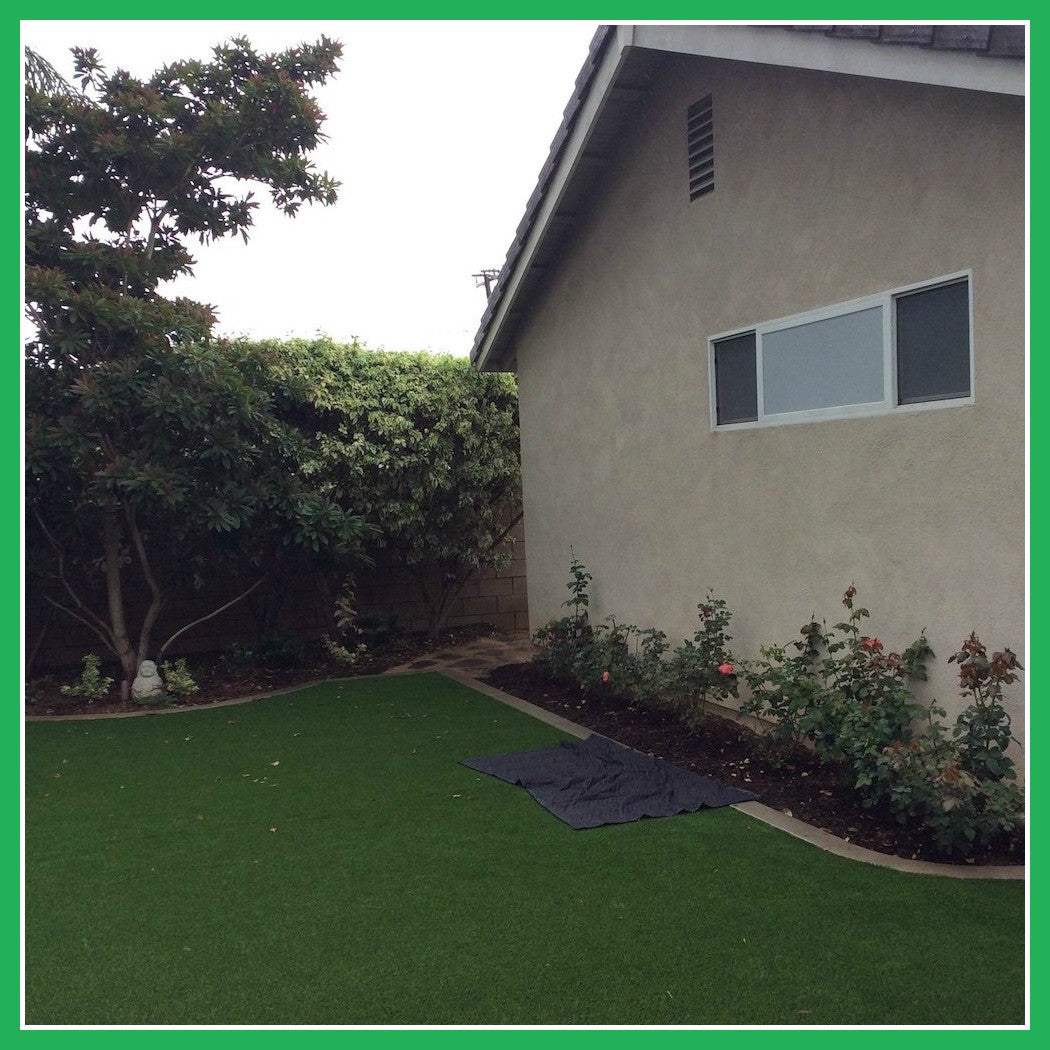
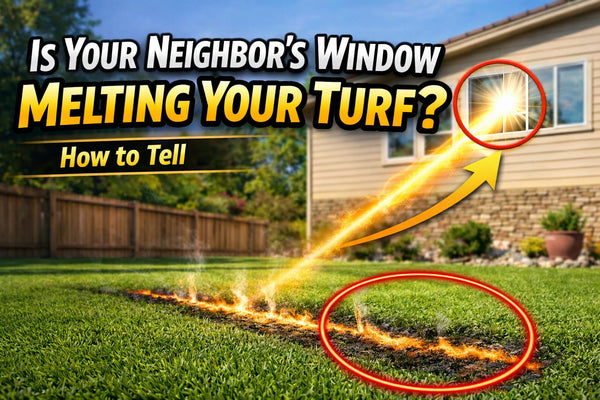
Yes, under certain conditions, residential windows can generate concentrated reflected heat strong enough to melt artificial turf.
Here’s how it happens.
How Windows Can Create Enough Heat to Melt Turf

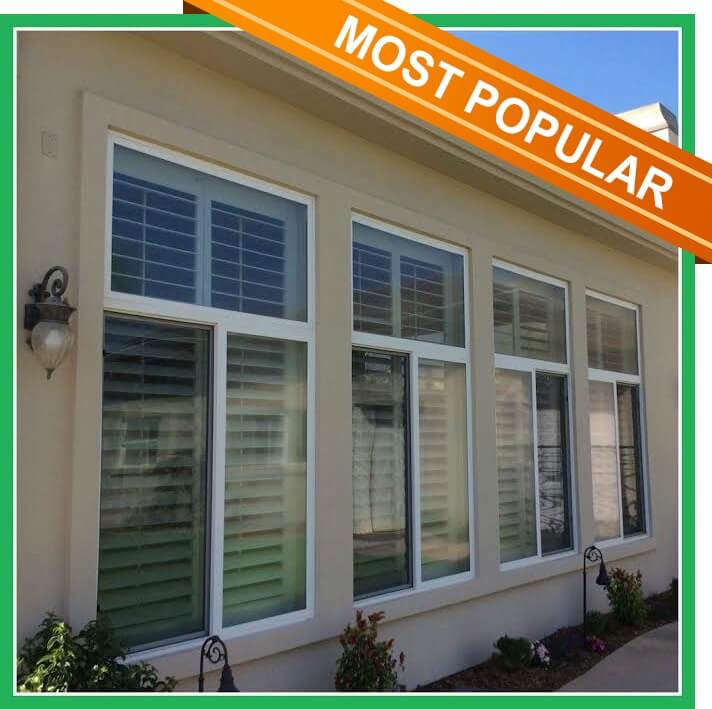
Modern homes commonly use Low-E (low emissivity) glass. These energy-efficient windows are designed to reflect infrared heat away from the home to reduce cooling costs.
But when sunlight hits the glass at certain angles, especially:
-
Late morning to mid-afternoon
-
During spring and fall sun shifts
-
On large or slightly curved window panes
The reflected light can:
-
Focus into a narrow beam
-
Intensify like a magnifying glass
-
Create surface temperatures exceeding 200–250°F
Artificial turf fibers, even high-quality ones, are not designed to withstand concentrated reflected heat at those temperatures.
Normal sunlight alone does not melt turf. Concentrated reflected sunlight can.
What Melt Damage Looks Like
If windows are the cause, the damage usually has recognizable patterns:
-
Straight melted streaks
-
Circular or oval “crop circle” shapes
-
Shiny, brittle turf blades
-
Collapsed or flattened fibers
-
Damage that appears at the same time each day
These patterns trace the path of the reflected beam as the sun moves.
If the damage shifts slightly with the seasons, that’s another strong indicator of window reflection.

Why This Happens More Often in Newer Homes
Several factors increase the likelihood:
✔ Energy-Efficient Low-E Glass
The coating reflects heat, which is great for indoor comfort, but can intensify outdoor glare.
✔ Large Window Panels
Bigger surfaces can reflect stronger beams.
✔ Slight Glass Curvature
Double-pane windows can bow slightly due to pressure differences, subtly concentrating light.
✔ Close Neighboring Homes
Sometimes the reflection comes from a neighbor’s window, not yours.

How to Confirm If Windows Are the Cause
If your artificial turf is melting:
-
Stand in the damaged area.
-
Look toward your home and nearby properties.
-
Identify the window producing the brightest glare or flash.
That window is likely creating the hot spot.
You may also notice that the damage:
-
Occurs at the same time daily
-
Gets worse during certain seasons
-
Stops temporarily on cloudy days
These are classic signs of reflection-driven heat.
Why Replacing the Turf Won’t Solve It
Many homeowners replace melted sections only to see the same damage return. Even premium nylon turf can melt if concentrated reflection continues. If the beam isn’t disrupted at the window, the problem repeats.
The root cause must be addressed first.
How to Stop Window Reflection from Melting Turf
Solutions focus on diffusing or interrupting the reflected light before it concentrates.
Options may include:
-
Turf Guard window film designed to break up glare and stop turf from melting
-
Solar screens
-
Shade structures like awnings or sails
When the concentrated reflection is diffused, the turf can no longer overheat, and the melting stops.
The Bottom Line
Are home windows melting artificial turf?
In many cases, yes, not because they’re defective, but because energy-efficient Low-E glass can reflect and concentrate sunlight under the right conditions.
If you’re seeing straight melt lines, shiny patches, or repeating burn patterns, window glare is likely the hidden cause.
Before replacing your turf, check the windows.
Because it’s often not the grass, it’s the reflection.