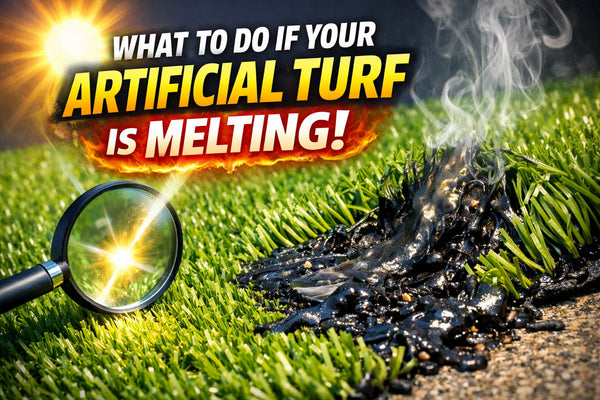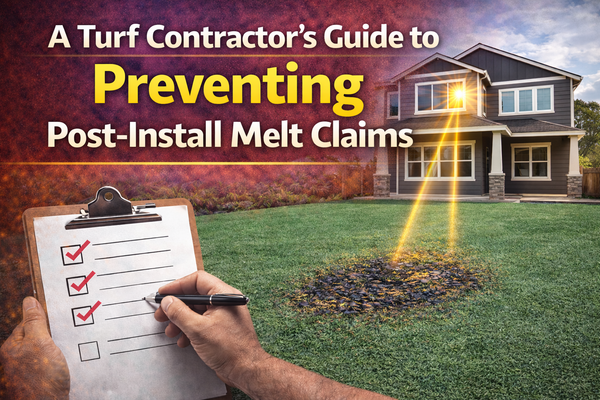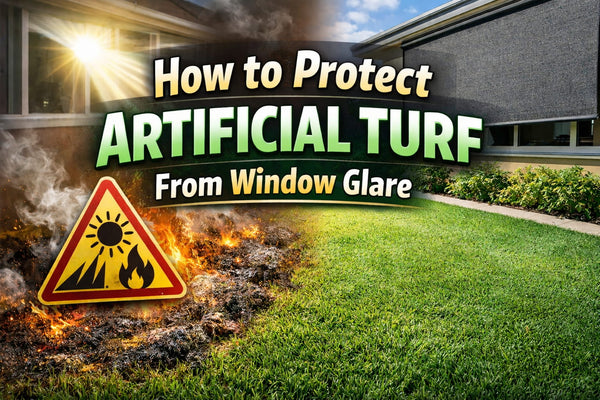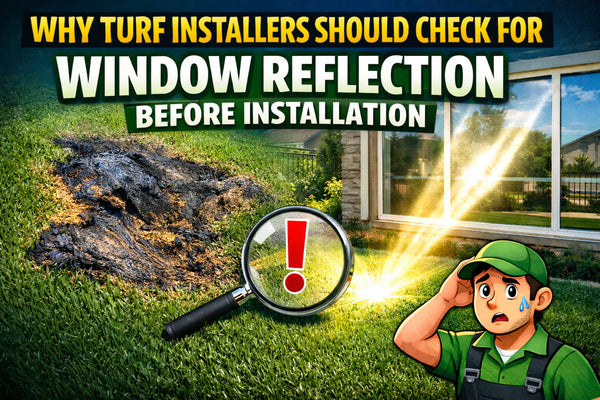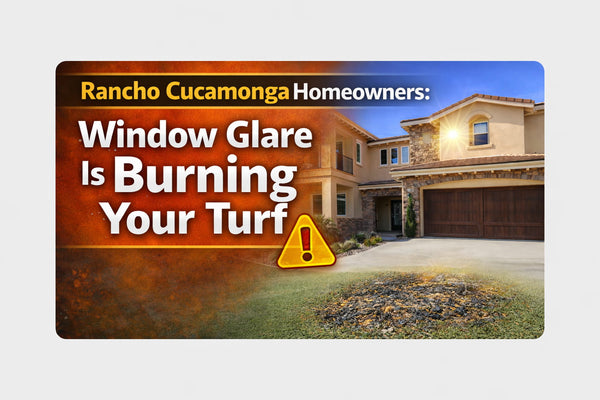
If you’ve noticed warped vinyl siding, melted car trim, or patio furniture, and damaged pool covers, you may be dealing with concentrated window glare, not a product defect. Low-E windows can create powerful hot spots that reach well above 200°F, hot enough to melt plastics, buckle vinyl, and damage pool covers or outdoor equipment. These issues are far more common than most homeowners realize.
This guide explains which materials are most vulnerable, how to test your property for reflection risks, and what steps you can take to prevent damage before it happens.

How window glare creates enough heat to melt materials
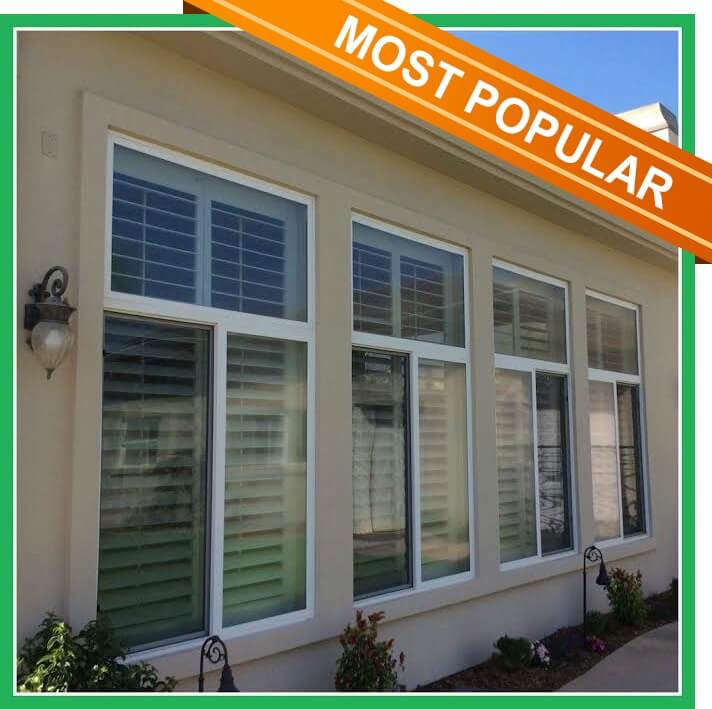
Low-E windows are designed to improve energy efficiency by controlling heat transfer. But the same reflective coating that helps regulate indoor temperatures can send concentrated sunlight onto nearby surfaces. Slight curvature in the glass can make this even stronger, creating a magnifying-glass effect that focuses sunlight into a small, extremely hot beam.
When that beam lands on outdoor materials, especially plastics, the temperature spikes fast, often within minutes.

1. Vinyl siding: why it warps or buckles
Many homeowners first discover window glare damage when they see wavy, rippled, or warped siding on a sunny wall. Vinyl siding begins to deform around 160–165°F, and reflected glare can easily exceed that threshold.
Common signs:
• sagging or bowing panels
• shiny, distorted surface areas
• localized rippling in a diagonal path
Most often caused by:
• a neighbor’s second-story Low-E window
• your own bay or picture window
• multiple reflections bouncing between homes
2. Car mirrors, trim, and bumpers
Parked cars are frequent victims of concentrated glare, especially cars with black trim or gloss plastics. Homeowners report:
• melted mirror housings
• warped trim pieces
• faded, cracked, or bubbled paint
• misshapen bumper corners
This happens because dark trim absorbs heat extremely efficiently. When a 200°F+ hot spot hits the same panel every afternoon, damage accumulates quickly.
Tip: If you notice one side of your car is always hot to the touch when parked in a specific spot, window glare may be the cause.
3. Patio furniture, toys, planters, and grills
Synthetic materials melt faster than most people realize. Window glare can soften or warp:
• plastic Adirondack chairs
• outdoor storage bins
• patio tables with vinyl or resin components
• kids’ plastic toys
• planters
• grill side shelves or handles
Some homeowners even report burned outdoor cushions because dark fabrics heat rapidly when exposed to concentrated glare.
4. Pool covers and liners
Pool covers, especially dark solar covers, are prone to reflected heat damage. A concentrated beam can:
• melt or bubble sections of the cover
• create brittle patches
• cause discoloration or shrinkage
Vinyl pool liners can also deform if the reflection consistently hits the waterline.
How to test your property for window glare hot spots
Use this simple checklist to identify whether a window, yours or a neighbor’s, is responsible:
Step 1: Stand or place your hand near the damaged area on a sunny day.
Step 2: Slowly rotate and look for a bright flash or shimmering line on the ground or wall.
Step 3: Trace the reflected line back to the window creating it.
Step 4: Photograph or record the reflection path at different times of day.
Step 5: Check surrounding surfaces (cars, walls, furniture) for heat or distortion.
Hot spots often appear:
• between 9–11 am on east-facing homes
• between 1–4 pm on south or west-facing homes
Prevention checklist: how to protect your property
Here are practical ways to reduce the risk of melting or heat damage:
Immediate (temporary) actions:
• move cars, furniture, toys, or bins out of the reflection path
• add a temporary shade umbrella, sail, or towel
• place a non-reflective barrier like a tall planter
Long-term (permanent) solutions:
• install exterior Turf-Guard window film
• add solar screens (often HOA-approved)
• install awnings or Bahama shutters
• adjust landscaping to block direct sun before it hits the window
The most reliable fix, and the one recommended by home inspectors, is to treat the window itself.
FAQs
Can window glare really melt vinyl siding?
Yes. Vinyl softens around 160–165°F, and reflected glare from Low-E windows can exceed 200°F, causing rippling or distortion.
Why is my car mirror melting or warping?
Dark car trim absorbs concentrated heat quickly. If a reflective beam hits the same location daily, the plastic deforms.
What else can window glare damage besides turf?
Patio furniture, pool covers, vinyl siding, toys, and car parts like mirrors can melt when exposed to hot spots.
How do I stop window glare from damaging my property?
Install exterior Turf-Guard window film, or solar screens. These break up the concentrated beam and prevent extreme heat.
What if the hot spot is coming from my neighbor’s window?
Document the reflection, take photos of damage, and approach them politely with HOA-friendly solutions such as exterior Turf-Guard window film or solar screens.