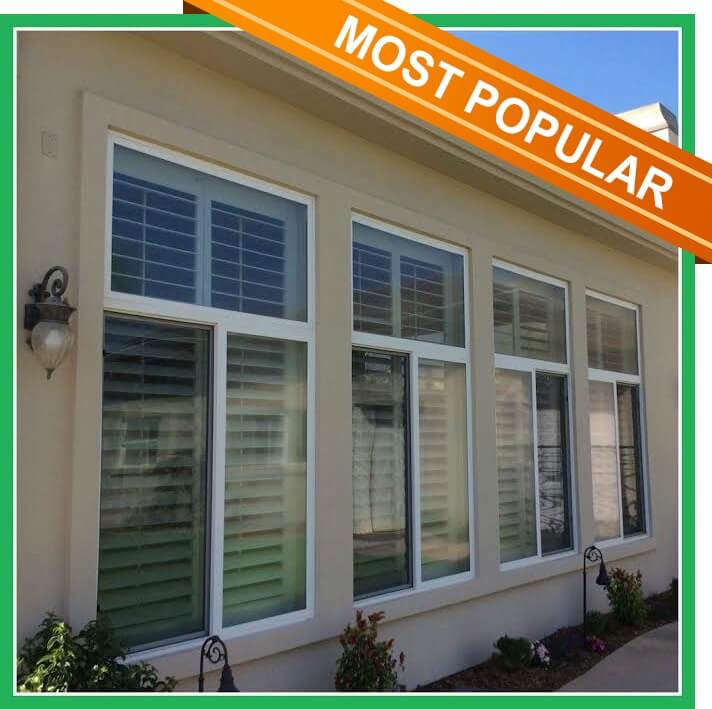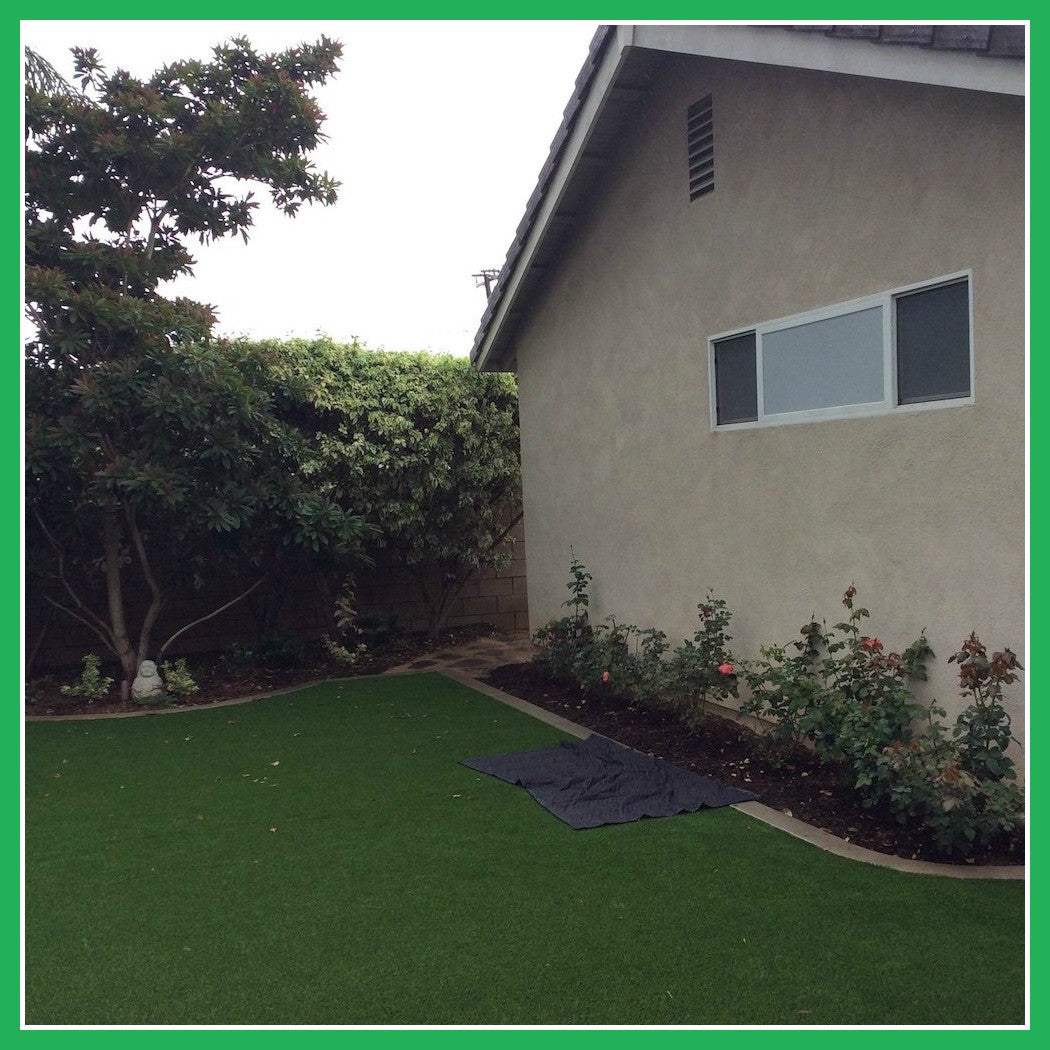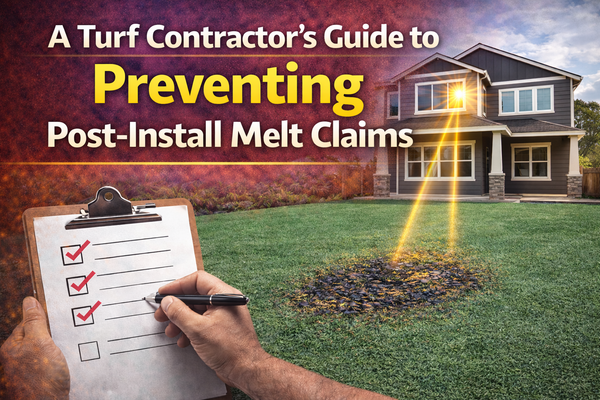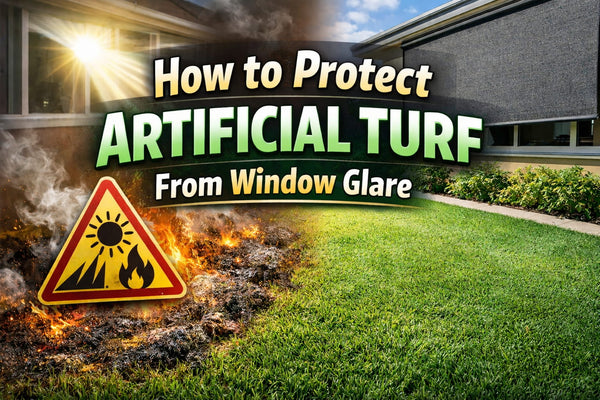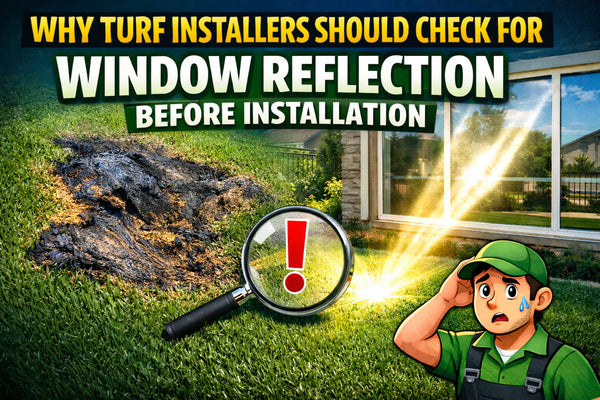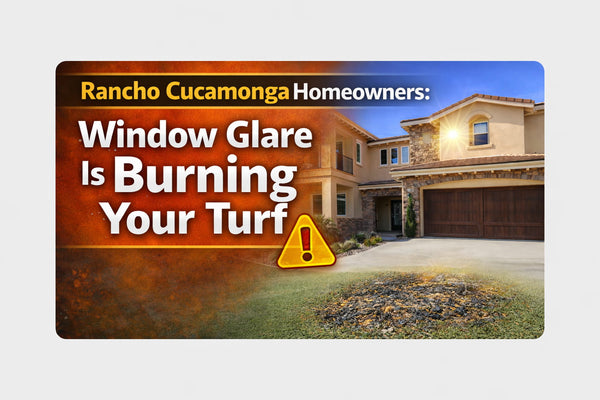
During spring and summer, your artificial grass tends to become hotter. This is because of the window reflection, which is a standard feature of many Low-E windows. Once the sun is up, the light hits the glass windows. It allows the natural light to come in your house and leave the heat outside, making the room a bit cooler. The same thing happens in the winter, but it makes the house’s atmosphere a bit warmer.
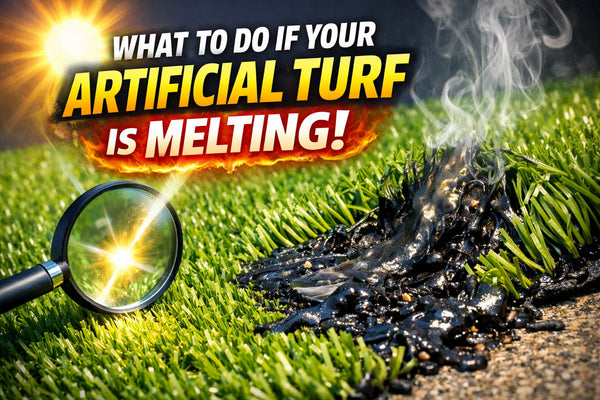
It may benefit your energy-savings, but it may cause harm to your artificial turf. Because a Low-E window doesn’t absorb heat, the hot temperature transmits to your synthetic lawn. This causes the grass blades to melt.
There’s a broad range of materials that you can use to reduce window reflection. You can use an awning window, a window shutter, a window shade, and a perforated window film.
Awning Windows
Awning windows are hinged windows. The sash is hinged at the top that swings outward at the bottom. Though it is a replacement window, it doesn’t cause harm to your artificial grass. In fact, it deflects off window reflections and reduces heat. You can place it over your existing windows to get turf protection and energy savings.
Window Shutters
Window shutters add value to your home. Their designs come in a range of styles, allowing you to choose a shutter that complements your home interior. Furthermore, it lets you reduce window reflections. Just adjust the shutter to get an ample amount of light coming from the sun.
Window Shades
Window shades are also effective in reducing reflection damage on your artificial lawn. Like window shutters, it comes in an array of styles and blocks the sunlight. Nevertheless, it still lets you enjoy the outdoor views while providing privacy.
Perforated Window Films
Among the four solutions, this is the best option for turf damage prevention. It is a thin layer that is applied to windows. Its primary purpose is to provide space for campaigns and posters. But because of its anti-reflective properties, homeowners use it to protect their artificial grass.
As the name suggests, it deflects off reflections and soaks up the heat. Nonetheless, it helps save energy costs as it still provides a clearer outdoor view. Simply stick the film to the outer part of the window, and it will do its purpose.
Additional Tip! Shade Trees
This may not be a window cover or protection, but it protects the synthetic grass from turf damage. Trees are naturally heat absorber. They produce oxygen and gives fresh, clean air. Moreover, it covers the artificial grass once it grows. However, it would take years before it becomes a real shade to your turf.
Protecting your synthetic turf from the sun’s reflection will help you save your budget in the long run. While turf manufacturers claim that their products can handle extreme heat, they may reason out that reflections don’t come from the sun. Thus, it is essential to correct the issues before it causes damage to your lawn. Use those tools mentioned above to keep your turf long-lasting.
Get the best protection for your artificial grass! Go to windowfilmforturf.com and buy our window perf products.